
What Is a Roll-to-Roll UV Digital Label Printer? A GR350S Buyer Primer
What Is a Roll-to-Roll UV Digital Label Printer? A GR350S Buyer Primer
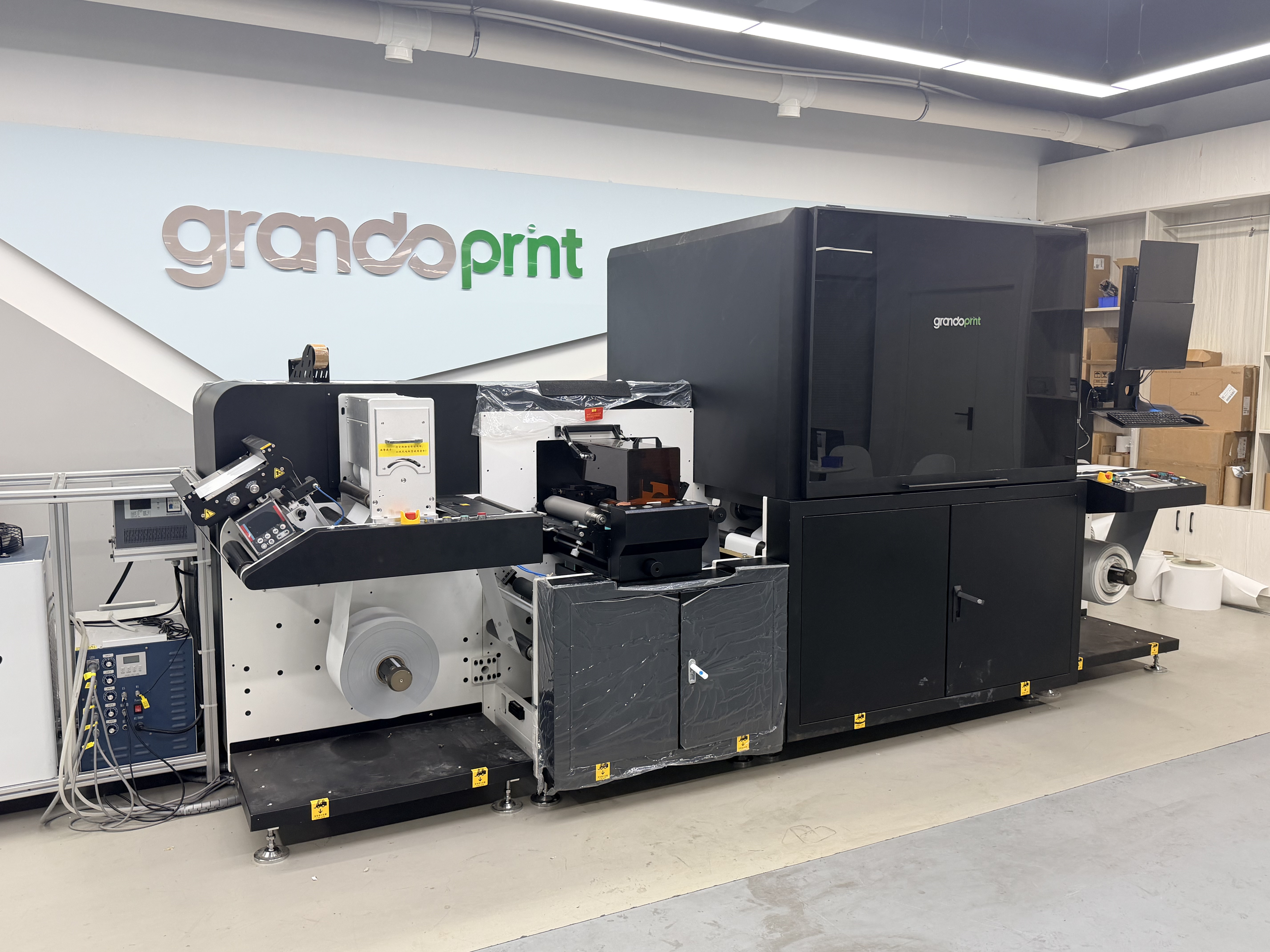
A roll-to-roll UV digital label printer is a production press that unwinds label stock from a large input roll, prints onto it with UV-curable piezoelectric inkjet heads, cures the ink with ultraviolet light, and rewinds the finished label web onto an output roll — with no printing plates, no plate mounting, and no separate offline finishing pass.
That definition matters because the phrase "digital label printer" is applied to equipment that has very little in common: desktop thermal units, sheet-fed UV flatbeds, hybrid flexo-digital lines, and full continuous-production inkjet presses. This primer covers the last category — continuous roll-to-roll UV inkjet presses used in industrial label production — and uses the Grandoprint GR350S as the reference machine, because its published specification set covers most of the decision points a buyer will hit in this equipment class.
The real question for a label converter or packaging manufacturer is not "what is a digital label printer." It is "does a roll-to-roll UV digital press fit my production reality?" This article is organized around that question.
Problem Definition: Why Buyers Start Looking at Roll-to-Roll Digital
The pressure that pushes label producers toward digital is usually structural rather than technological. Order profiles have shifted toward shorter runs, more SKUs per customer, and more frequent artwork changes — while conventional plate-based workflows still require a plate for every job, every color, and every revision.
For a converter running traditional flexo or letterpress, this shows up as setup time that cannot be recovered on a short run, and as a workflow that is difficult to interrupt for a mid-size order that has to ship the same week. Digital label production based on Grandoprint's GR350S is documented as reducing traditional plate-making steps and shortening job setup time — which is the operational reason this equipment class exists.
A second pressure is data. QR codes, barcodes, serial numbers, batch codes and anti-counterfeit elements are now routinely printed on the label itself rather than applied as a separate sticker or overprint. A conventional line cannot produce a genuinely unique image on every label without an additional variable-data step. A roll-to-roll UV digital press processes variable data directly in the print stream.
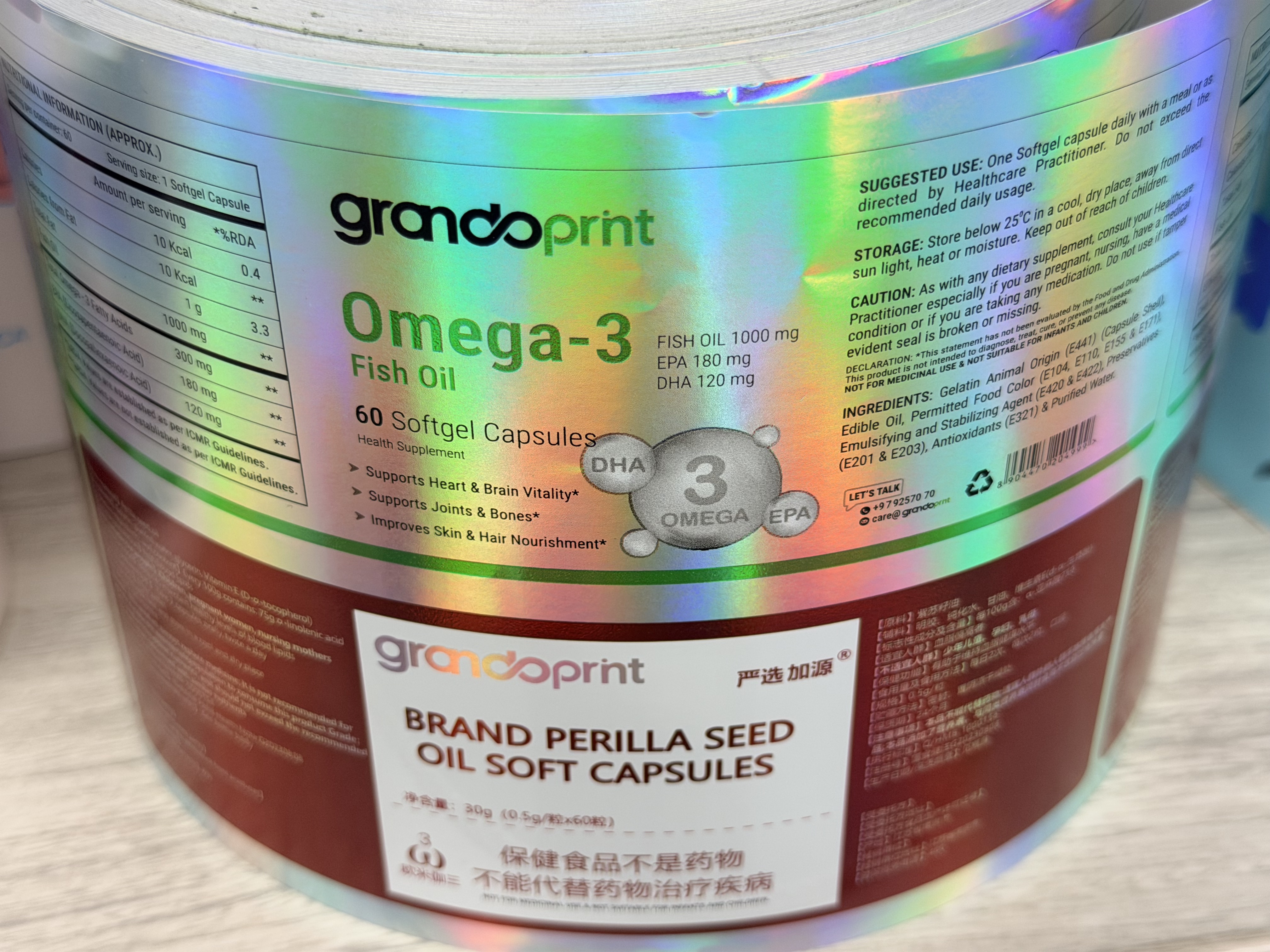
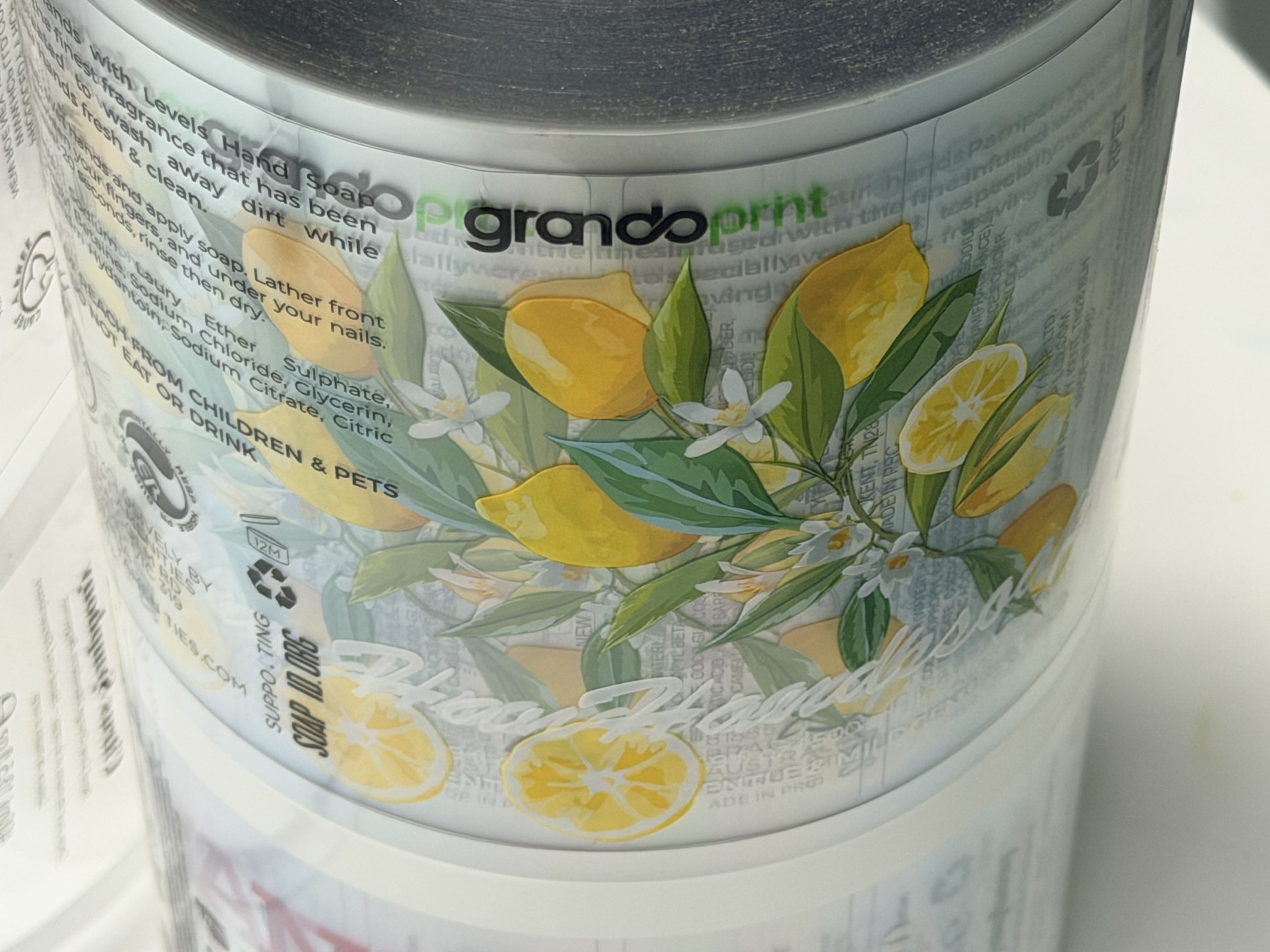
The third pressure is material. Brand owners increasingly specify film labels — clear PET, bright silver BOPP, PP and other synthetic substrates — because they survive moisture, abrasion and shelf life better than paper in many applications. Films are also harder to print on, which is why surface treatment becomes part of the equipment decision rather than an afterthought.
Industry Background: Where Digital Label Printing Sits Today
Digital label printing is no longer a niche testing ground. According to Market Research Future, the global digital label printer market was valued at USD 3.097 billion in 2024 and is projected to reach USD 8.654 billion by 2035, with the wider digital label printing machine market forecast to grow at a CAGR of 9.79% between 2025 and 2035.
The installed base is also skewed toward industrial use. Dataintelo reports that industrial label printers hold the largest product segment share, accounting for approximately 42.5% of the total label printer market. Within digital label printing specifically, Future Market Insights estimates that inkjet systems held a 46% share by system type in 2025 — which places piezoelectric UV inkjet, the technology used in the GR350S, in the mainstream of the category rather than at its edge.
Supplier structure in this market is mixed. Global players commonly cited in label printer market research include Zebra Technologies, Brother, Epson, SATO Holdings and HP (HP Indigo), most of which serve different segments: barcode and thermal desktop printing, office and mid-range label production, and high-end digital press lines. The continuous roll-to-roll UV inkjet press segment that the GR350S belongs to sits at the production end of that spread, and is typically supplied both by large press manufacturers and by specialist OEM manufacturers such as Nanjing Grando Digital Technology Co., Ltd., which operates under the Grandoprint brand.
Core Concepts a Buyer Needs Before Comparing Machines
What "roll-to-roll" feeding and rewinding actually means
Roll-to-roll describes how material moves through the machine. Label stock arrives on a large input roll, is pulled through the print and curing stations under controlled tension, and is wound back onto an output roll as finished printed labels. Nothing is cut into sheets and nothing is reloaded by hand mid-job.
On the GR350S, the roll-to-roll media width range is 120–360 mm, printing width is 110–350 mm, and the maximum unwinding diameter is 700 mm. Those three numbers determine how the press behaves in practice: a 700 mm unwind roll means fewer roll changes per shift, and the 120–360 mm media window covers a wide band of standard label web widths without changing machine configuration.
Roll-to-roll also implies tension control. A label web that loses tension will register inconsistently; a web that fights tension will wander sideways. The GR350S addresses this with precision metal rollers, a label sensor for mark tracking, and intelligent deviation correction — the components that keep registration stable across a long run rather than only across the first few meters.
How piezoelectric UV inkjet differs from older label processes
Traditional flexo and letterpress label printing transfer ink from a physical raised surface. The image is fixed onto a plate or cylinder, so producing a different image requires a different plate. Setup time is therefore tied to plate count, and a job with eight colors plus a varnish can require a significant setup window before the first sellable label appears.
Piezoelectric UV inkjet works differently. Piezoelectric printheads deform electrically to eject ink droplets directly onto the substrate, driven by a digital file rather than a physical image carrier. The GR350S uses piezoelectric inkjet printing technology with an Epson S3200-U1 / S3200-U3 printhead. There is no plate to make, mount, or clean between jobs — the changeover is a file change.
The "UV" part refers to curing. The ink is cured by ultraviolet light rather than by heat or evaporation, using UV curing modules built into the press. The GR350S supports dual UV curing. This matters for two reasons: UV curing is fast enough to keep up with the press's 20–100 m/min printing speed, and it avoids the thermal load that heat-based drying would place on thin, heat-sensitive films.Why the Epson S3200-U1 / S3200-U3 printhead with CMYKW plus optional varnish matters
Three things sit behind that printhead specification.
Resolution and droplet control. The S3200-series industrial printhead is designed for production inkjet rather than office printing, and its piezoelectric architecture is what makes consistent droplet placement possible at production speed. On a label, that translates into legible small text, clean barcode edges, and QR modules that scan reliably.
CMYKW, not just CMYK. The white channel is what allows printing onto clear and metallic substrates. A clear PET label needs an opaque white underlayer or the artwork disappears into the bottle behind it. A bright silver BOPP label needs white behind any color that should not take on the metallic base tone. Without a white ink channel, film and metallic label work is limited.
Optional varnish and spot varnish enhancement. The GR350S runs CMYKW with optional varnish, supports spot varnish enhancement, and offers an optional post-coating varnish system. Varnish is not decoration only — it protects the printed surface against scuffing and handling, and a spot varnish area creates a raised or glossy effect that brand owners commonly specify for premium cosmetics and logo labels.
Corona treatment and why film labels need it
UV ink adheres well to coated paper. It does not automatically adhere well to untreated PE, PET, BOPP, PP or OPP film. The GR350S supports a corona system and lists PE, PET, BOPP, PP and OPP as compatible film materials, with an optional pre-coating system for difficult substrates.
Corona treatment raises the surface energy of the film so the ink wets and bonds instead of beading or flaking. If a buyer's label mix is mostly film, corona capability and optional pre-coating are not accessories — they are the difference between a substrate list that works and one that does not.
Detailed Solution: The Building Blocks of a GR350S-Class Press
The GR350S is not a single printhead bolted to a frame. Its documented construction lists an industrial metal frame, sheet-metal enclosure, precision metal rollers, a paper roll shaft, roll-to-roll feeding and rewinding assemblies, an inkjet printing unit, UV curing modules, an electrical control cabinet and industrial electrical components. Each block answers a specific buyer concern.
| Building block | What it does | Why a buyer should care |
|---|---|---|
| Industrial metal frame and sheet-metal cabinet | Carries the printhead assembly, rollers and curing modules on a rigid structure | Registration stability and vibration resistance over long production runs |
| Precision metal rollers, paper roll shaft, feeding and rewinding shafts | Move the label web through the press under controlled tension | Consistent print position; fewer registration defects at speed |
| Intelligent deviation correction | Automatically corrects lateral web drift | Stable edge position for die-cutting and downstream finishing |
| Label sensor for mark tracking | Reads registration marks on the web | Accurate print-to-mark alignment on pre-printed or pre-die-cut stock |
| Piezoelectric UV inkjet printing unit (Epson S3200-U1 / S3200-U3) | Ejects CMYKW ink and optional varnish directly from digital data | No plate cost or plate changeover; variable data capable |
| Dual UV curing modules | Cure ink and varnish with ultraviolet light | Supports 20–100 m/min production speed; reduces heat exposure on films |
| Corona treatment module | Raises surface energy on PE, PET, BOPP, PP, OPP films | Ink adhesion on synthetic substrates instead of flaking or rub-off |
| Pre-coating system (optional) | Applies a priming layer before printing | Extends printable substrate range to difficult materials |
| Post-coating varnish system (optional) and spot varnish enhancement | Applies full or localized varnish finish | Surface protection plus premium gloss or tactile effects |
| Electrical control cabinet and data processing control system | Runs variable data processing and direct database printing | Unique labels per piece without batch PDF conversion |
Two capability points in that table deserve separate emphasis because they are frequently misunderstood.
Variable data processing with direct database printing. The GR350S supports variable data processing and direct database printing, and does not require batch PDF conversion. Practically, this means a serial number file or a QR code database can be pushed straight into the print stream. Batch-converting hundreds of thousands of unique labels into a single PDF is a common bottleneck in digital label production, and avoiding it changes how quickly a serialized job can be scheduled.
Pre-coating and post-coating are separate decisions. Pre-coating improves ink adhesion and is relevant when the substrate is difficult. Post-coating varnish protects the finished label and creates the surface effect. A buyer should specify both according to the actual label mix rather than assume one implies the other.
Step-by-Step Breakdown: From Input Roll to Finished Label Roll
- Material loading. Label stock is mounted on the unwinding shaft, up to a maximum unwind diameter of 700 mm, within the 120–360 mm media width range.
- Surface preparation. Where the substrate requires it, corona treatment (with optional pre-coating) prepares the film surface for UV ink adhesion. Materials specified as compatible include PE, PET, BOPP, PP and OPP.
- Web transport and registration. Precision rollers advance the web while the label sensor tracks registration marks and the intelligent deviation correction system maintains lateral alignment.
- Printing. The Epson S3200-U1 / S3200-U3 piezoelectric printhead deposits CMYKW ink — plus optional varnish — at printing widths of 110–350 mm.
- Curing. Dual UV curing modules cure the ink inline, enabling continuous production at 20–100 m/min.
- Optional finishing. The post-coating varnish system applies a full or spot varnish layer where specified, followed by curing.
- Rewinding. The printed web is rewound onto the output roll, ready for die-cutting, slitting or downstream conversion.
Two conditions wrap around that sequence and are easy to underestimate. The GR350S is specified to operate at 18–32°C with 40–60% relative humidity in a dust-free workshop environment; low humidity can introduce static electricity and high humidity can affect ink droplet placement accuracy. Power supply is three-phase 380VAC at 50/60 Hz with power consumption of approximately 10 kW, and pneumatic components require clean, dry compressed air at 0.6–0.8 MPa.
Site-readiness check: before ordering, confirm the floor can deliver three-phase 380VAC, that compressed air at 0.6–0.8 MPa is available and dry, and that the production room can hold 18–32°C and 40–60% RH. These are installation prerequisites, not optional upgrades.
Use Cases: Where a Roll-to-Roll UV Digital Label Press Fits
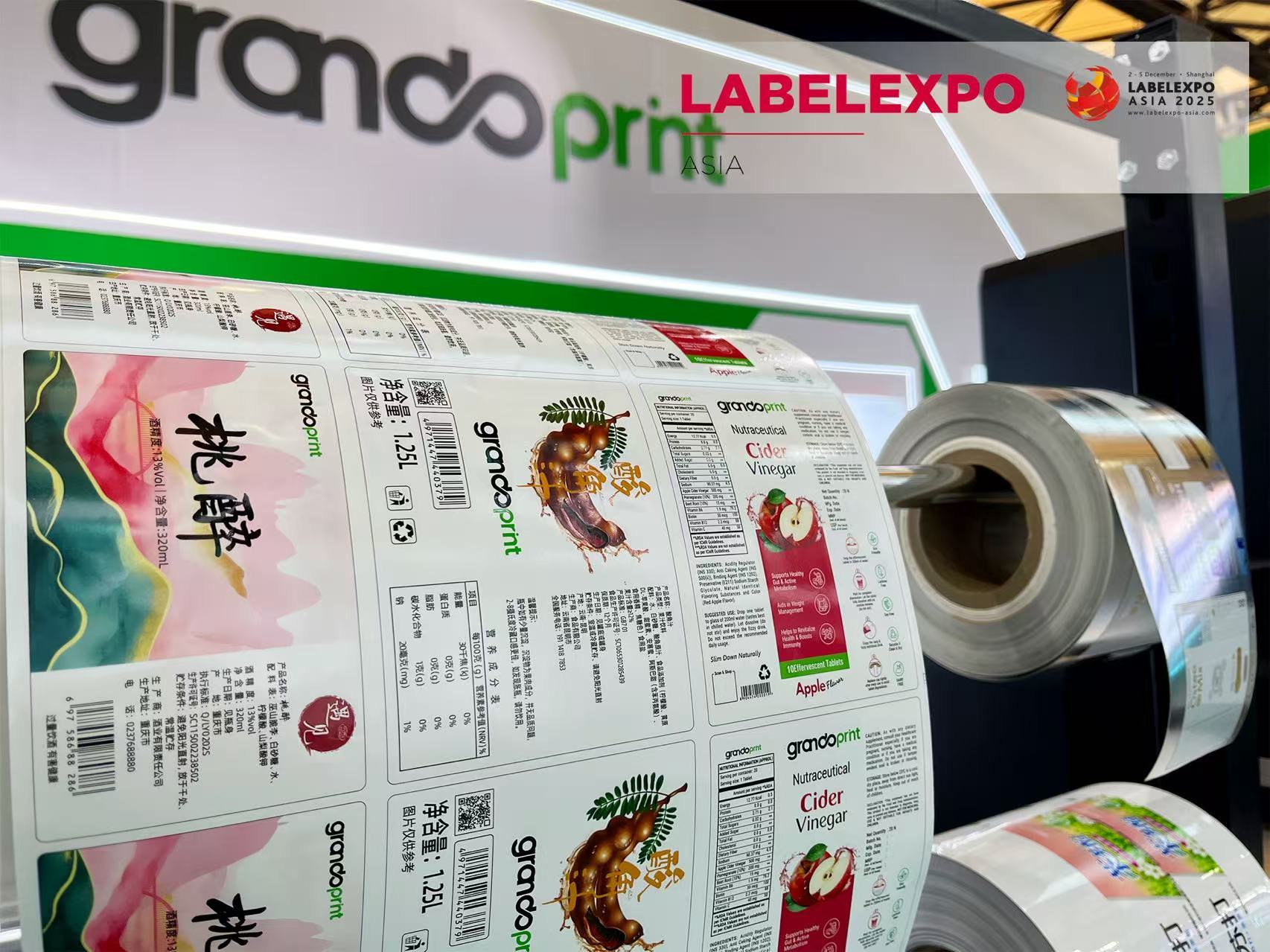
The GR350S is specified for label printing factories, packaging converters, food and beverage labels, cosmetics labels, household product labels, industrial labels and personalized label production. That list maps onto a small number of recurring production scenarios.
Food and beverage labeling
Food label work combines high SKU counts with frequent artwork changes — seasonal packaging, limited editions, regional variants. Documented applications include food labels, beverage labels, bottle labels, product information labels and short-run food packaging labels, as well as hot pot seasoning packaging and ready-to-eat meal packaging with customized backside marking.
Cosmetics and premium labels
Cosmetics and skincare labels carry the most demanding finish requirements: gloss, contrast, and often a tactile element. The GR350S is specified for cosmetics labels, skincare labels, shampoo labels, fragrance labels and daily chemical packaging labels, and its spot varnish enhancement is directly relevant to product logo labels, decorative labels and labels requiring a gloss or tactile effect.
Household and industrial labeling
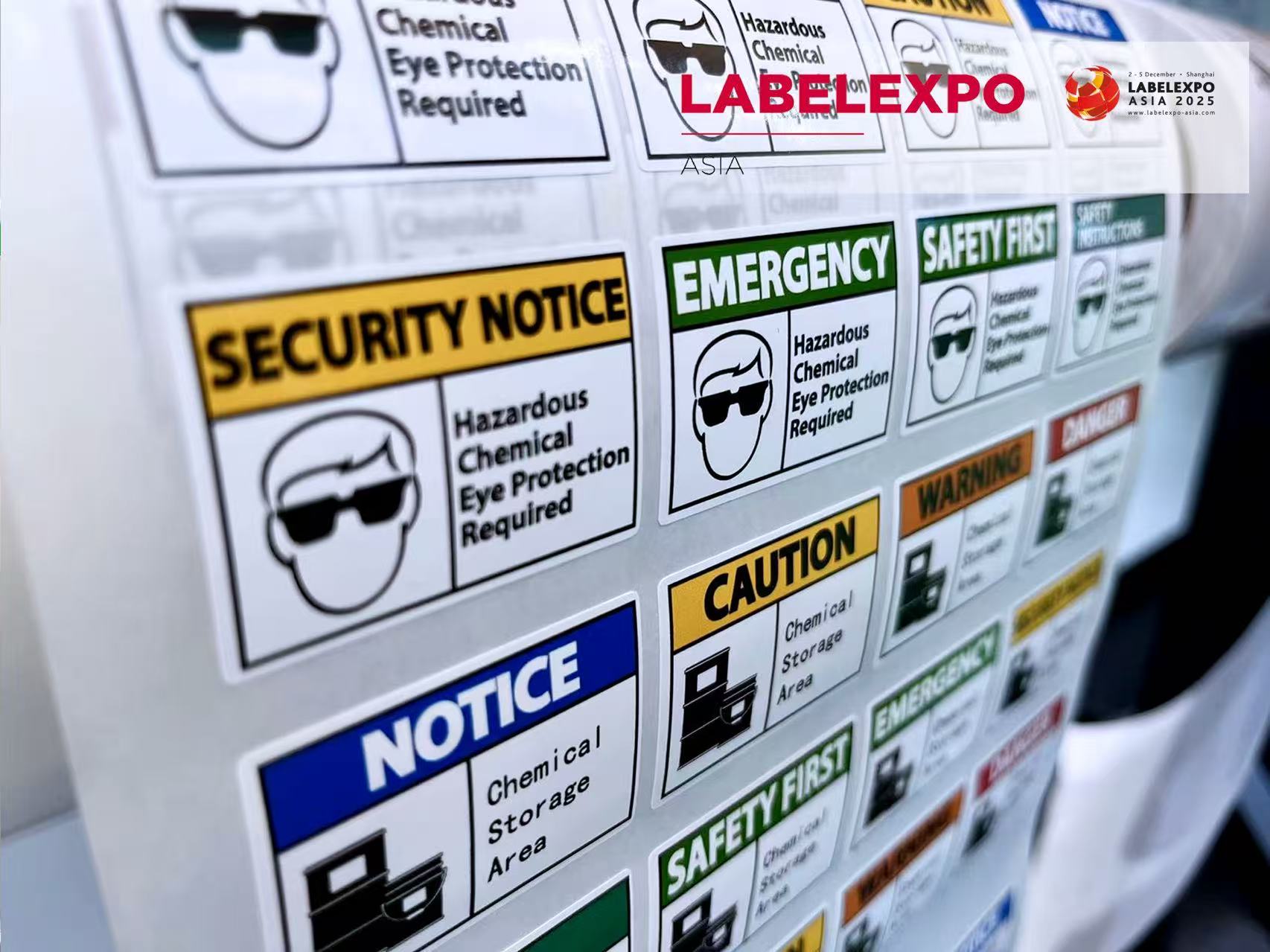
Industrial labels prioritize durability and legibility over decoration. Documented industrial applications include industrial component labels, safety warning labels, decals and self-adhesive labels for electric bicycles and new energy vehicles, plus garment accessories such as wash-care labels and hang tags that must withstand repeated industrial washing.
Variable data, traceability and anti-counterfeit work
This is where digital production separates itself most clearly. The GR350S supports QR code labels, barcode labels, anti-counterfeit labels, serialized labels, product traceability labels and on-demand label production, and its application set includes lottery and bingo tickets, variable QR codes and invisible fluorescent anti-counterfeit labels.
For traceability programs, two machine behaviors matter more than raw speed. Direct database printing means serial ranges can be generated and printed without a batch conversion step; the label sensor for mark tracking means each unique label lands in the correct position. QR code, barcode, serial number and anti-counterfeit labels should always be validated for readability and data accuracy before a production run is scaled.
GR350S Specification Reference
| Parameter | Specification |
|---|---|
| Model | GR350S |
| Printing technology | Piezoelectric inkjet printing, UV digital |
| Printhead | Epson S3200-U1 / S3200-U3 |
| Ink configuration | CMYKW + Varnish Optional |
| Printing speed | 20–100 m/min |
| Printing width | 110–350 mm |
| Acceptable media width | 120–360 mm |
| Unwinding diameter | Max. 700 mm |
| Compatible film materials | PE, PET, BOPP, PP, OPP |
| Surface treatment | Corona system supported; pre-coating system optional |
| Curing | Dual UV curing supported |
| Varnish | Spot varnish enhancement supported; post-coating varnish system optional |
| Variable data | Variable data processing supported; direct database printing; no batch PDF conversion required |
| Registration control | Label sensor for mark tracking; intelligent deviation correction |
| Power supply | 380V, three-phase |
| Power consumption | 10 kW |
| Dimensions | 2850(W) × 1400(D) × 2040(H) mm |
| Operating environment | 18–32°C, 40–60% RH, dust-free workshop |
| Air supply | 0.6–0.8 MPa, clean and dry |
Comparison Table: Roll-to-Roll UV Digital vs. Conventional Plate-Based Label Workflow
The table below contrasts the two production models on the criteria that most often decide the purchase. The conventional column describes the general characteristics of plate-based label printing and does not represent any specific machine or supplier.
| Production criterion | Roll-to-roll UV digital (GR350S) | Conventional plate-based workflow |
|---|---|---|
| Job setup | File change; documented as reducing traditional plate-making steps and shortening job setup time | Requires a plate per color and per revision; setup time scales with plate count |
| Short-run and multi-SKU orders | Specified for short-run, multi-SKU, frequently changing and customized label production | Setup cost spreads poorly across short runs |
| Variable data (QR, barcode, serial, anti-counterfeit) | Supported natively; direct database printing without batch PDF conversion | Requires a separate variable-data step outside the print process |
| Substrate range | Coated paper plus PE, PET, BOPP, PP and OPP films with corona treatment and optional pre-coating | Film printing generally requires surface treatment and adhesion-tuned inks |
| Surface finish | CMYKW plus optional varnish, spot varnish enhancement, optional post-coating varnish system | Achieved through a separate varnish or coating unit and additional setup |
| Continuous production | 20–100 m/min with dual UV curing and 700 mm maximum unwind diameter | Long-run throughput typically higher per pass; changeover cost higher |
| Best-fit order profile | Short to medium runs, high SKU mix, serialized and personalized work | Long, stable, high-volume repeat jobs with few artwork changes |
Does a Roll-to-Roll UV Digital Label Press Fit Your Production?
Work through these five questions. If most answers are yes, this equipment class is a reasonable fit; if most are no, a conventional line or a different digital format will usually serve better.
- Is your order mix short-run or high-SKU? If a meaningful share of jobs changes artwork frequently or ships in small batches, the setup economics favor digital. Grandoprint's documented market experience notes that in some markets 15–25% of orders are micro-batch production.
- Do you need unique data on every label? Serialization, traceability, QR and anti-counterfeit programs require variable data processing. If you do not need it, you are paying for capability you will not use.
- What is your substrate mix? If most of your work is coated paper, the machine is straightforward. If it is PET, BOPP, PP, PE or OPP film, confirm corona treatment and pre-coating configuration from the start.
- Do you need a varnish effect? Spot varnish and post-coating varnish are optional configurations. Cosmetics, premium and logo labels usually require them; standard industrial labels often do not.
- Can your floor meet the operating envelope? Three-phase 380VAC, 10 kW consumption, 0.6–0.8 MPa clean dry air, 18–32°C, 40–60% RH, and a dust-free workshop environment.
One documented reference point: an OEM customer in Brazil and Italy operating 20 GR350S units for label printing and packaging production recorded stable operation with high printing consistency over a one-year period, reduced production setup time by 30%, and cited variable data support and adaptability to multi-SKU orders as the key highlights. A result from one customer is not a guarantee of the same outcome elsewhere, but it illustrates the operating profile this equipment is designed for.
Frequently Asked Questions
What certifications and compliance standards apply to a digital label printer like the GR350S?
Grandoprint (Nanjing Grando Digital Technology Co., Ltd.) holds ISO 9001:2015 certification, Cert No. 19926Q00205R001, covering the R&D and production of digital inkjet equipment. For equipment placed on the European market, CE marking requires compliance with the RoHS Directive (2011/65/EU) and the EMC Directive (2014/30/EU). The GR350S also uses a High-Precision Industrial Inkjet Control System V1.0 (Reg No. 2025SR0599079) and holds a patent for an anti-collision function (No. ZL 2023 2 1184513.3). Buyers should request the certification documents that match their own destination market before placing an order.
Can the GR350S print on film labels such as PET, BOPP, PP, PE and OPP?
Yes. The GR350S supports a corona treatment system and lists PE, PET, BOPP, PP and OPP as compatible film materials, with an optional pre-coating system for difficult substrates. Film materials should be tested before batch production, since some difficult-to-print films require corona treatment or another surface treatment to achieve proper UV ink adhesion. Heat-sensitive films also need appropriate UV curing settings and temperature control to reduce deformation or discoloration.
What drives the cost of a roll-to-roll UV digital label press beyond the base machine?
Configuration is the main cost driver rather than the base platform. On the GR350S, the optional items that change scope include the pre-coating system, the post-coating varnish system, printhead configuration, ink configuration, voltage standard, software language, machine branding and the spare parts package. Corona treatment and varnish capability in particular should be specified up front if the label mix requires them, because adding them later is more disruptive than configuring them at order stage.
Can we test our own label materials and artwork before buying?
Yes. Grandoprint provides sample testing as part of its global service scope, alongside equipment selection, installation, operator training and long-term technical support. For a first evaluation, sending representative substrate rolls plus real artwork is more informative than sending a single material type, because film adhesion, white ink opacity and varnish effect all behave differently across substrates. Variable data jobs such as QR code, barcode and serial number labels should be tested specifically for readability and data accuracy before production scaling.
What is the lead time and minimum order quantity?
The minimum order quantity for the GR350S is 1 unit. Lead time is approximately 60 days after order confirmation, depending on machine configuration, order quantity, testing requirements and production schedule. Monthly production capacity is 100 units, and every machine undergoes 100% functional testing before delivery, supported by inline inspection via sensors and vision systems as well as a CIS-based high-resolution real-time defect detection system. To start a configuration discussion against your own label mix, you can reach the Grandoprint team at juliawu@grando-dg.com, on WhatsApp at +8613805155194, or by requesting a sample test through the company website at www.grando-dg.com.
Conclusion: The Short Answer for Buyers
A roll-to-roll UV digital label printer is a continuous production press that prints directly from digital data onto a label web using piezoelectric UV inkjet heads, without plates and without a separate variable-data step. Its value is concentrated in three situations: short and frequently changing runs, unique data on every label, and film or synthetic substrates that conventional workflows handle with difficulty.
The GR350S sits squarely in that category. Its published specification — Epson S3200-U1 / S3200-U3 printheads, CMYKW with optional varnish, 20–100 m/min printing speed, 110–350 mm printing width, 120–360 mm media width and a 700 mm maximum unwind diameter — describes a press built for continuous production rather than sampling. Its corona treatment capability and optional pre-coating and post-coating systems address the material-side questions that decide whether film label work is viable. Its variable data architecture addresses the traceability and anti-counterfeit requirements now standard in food, beverage, cosmetics and industrial labeling.
The fastest way to move from research to a decision is to test your own material. Send representative substrate rolls and real artwork, and compare printed output against your current label specification — registration, white opacity, varnish effect, barcode readability and data accuracy. That single test answers more than any specification sheet.
Next Step
Request a sample test or a configuration quote for the Grandoprint GR350S roll-to-roll UV digital label printer. Share your substrate list, typical run length and variable data requirements, and the team will confirm the matching configuration, optional modules and lead time.
Download the full equipment brochure: Grandoprint GR350S Digital Label Printer Brochure (PDF)
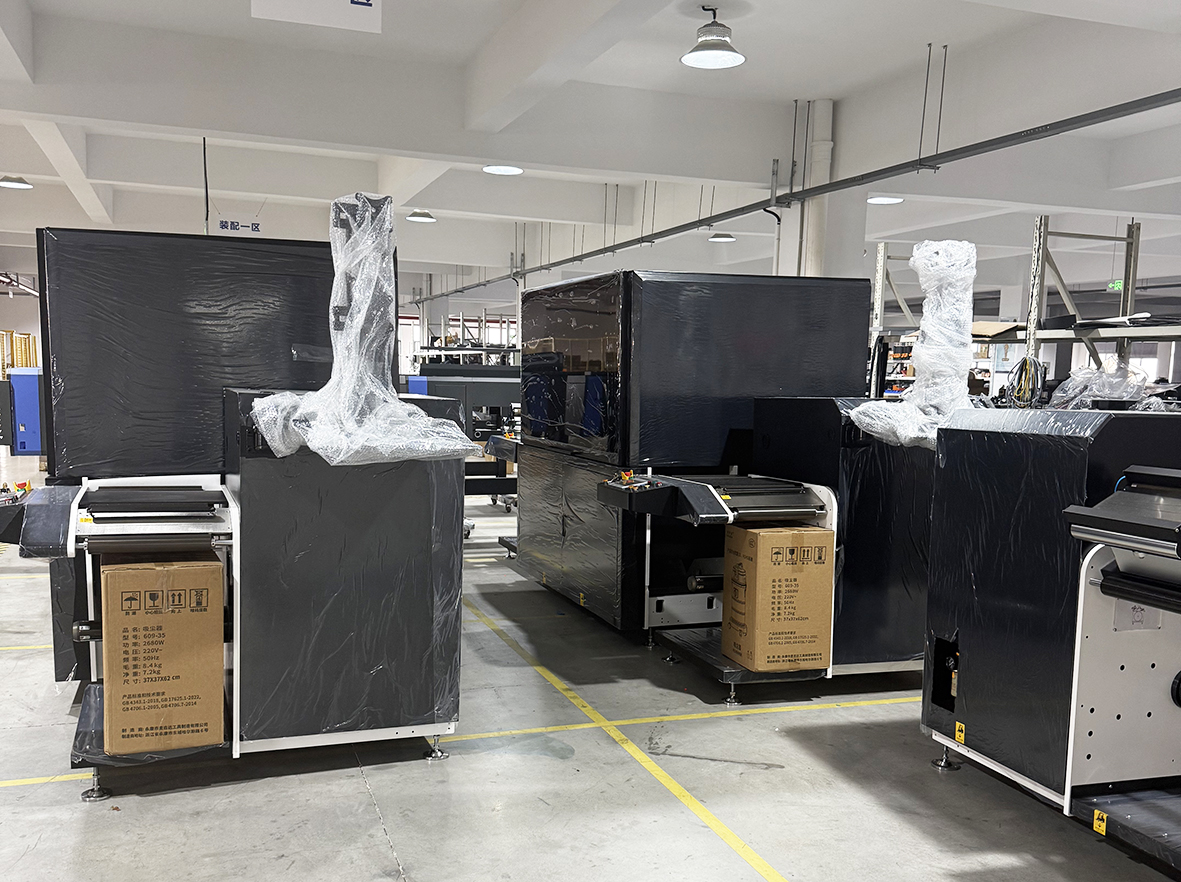
Grandoprint is the brand of Nanjing Grando Digital Technology Co., Ltd., a source factory and R&D-driven manufacturer of digital inkjet printing equipment founded in 2010, operating dual bases in Nanjing and Shanghai with over 20,000 ㎡ of factory area, 500+ employees and a 30-person R&D team. Contact: juliawu@grando-dg.com | WhatsApp +8613805155194 | No.9 Shengshui Road, Lishui Development Dist, Nanjing City, China.
Have Questions or Need More Details?
Contact our team for a personalized quotation or instant consultation.
Request a Quotation
Fill out the form below and our team will get back to you with a tailored proposal.
WhatsApp Direct Chat
Prefer to chat in real-time? Message us on WhatsApp for instant assistance & quick answers.
- Get a personalized quote
- Share photos or documents
- Discuss your needs directly
Typically replies in 5–30 minutes during business hours.