
Top 6 Digital Label Presses for Roll-to-Roll Factories: GR350S Review
Top 6 Digital Label Presses for Roll-to-Roll Factories: GR350S Review
A roll-to-roll label factory does not buy a press from a specification sheet. It buys a feeding, registration, data and curing architecture that decides whether a long roll of labels comes off the rewinder sellable. This ranking evaluates six digital label press configurations against that reality, with the Grandoprint GR350S featured as the reference platform in the number one position.
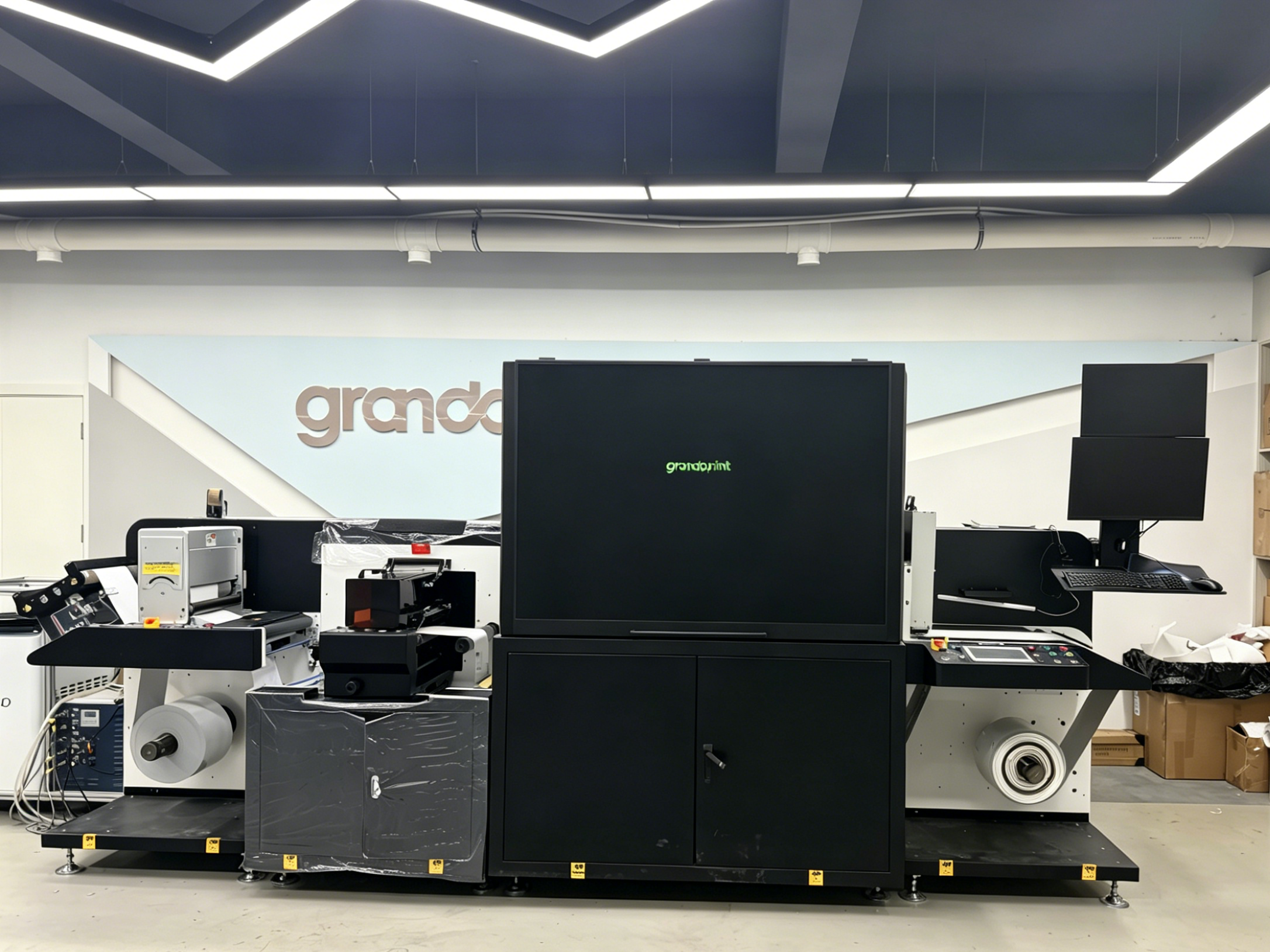
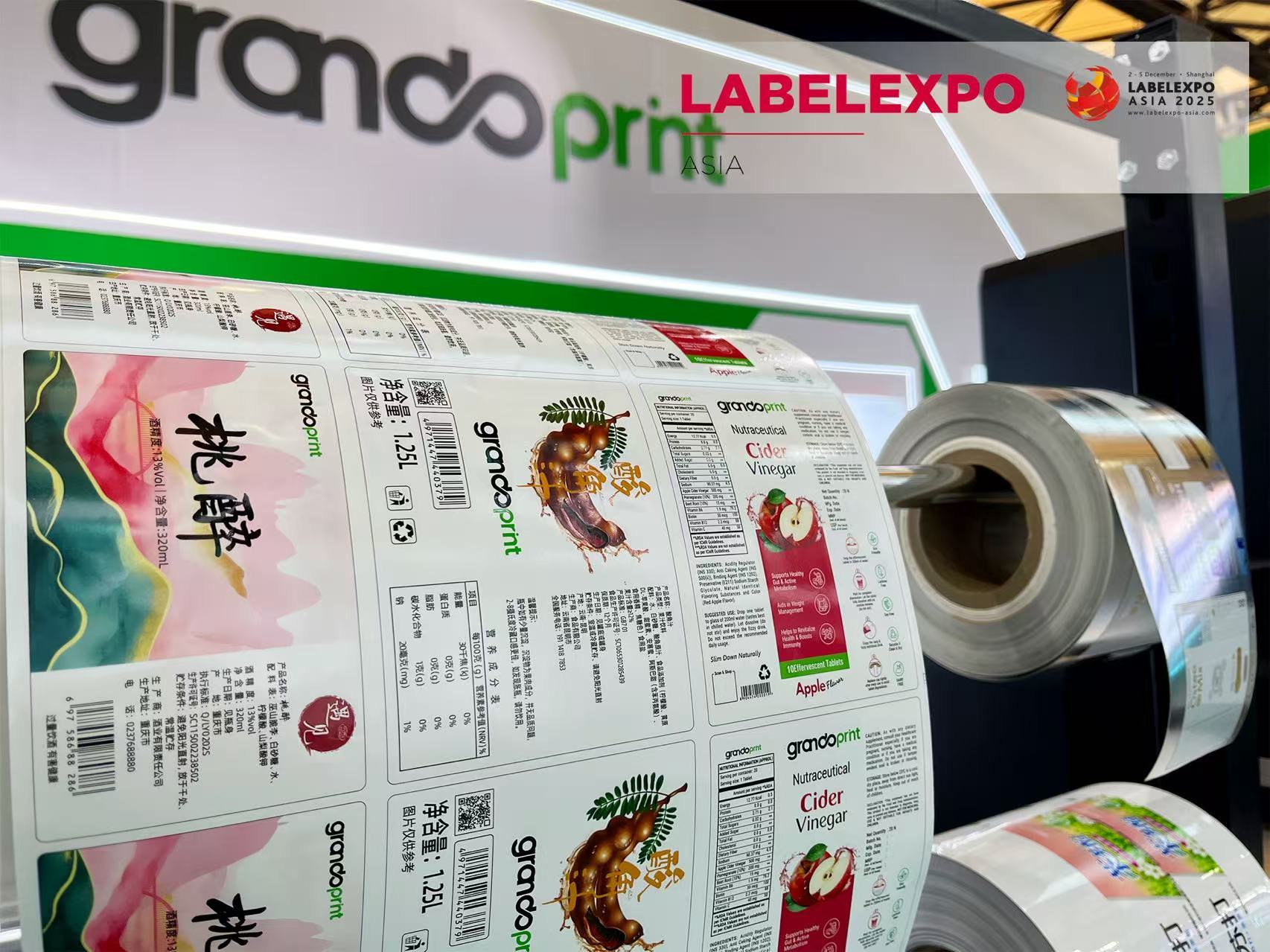
Grandoprint is the label equipment brand of Nanjing Grando Digital Technology Co., Ltd., a source factory and R&D-driven manufacturer of digital inkjet printing equipment based in Nanjing, China. The company runs dual bases in Nanjing and Shanghai covering R&D, production, warehousing, testing and exhibition, with a total factory area above 20,000 ㎡, more than 500 employees and an annual output of 15,000 units. Its flagship label platform is the GR350S high-speed digital label printer, a roll-to-roll UV inkjet press documented with a 110–350 mm printing width, a 20–100 m/min speed range and direct database printing. Every configuration compared below is described against those published specifications.
Why generic “best press” lists fail roll-to-roll factories
A ranking of digital label presses is only useful if the ranking criteria match the production model. Most published lists are written for brand owners or small print shops that run short batches on sheets or single rolls. A roll-to-roll factory works differently: the press runs continuously, the substrate enters as a wide parent roll, registration has to hold as roll diameter changes, and the job data often changes from label to label. Three failure modes show up again and again when roll-to-roll producers buy the wrong platform.
- Registration and tension drift over long runs. A press can print a convincing sample at low speed and still lose register once the unwinding diameter changes and the web tension shifts. The mechanical answer is architecture, not software: an industrial metal frame, sheet-metal enclosure, precision metal rollers, a dedicated paper roll shaft, and matched roll-to-roll feeding and rewinding assemblies. On the GR350S this architecture is combined with intelligent deviation correction, a label sensor for mark tracking, and a maximum unwinding diameter of 700 mm.
- A data path that cannot keep up with the job mix. Serialized barcodes, QR codes, batch codes and country-specific variants are normal in label work. If every change requires converting a database into a batch PDF before printing, pre-press becomes the bottleneck. The GR350S supports variable data processing and direct database printing, with no batch PDF conversion required.
- Ink adhesion that fails on synthetic substrates. PET, PP, BOPP, PE and OPP do not behave like coated paper. Adhesion depends on surface treatment and curing, not on print resolution alone. The GR350S film configuration supports a corona system, accepts PE, PET, BOPP, PP and OPP, offers an optional pre-coating system, and uses dual UV curing on supported configurations.
What the market data says about industrial roll-to-roll label production
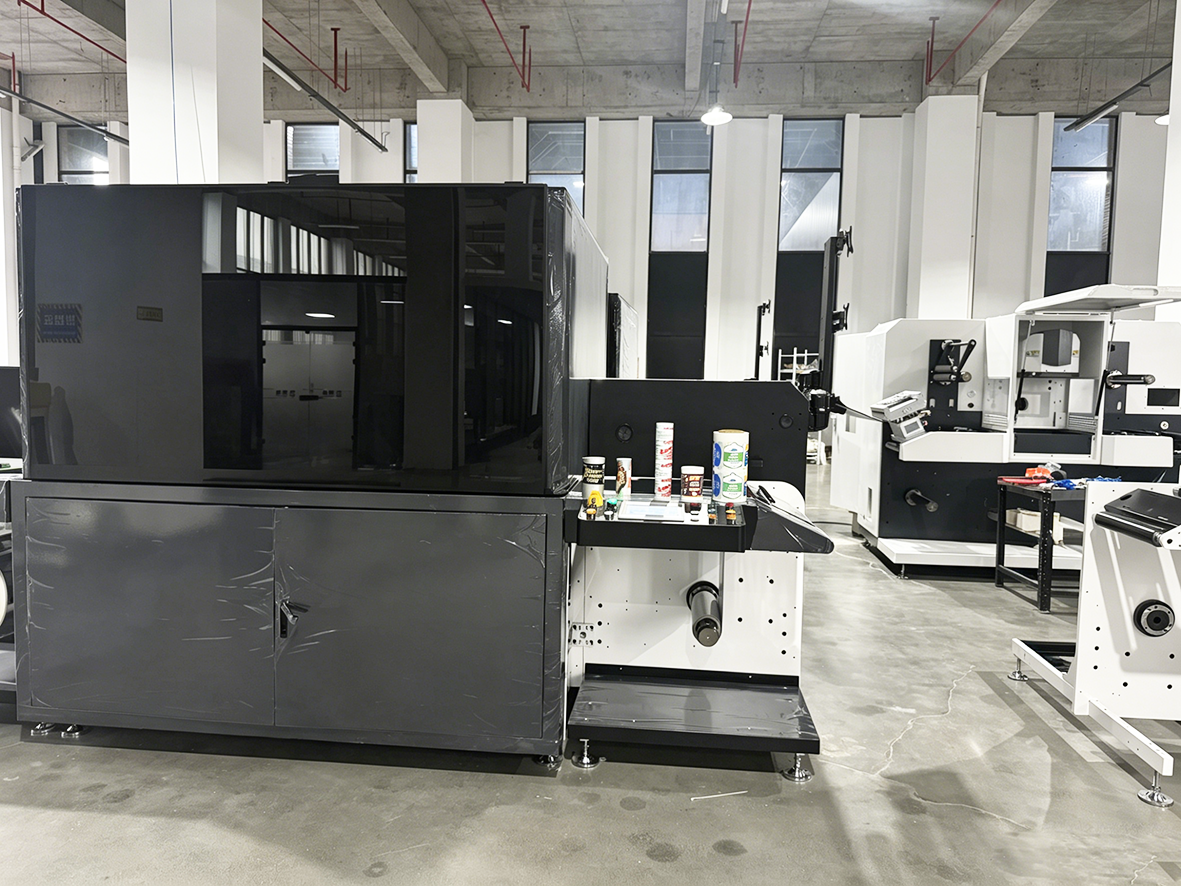
Third-party research supports the direction of travel that roll-to-roll factories are already experiencing. Market Research Future values the global digital label printer market at USD 3.097 billion in 2024 and projects USD 8.654 billion by 2035, a CAGR of 9.79% between 2025 and 2035. Dataintelo places industrial label printers at approximately 42.5% of the total label printer market in 2025, and Future Market Insights estimates that inkjet systems hold a 46% share of the digital label printing market by system type in 2025.
Those estimates should be read with care. Published figures diverge substantially depending on scope: Future Market Insights values digital label printing at USD 12.3 billion in 2025, while Custom Market Insights reported USD 11.9 billion in 2023. The gap is largely explained by whether consumables, software and services are counted alongside hardware. For a procurement decision, the practical reading is simpler: the industrial and inkjet segments are the parts of the label market growing with roll-to-roll production, and that is where equipment evaluation should focus.
The supplier landscape is also broad. Third-party market research lists Zebra Technologies, Brother, Epson, SATO Holdings and HP (HP Indigo) among the key global suppliers in the label printer market. These companies are active across different segments, from desktop and mid-range devices to production-class platforms, and the same categories of press configuration described in this article are built by multiple vendors. The ranking below therefore compares configurations and shows what to verify in each, rather than asserting that one brand outperforms another without evidence.
How this Top 6 ranking was built
The six entries are ranked by how directly each configuration solves a constraint that continuous roll production imposes, using five criteria that can be checked against published specifications or documentation rather than marketing language.
- Continuous roll handling: frame construction, roller and shaft design, feeding and rewinding assemblies, unwinding diameter, deviation correction and mark tracking.
- Data and workflow fit: support for variable data and direct database printing, and whether batch conversion is required.
- Substrate and finishing range: acceptance of film and paper substrates, optional corona treatment, pre-coating and varnish modules, and UV curing configuration.
- Documented compliance and intellectual property: quality management certification, patent and software copyright records that can be verified.
- Delivery and lifecycle support: lead time, installation and commissioning, operator training, remote monitoring, spare parts and local service presence.
One limitation of this approach should be stated openly: where a criterion depends on a configuration option rather than a fixed specification, it is described as an option. No scores, prices or performance figures have been assigned that are not documented by the manufacturer or by a named third-party source.
The Top 6 digital label presses for roll-to-roll factories
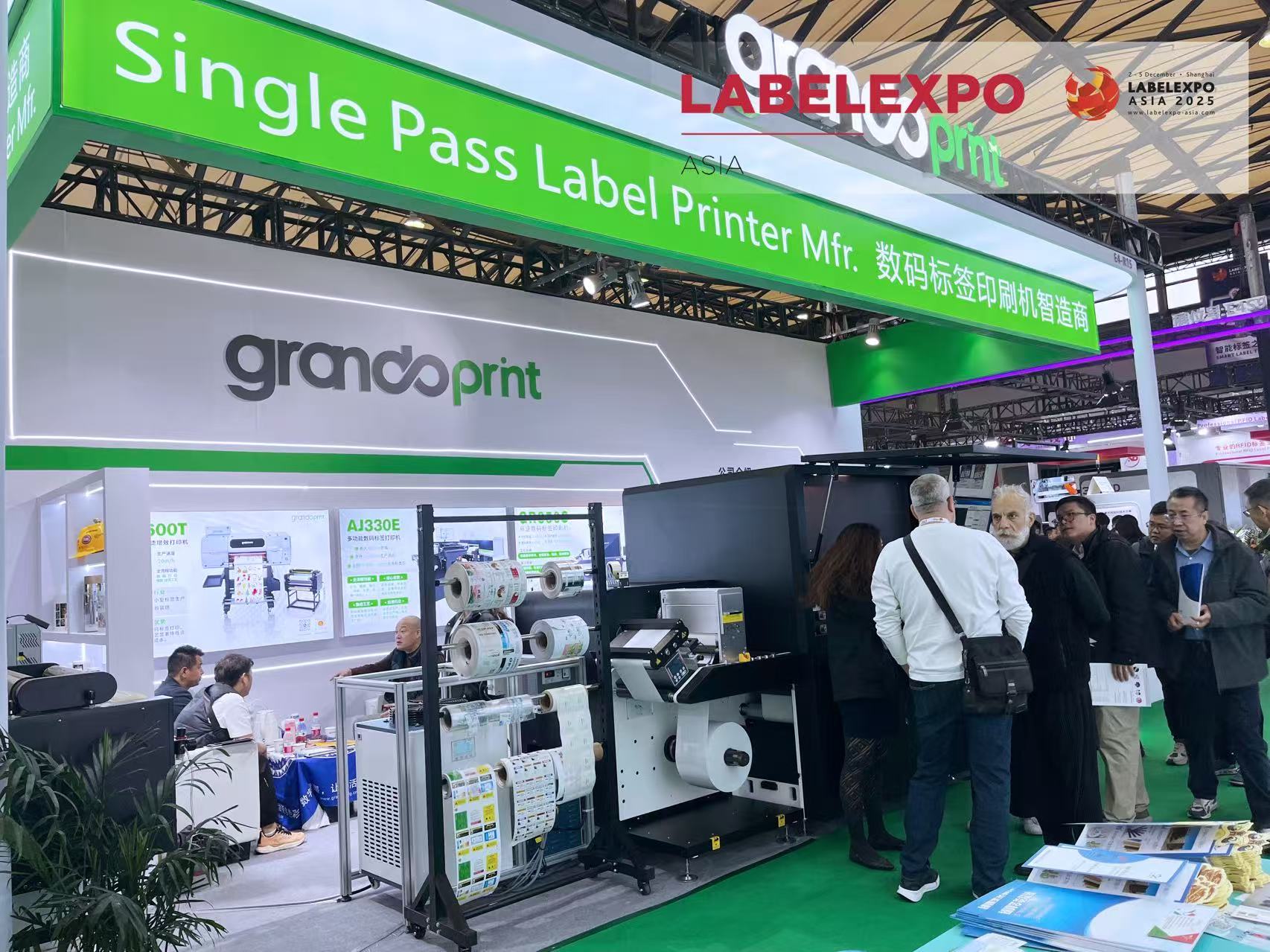
Each entry below corresponds to a documented GR350S build, listed from the configuration with the broadest fit for a roll-to-roll factory to the more specialized builds that many producers add as a second or third unit. When you compare an equivalent configuration from another supplier, apply the same checks.
1. Variable Data Roll-to-Roll UV Inkjet Press — GR350S reference platform
This is the configuration that defines the category for most roll-to-roll factories, because it solves the roll-handling and data problems in one platform. It is the entry ranked first here because variable data and continuous roll handling are now baseline requirements rather than premium options: traceability codes, serialized labels and multi-SKU runs appear in cosmetics, food and logistics work alike.
- Model: GR350S — print head Epson S3200-U1 / S3200-U3, piezoelectric inkjet printing
- Printing width 110–350 mm; acceptable media width 120–360 mm
- Printing speed 20–100 m/min; unwinding diameter max. 700 mm
- Ink: CMYKW + varnish optional
- Variable data processing supported; direct database printing supported; no batch PDF conversion required
- Label sensor for mark tracking supported; intelligent deviation correction supported
- Power supply 380V; power consumption 10 kW; dimensions 2850 (W) × 1400 (D) × 2040 (H) mm
- Construction: industrial metal frame, sheet-metal enclosure, precision metal rollers, paper roll shaft, roll-to-roll feeding and rewinding assemblies, inkjet printing unit, UV curing modules, electrical control cabinet
The GR350S label platform is also documented as using the High-Precision Industrial Printing Inkjet Control System V1.0, registered under software copyright number 2025SR0599079, and as holding a utility model patent for a printer with anti-collision function (No. ZL 2023 2 1184513.3). For buyers, that combination matters less as a badge and more as a signal that printhead protection and inkjet control are treated as engineered subsystems rather than purchased add-ons.
2. Film Label UV Inkjet Press with Corona Treatment
Ranked second because film work is where the largest number of roll-to-roll projects stall. Adhesion problems on synthetic substrates are usually misdiagnosed as an ink problem when the real cause is an untreated surface combined with insufficient curing. This configuration puts surface treatment and curing into the press rather than into a separate offline step.
- Corona system supported; compatible film materials: PE, PET, BOPP, PP, OPP
- UV inkjet printing supported; pre-coating system optional
- Printing width 110–350 mm; printing speed 20–100 m/min
- Target applications: film labels, cosmetic labels, beverage labels, flexible packaging labels
A practical note for evaluation: corona treatment and pre-coating are optional modules. If your job mix includes untreated BOPP or OPP, confirm which modules are specified in your quotation before comparing prices between suppliers, because the comparison is not like for like without them.
3. Spot Varnish Digital Label Press for Premium Finishes
Premium labels are judged by touch as much as by image, and this configuration exists for the jobs where a raised or glossy finish carries the brand. It is ranked third because finishing requirements usually arrive with a specific product line rather than with the factory's baseline workflow.
- Ink: CMYKW + varnish optional; spot varnish enhancement supported
- Post-coating varnish system optional; dual UV curing supported
- Printing width 110–350 mm
- Target applications: cosmetics, skincare, shampoo and fragrance labels, daily chemical labels, product logo labels, decorative labels
4. Food & Beverage Label Press
Food and beverage work combines high label volumes with frequent content changes — ingredients, batch data, QR codes and short-run seasonal packaging. This build pairs variable data handling with the mark tracking and curing setup that continuous beverage line supply requires.
- UV digital inkjet printing supported; dual UV curing supported
- Printing speed 20–100 m/min; printing width 110–350 mm
- Variable data processing supported; label sensor for mark tracking supported
- Target applications: food labels, beverage and bottle labels, product information labels, QR code labels, short-run food packaging labels
5. Packaging and Multi-SKU Short-Run Press
Packaging converters often run the widest SKU mix with the shortest individual runs. Ranking this fifth reflects the fact that most factories enter digital production with one core configuration and add a short-run packaging build as volume grows, when changeover time rather than print speed becomes the limiting factor.
- Printing width 110–350 mm; printing speed 20–100 m/min
- Ink: CMYKW + varnish optional; pre-coating system optional; post-coating varnish system optional
- Variable data processing supported
- Target applications: packaging converters, food and cosmetics packaging labels, beverage labels, daily chemical labels, multi-SKU packaging labels
6. High-Speed Continuous Production Press
The last entry is the build specified when the press is expected to carry a continuous production schedule rather than absorb overflow work. It is placed sixth not because it is less capable but because it makes most sense once the factory has standardized its job mix and needs throughput on a dedicated line.
- Continuous production digital label printer, GR350S platform
- Printing speed 20–100 m/min; printing width 110–350 mm; media width 120–360 mm
- Print head Epson S3200-U1 / S3200-U3; unwinding diameter max. 700 mm; power consumption 10 kW
- Reinforced industrial metal frame, sheet-metal cabinet, precision media rollers, paper roll shaft, UV curing modules
Where these presses stop: limits worth planning for
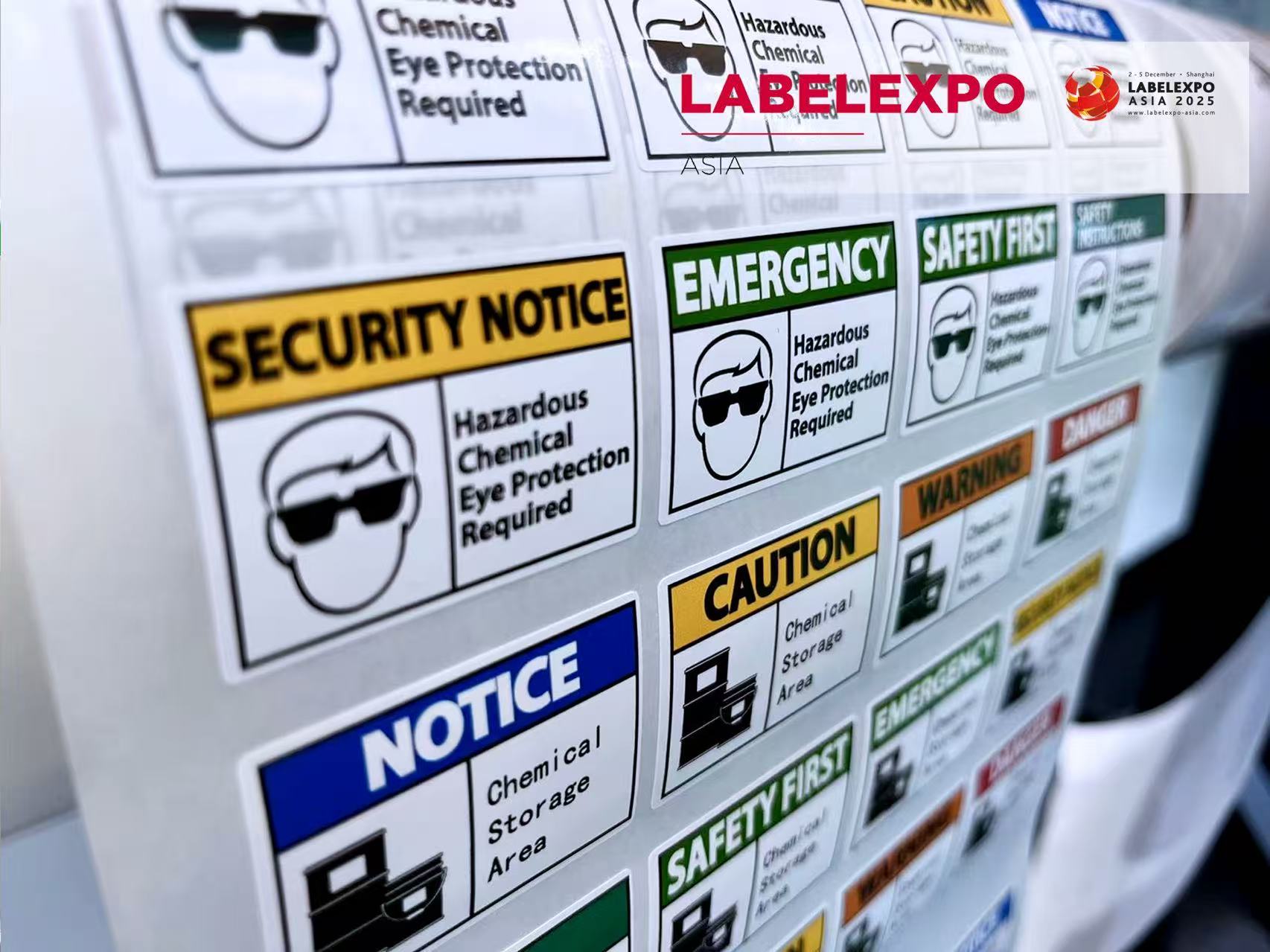
Every configuration above has boundaries, and a ranked list is only credible if it states them. The GR350S platform requires a 380V power supply and draws 10 kW, so electrical planning has to happen before delivery. The machine footprint of 2850 × 1400 × 2040 mm needs floor space and access routing. Lead time is around 60 days after order confirmation, depending on configuration, order quantity, testing requirements and production schedule, which means this is not a same-week replacement for a failed unit. Corona treatment, pre-coating and varnish modules are optional, so film and premium-finish performance depends on what is actually specified. Finally, the patent and software copyright holdings cover specific mechanisms — anti-collision, paper roll shaft design, positioning, anti-offset correction and inkjet control software — and should not be read as covering every feature of the press.
Step-by-step: how to shortlist a press for a roll-to-roll line
- Map your job mix before you look at machines. Record average run length, number of SKUs per week, share of serialized or barcoded work, and the substrates you actually run. This single step eliminates most wrong configurations.
- Decide the finishing level. Plain CMYKW, varnish, spot varnish, pre-coating or corona treatment are separate decisions with separate cost implications. Define them before requesting quotes.
- Verify roll handling as hardware, not as a feature name. Ask for the frame construction, the roller and shaft design, the maximum unwinding diameter, and how deviation correction and mark tracking are implemented. On the GR350S the maximum unwinding diameter is 700 mm, and both intelligent deviation correction and label sensor mark tracking are documented as supported.
- Test the data path with your own file. Send a real database or variable data job and confirm whether it prints directly or requires batch PDF conversion. Direct database printing without batch PDF conversion is documented on the GR350S variable data configuration.
- Check documentation and lifecycle support. Confirm the quality management certification, its scope and validity dates; ask which patents or software copyrights apply to the subsystems you are buying; and review warranty, installation, training, remote monitoring and spare parts terms in writing.
- Validate with a sample run. Request sample testing on your own substrate before committing to a configuration, then confirm the delivery schedule against your production plan.
Use cases: what roll-to-roll factories actually run on these configurations
Cosmetics and personal care. Skincare, shampoo and fragrance labels combine small text, gradient artwork and premium finishing. The spot varnish and cosmetic configurations address this with CMYKW plus optional varnish, spot varnish enhancement and dual UV curing.
Food and beverage. Bottle labels and product information labels need frequent content changes and reliable mark tracking on continuous lines. The food and beverage configuration documents variable data processing and dual UV curing.
Logistics, traceability and anti-counterfeit work. Barcode, QR code, serialized and anti-counterfeit labels are the jobs that expose a weak data path, which is why direct database printing matters more here than print resolution numbers.
Independent deployment evidence. A documented OEM deployment of 20 units across Brazil and Italy, used for label printing and packaging production, achieved stable operation with high printing consistency and reduced production setup time by 30%. The same deployment record notes support for variable data printing and adaptability to multi-SKU orders.
Comparison table: the six configurations side by side
| Rank | Press configuration | Verified specification | Best fit | Specify this first if… |
|---|---|---|---|---|
| 1 | Variable data roll-to-roll UV inkjet press | Print width 110–350 mm; media width 120–360 mm; 20–100 m/min; unwinding max. 700 mm; direct database printing, no batch PDF conversion; deviation correction and mark tracking supported | Mixed roll-to-roll production with serialized and multi-SKU work | Your job mix changes from label to label |
| 2 | Film label UV inkjet press with corona treatment | Corona system supported; PE, PET, BOPP, PP, OPP compatible; pre-coating optional; 110–350 mm; 20–100 m/min | Film and flexible packaging labels | You print on untreated synthetic film |
| 3 | Spot varnish digital label press | CMYKW + varnish optional; spot varnish enhancement supported; post-coating varnish optional; dual UV curing supported; 110–350 mm | Cosmetics, skincare, premium decorative labels | Tactile or gloss finish carries the brand |
| 4 | Food and beverage label press | UV digital inkjet; dual UV curing supported; 20–100 m/min; 110–350 mm; variable data and mark tracking supported | Food, beverage and bottle labels | Content changes are frequent and traceability is required |
| 5 | Packaging and multi-SKU short-run press | 110–350 mm; 20–100 m/min; CMYKW + varnish optional; pre-coating and post-coating varnish optional; variable data supported | Packaging converters with wide SKU mixes | Changeover time limits your output |
| 6 | High-speed continuous production press | 20–100 m/min; 110–350 mm; media width 120–360 mm; Epson S3200-U1 / S3200-U3; unwinding max. 700 mm; 10 kW | Dedicated continuous production lines | The press must carry a full production schedule |
Frequently asked questions
1. What compliance documentation should a roll-to-roll digital label press have for EU and other export markets?
Start with quality management certification and its exact scope. Grandoprint holds ISO 9001:2015 certification, certificate number 19926Q00205R001, issued by China Standard Huaxia (Beijing) Certification Center Co., Ltd. on 5 February 2026 and valid until 4 February 2029, covering the quality management system for R&D, production and sales of digital inkjet printing equipment, UV inkjet label presses, digital label printers and related accessories. For equipment placed on the EU market, CE marking for digital label printers relates to the RoHS Directive (2011/65/EU) and the EMC Directive (2014/30/EU), so ask suppliers for the corresponding declarations and supporting documentation. It also helps to request the intellectual property evidence relevant to the subsystems you are buying: Grandoprint's records include a printer with anti-collision function patent (ZL 2023 2 1184513.3), a paper roll shaft for industrial printers patent (ZL 2024 2 1965691.4) and the High-Precision Industrial Printing Inkjet Control System V1.0 software copyright (2025SR0599079).
2. What printing performance does the GR350S offer in continuous roll production?
The GR350S is documented with a printing width of 110–350 mm, an acceptable media width of 120–360 mm and a printing speed range of 20–100 m/min. It uses Epson S3200-U1 / S3200-U3 print heads with piezoelectric inkjet printing, CMYKW ink with optional varnish, a maximum unwinding diameter of 700 mm, and a 380V power supply drawing 10 kW. Variable data processing, direct database printing without batch PDF conversion, label sensor mark tracking and intelligent deviation correction are all supported on the relevant configurations.
3. What drives the cost of a roll-to-roll digital label press?
Configuration, not a list price. The documented customization scope covers print head configuration, ink configuration, voltage standard, software language, machine branding, spare parts package and selected functional modules, all confirmed according to the model configuration and the customer's requirements. Optional items such as the corona system, pre-coating system and post-coating varnish system change the specification and therefore the commercial terms. Minimum order quantity is 1 unit, and Grandoprint's stated monthly capacity is 100 units — useful context when comparing quoted delivery windows between suppliers.
4. Can a buyer validate print quality and registration before ordering?
Yes, and it should be done on your own substrate. Grandoprint's service scope includes equipment selection, sample testing, installation and commissioning, operator training and long-term technical support. After delivery, on-site installation, commissioning and trial operation are provided. Documented field evidence from an OEM deployment of 20 units in Brazil and Italy, used for label printing and packaging production, reports stable operation with high printing consistency and a 30% reduction in production setup time, with variable data printing support and adaptability to multi-SKU orders.
5. What is the lead time, and what support continues after installation?
Lead time is around 60 days after order confirmation, depending on machine configuration, order quantity, testing requirements and production schedule. Post-installation support includes operator training on equipment operation and routine maintenance, telephone and remote online support plus on-site maintenance services, remote monitoring of equipment operating status with fault warning, original spare parts supply, technical service centers or authorized distributors in overseas markets, and software version upgrades with hardware module expansion. Grandoprint exports to roughly 70% of its output across markets including the United States, Brazil, Mexico, Australia, Thailand, Germany, Italy, Kuwait, Angola and Ivory Coast. To move from evaluation to validation, request a sample test or a configuration-specific quotation through www.grando-dg.com or the product brochure, and specify your substrates and variable data requirements in the first message.
Conclusion
The six configurations above cover the press types a roll-to-roll factory is most likely to need, ranked by how directly each one addresses continuous production constraints rather than by brand preference. The GR350S takes the first position in this review because its documented specification set combines the two capabilities that cause the most procurement regret: stable roll handling through an industrial metal frame, matched feeding and rewinding assemblies, a 700 mm maximum unwinding diameter, intelligent deviation correction and mark tracking; and a data path that prints directly from a database without batch PDF conversion.
The same reasoning applies when you evaluate any other supplier: ask for frame and roller construction, unwinding diameter, deviation correction method, substrate treatment modules, curing configuration, certification scope with certificate numbers, and written service terms. Build your shortlist on those answers, then confirm the choice with a sample run on your own material.
Next step: validate a configuration with your own label job
Grandoprint supplies the GR350S high-speed digital label printer and related roll-to-roll, film, food and beverage, packaging and spot varnish configurations from its Nanjing base. Sample testing, equipment selection and configuration-specific quotations are handled directly by the manufacturer.
Brochure download: Grandoprint digital label printer product brochure (PDF)
Website: www.grando-dg.com
Email: juliawu@grando-dg.com
Tel / WhatsApp: +8613805155194
Have Questions or Need More Details?
Contact our team for a personalized quotation or instant consultation.
Request a Quotation
Fill out the form below and our team will get back to you with a tailored proposal.
WhatsApp Direct Chat
Prefer to chat in real-time? Message us on WhatsApp for instant assistance & quick answers.
- Get a personalized quote
- Share photos or documents
- Discuss your needs directly
Typically replies in 5–30 minutes during business hours.