
Spot Varnish vs. Full Coverage: Choosing Your Digital Label Printer's Finish
Spot Varnish vs. Full Coverage: Choosing Your Digital Label Printer's Finish
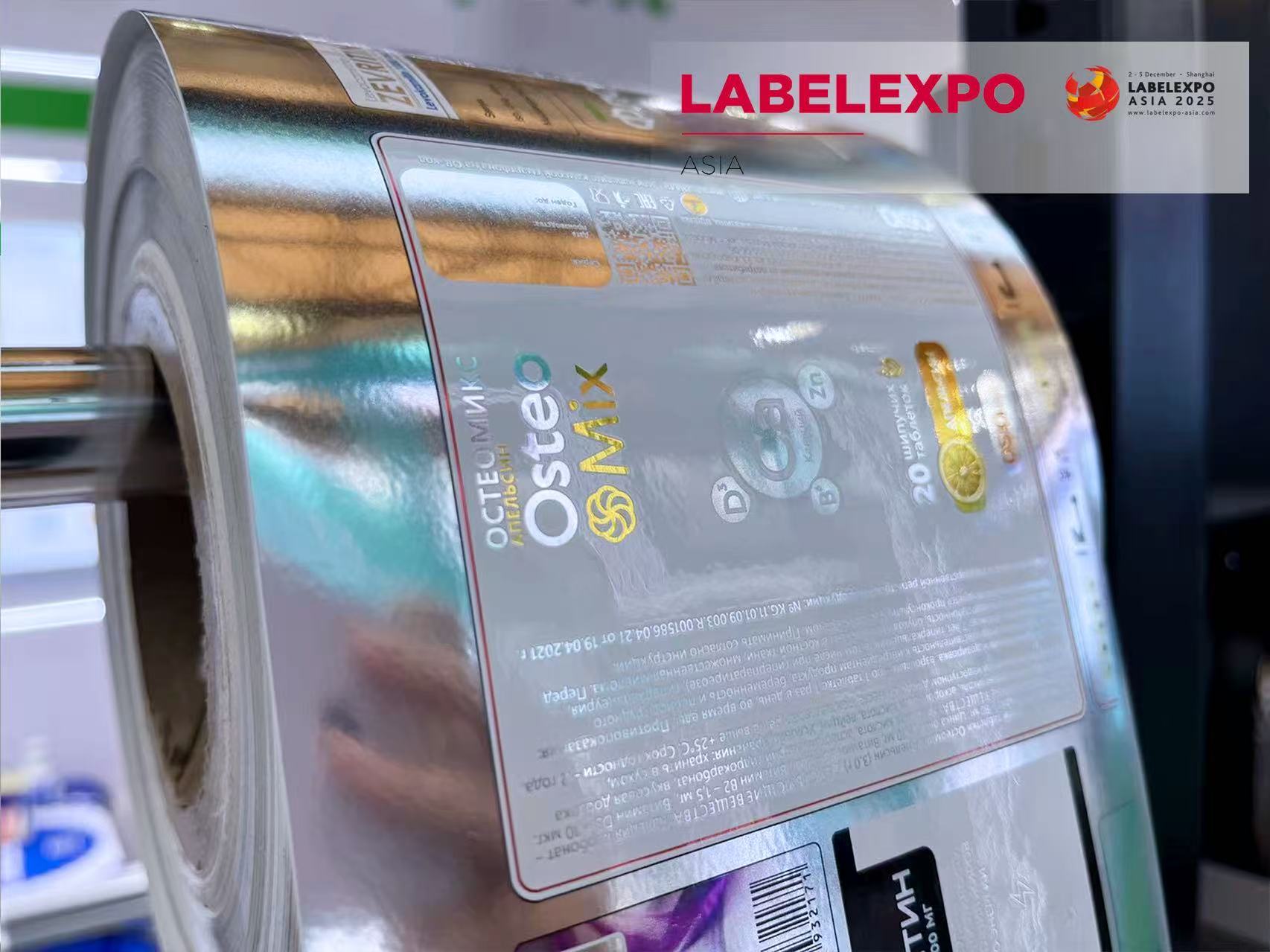
Spot varnish and full-coverage varnish are not competing quality levels — they are two different finishing functions. Spot varnish puts a UV coating only where the artwork needs attention: a logo, a brand name, a product mark, a decorative pattern. Full-coverage varnish runs the coating across the entire printed surface so the label gains a uniform finish and a consistent surface treatment. The practical question for a label printing factory or packaging converter is therefore not which finish is better, but which finish the label application requires — and whether the digital label printer on the shop floor can deliver it without adding a second, offline finishing step.
This guide is written for production managers, label converters and OEM buyers who have already completed equipment discovery and are now specifying a press. It compares spot varnish and full-coverage varnish as two finish strategies, uses the Grandoprint GR350S digital label printer as a grounded configuration example, and sets out the questions that decide the specification. No finish route is recommended over the other here: the answer depends on what the label has to do after it leaves the press.
What the Finish Decision Actually Decides
A finish decision is a production decision, and it resolves three things at once: how the label reads on the shelf, how the printed surface behaves through handling and storage, and how the press has to be configured to produce it. Buyers who treat varnish as a single optional line item on a quotation often discover the difference only after the first production run — when a brand owner asks for a gloss logo on a matte background, or when a serialized label starts scuffing on a sorting line.
Spot varnish: selective gloss for attention
Spot varnish applies a UV varnish to defined zones of a printed label. Everything outside those zones keeps its base appearance, so the finished label shows a deliberate contrast between coated and uncoated areas. Documented applications for this finish mode include premium labels, cosmetics labels, product logo labels, packaging labels, decorative labels and labels requiring a gloss or tactile effect. The function is directional: it tells the eye where to look.
Full-coverage varnish: uniform coating for protection and consistency
Full-coverage varnish runs the coating across the whole printed surface rather than to selected areas. The label reads as one continuous finish, and every part of the printed area receives the same treatment. This is the route associated with food labels, beverage labels, bottle labels, product information labels and QR code labels — labels that pass through filling, transport and retail handling and therefore benefit from a consistent surface treatment. The function is protective and unifying rather than directional.
Where finish specifications usually go wrong
- Treating varnish as a checkbox. The words “varnish optional” on a specification sheet say nothing about which coverage mode the machine can run, or at what production speed.
- Assuming coverage area is free. Coverage is a production variable. A finish that coats the entire web and a finish that coats a logo occupy very different positions on the same press, and the varnish module, curing step and throughput assumption should be checked against the coverage the work actually calls for.
- Assuming all substrates behave the same. Coated paper and film labels do not react identically to ink and varnish. Film substrates such as PE, PET, BOPP, PP and OPP generally need surface treatment and, where the substrate requires improved ink adhesion, an optional pre-coating step.
- Skipping the sample. Finish quality on a spec sheet and finish quality on the buyer's own material are two different things. The sample run is where the decision is actually validated.
Where Label Finishing Is Moving
Two structural facts shape how finishing is evaluated today. The global digital label printer market was valued at USD 3.097 billion in 2024 and is projected to reach USD 8.654 billion by 2035, growing at a CAGR of 9.79% between 2025 and 2035 (Market Research Future). Within that market, inkjet systems are estimated to hold a 46% share of the digital label printing market by system type in 2025 (Future Market Insights), and industrial label printers account for approximately 42.5% of the total label printer market (Dataintelo).
The consequence for finishing is direct. As more label volume shifts to digital inkjet, the finishing step shifts with it. UV inkjet platforms cure and finish inline, so the varnish decision is no longer a separate converting operation bolted on after printing — it belongs to the press specification, decided at the buying stage alongside print head, ink configuration and web width.
Compliance runs alongside that specification work. Units destined for the European Union must satisfy the RoHS Directive (2011/65/EU) and the EMC Directive (2014/30/EU) for CE marking. On the supplier side, quality management is documented rather than asserted: Nanjing Grando Digital Technology Co., Ltd., the company behind the Grandoprint brand, holds ISO 9001:2015 certification (Cert No. 19926Q00205R001) covering the R&D, production and sales of digital inkjet printing equipment, UV inkjet label presses and related accessories.
How the GR350S Handles Both Finish Routes
The Grandoprint GR350S is a roll-to-roll UV inkjet digital label press built by Nanjing Grando Digital Technology Co., Ltd., a source factory and R&D-driven manufacturer of digital inkjet printing equipment with dual production bases in Nanjing and Shanghai and a total factory area of more than 20,000 m². Its finish-relevant configuration is what makes it a useful reference point for this decision.
| Specification item | Documented configuration |
|---|---|
| Model | GR350S |
| Printing technology | Piezoelectric inkjet printing (UV digital inkjet label press) |
| Print head | Epson S3200-U1 / S3200-U3 |
| Ink configuration | CMYKW + Varnish Optional |
| Spot varnish enhancement | Supported |
| Pre-coating system | Optional |
| Post-coating varnish system | Optional |
| UV curing | Dual UV curing supported |
| Printing width | 110–350 mm |
| Acceptable media width | 120–360 mm |
| Printing speed | 20–100 m/min |
| Unwinding diameter | Max. 700 mm |
| Power supply / consumption | 380V / 10 kW |
| Dimensions | 2850(W) × 1400(D) × 2040(H) mm |
| Film material compatibility | Corona system supported; compatible film materials: PE, PET, BOPP, PP, OPP |
| Variable data | Variable data processing supported; direct database printing; no batch PDF conversion required |
| Web control | Label sensor for mark tracking; intelligent deviation correction |
| Quality control | Inline inspection via sensors/vision systems; CIS-based high-resolution real-time defect detection; 100% functional testing before delivery |
Read together, these rows explain the structural point behind the spot-versus-full-coverage decision on this platform. Varnish is configured as an optional ink channel (CMYKW + Varnish Optional). Spot varnish enhancement is listed as supported. The pre-coating system and the post-coating varnish system are each listed as optional modules rather than as fixed parts of the base machine. That means a converter can align the configuration with the finish logic the label work requires: targeted spot varnish enhancement for selective gloss, or the optional post-coating varnish system where an all-over coating is needed.
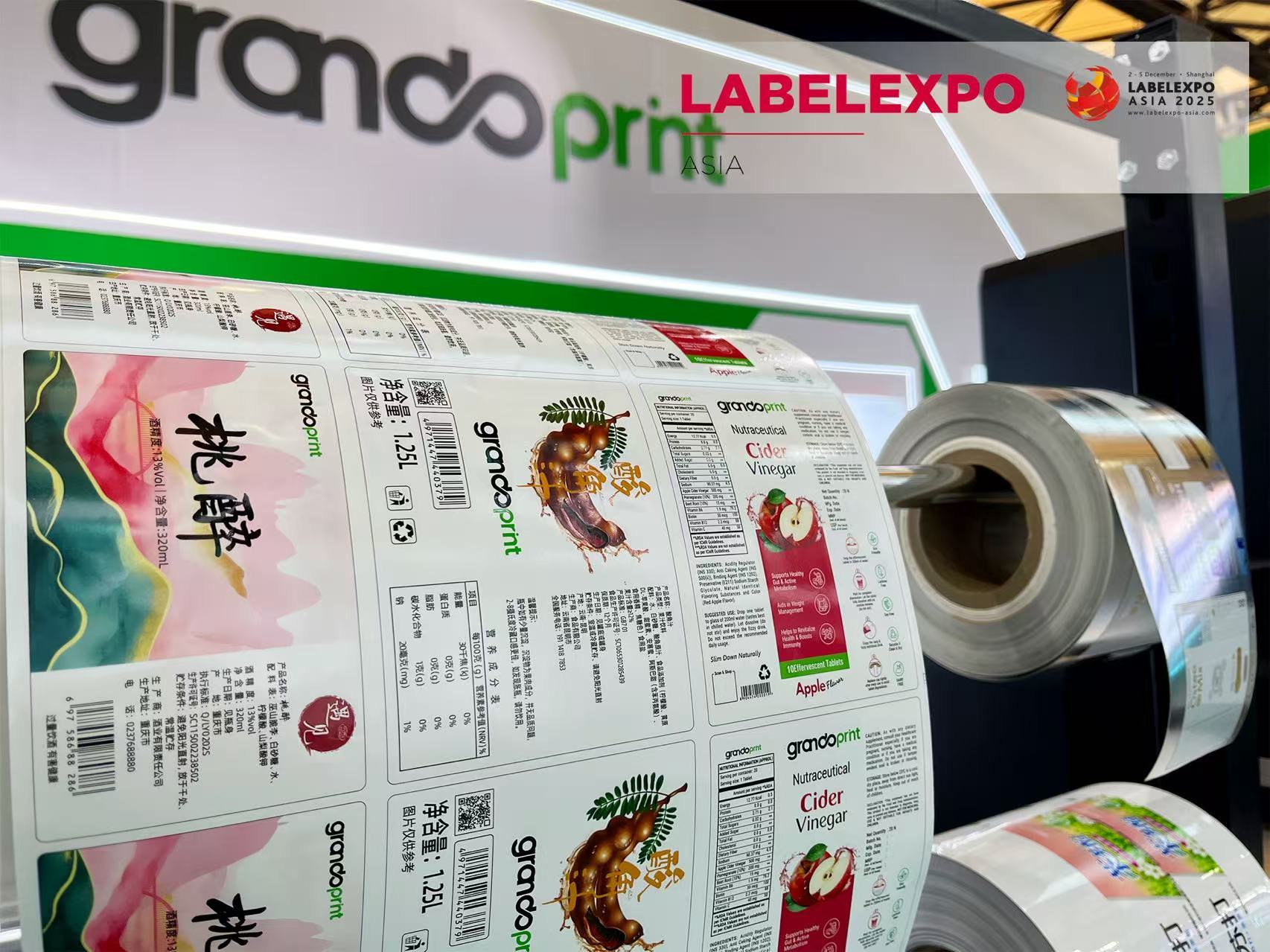
Throughput is the second half of the decision. The GR350S prints at 20–100 m/min with a printing width of 110–350 mm and an acceptable media width of 120–360 mm, and the unwinding diameter reaches a maximum of 700 mm. A line running continuous production at the upper end of that speed range needs the varnish route settled before the press is configured, not after it is installed, because the coating decision sits inside the production sequence rather than beside it.
Substrate handling belongs to the same decision. The platform supports a corona system and lists PE, PET, BOPP, PP and OPP as compatible film materials, with the pre-coating system available as an option for labels on difficult substrates requiring improved ink adhesion. For a converter running PET or PP label work, the finish route should be validated on the actual film rather than on coated paper alone, because the two substrates do not present the same surface to the ink and varnish.
Variable data capability also interacts with finishing. The GR350S supports variable data processing and direct database printing with no batch PDF conversion required, and it uses a label sensor for mark tracking with intelligent deviation correction. For serialized QR code labels, barcode labels and traceability labels, this means the same press route can carry both the data and the finish, rather than treating variable-data work as a separate production category.
Step-by-Step: How to Specify and Validate the Finish Route
The following sequence is designed for the evaluation-to-execution stage, where a buyer has a shortlist and now needs a defensible specification.
- Define what the finish must do. If the label's job is to direct attention to a brand mark, logo or decorative element, the requirement is targeted coverage. If the label's job is to present a single, consistent surface through filling, transport and retail handling, the requirement is all-over coverage. Write this down before comparing machines.
- Map the substrate first. Identify whether the job runs on coated paper, synthetic paper, or film such as PE, PET, BOPP, PP or OPP. Film work should be matched to a platform with a corona system and an optional pre-coating step where adhesion needs support.
- Quantify coverage as a production variable. Estimate how much of the average label area the finish will cover, and how many SKUs share that pattern. A catalogue of cosmetic labels with a small gloss logo and a beverage programme with full-surface coating are different workloads even though both are called “varnish”.
- Confirm how artwork and data are supplied. Targeted coverage requires the finish area to be defined as its own document layer. For variable data work, confirm that direct database printing is supported so that the finish decision does not force a batch conversion step.
- Run a sample on real material. Sample testing is part of the supplier's service scope, together with equipment selection, installation, training and long-term technical support. Review the gloss level, the edge definition of a spot zone, and the uniformity of an all-over coating on the buyer's own stock.
- Lock the machine configuration. OEM production services are available, and customization covers printhead configuration, ink configuration, voltage standard, software language, machine branding, spare parts package and selected functional modules. This is the step where optional finish modules become part of the order rather than a future retrofit.
- Confirm commercial terms, lead time and acceptance. The minimum order quantity is 1 unit. Typical production lead time is around 60 days after order confirmation, depending on machine configuration, order quantity, testing requirements and production schedule, with a monthly production capacity of 100 units. Delivery method is FOB, acceptance is by pre-shipment test, and payment terms are 30% deposit by T/T with the balance of 70% paid before delivery.
Use Cases: Matching Finish Coverage to the Label Application
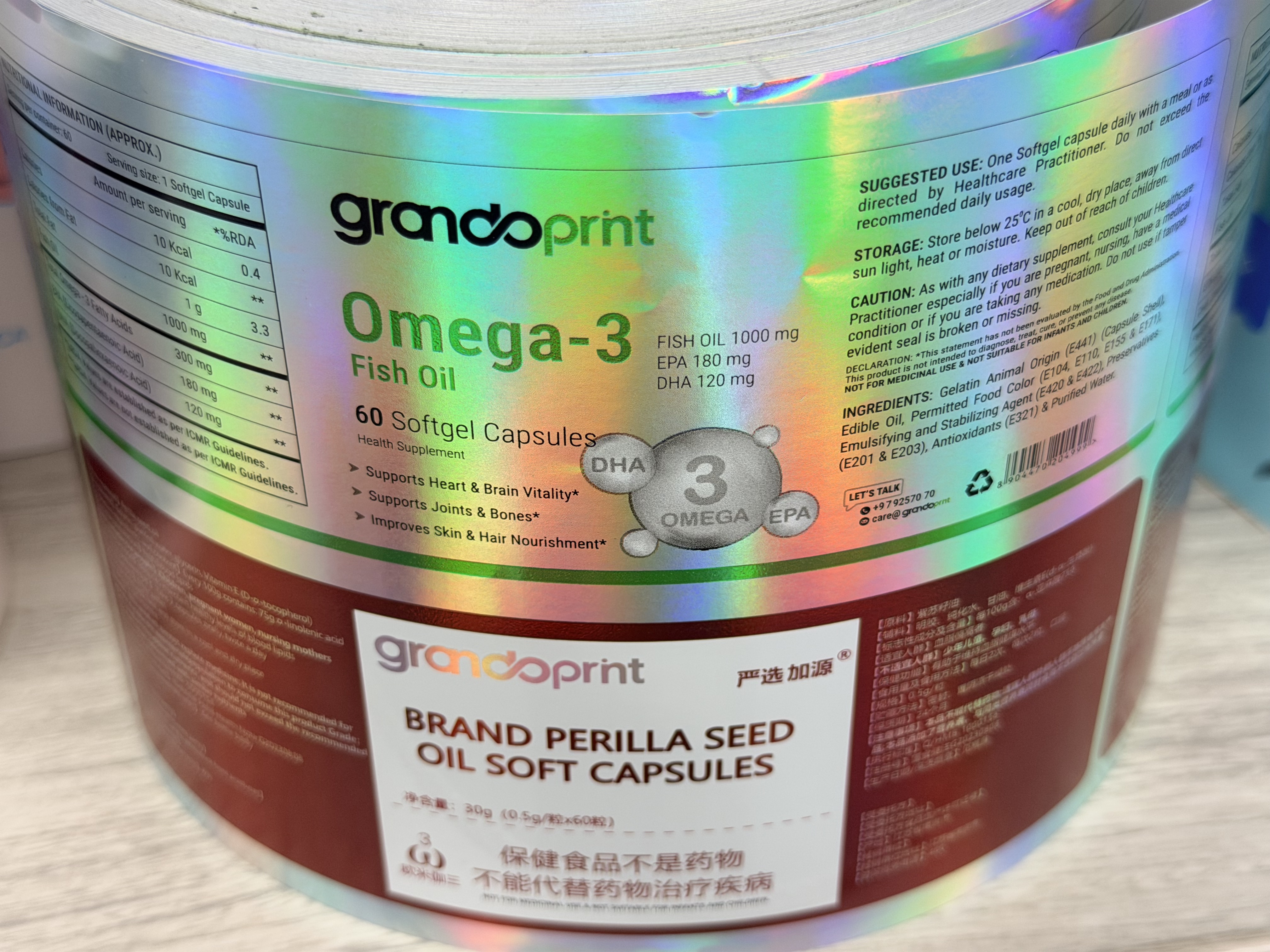
Cosmetics and skincare labels: targeted gloss as a brand signal
Cosmetics labels, skincare labels, shampoo labels, fragrance labels, daily chemical packaging labels and premium product labels are the classic home of selective gloss. Here a spot varnish zone lifts a logo or a product name off the surrounding artwork. On the GR350S this route is covered by the supported spot varnish enhancement capability, with CMYKW plus optional varnish and dual UV curing.
Food, beverage and bottle labels: uniform coverage for handling
Food labels, beverage labels, bottle labels, product information labels and short-run food packaging labels are usually assessed on consistency rather than on contrast. All-over coverage keeps the finished label reading as one surface across a print run. The GR350S supports UV digital inkjet printing at 20–100 m/min with a printing width of 110–350 mm and dual UV curing, with variable data processing available where batch codes or dates are printed on the same label.
Film and synthetic substrates: finish plus surface preparation
For film labels, cosmetic labels and beverage labels on flexible packaging, the finish decision cannot be separated from surface preparation. The platform supports a corona system, lists PE, PET, BOPP, PP and OPP as compatible film materials, and makes the pre-coating system optional for labels on difficult substrates requiring improved ink adhesion. Buyers evaluating a PET label digital printer or a PP label digital printer should treat corona, pre-coating and varnish as one specification block.
Serialized QR, barcode and logistics labels: coverage plus data
QR code labels, barcode labels, anti-counterfeit labels, serialized labels and product traceability labels combine two requirements: readable variable data and a printed surface that survives handling. The GR350S supports variable data processing and direct database printing with no batch PDF conversion required, and uses a label sensor for mark tracking — so a converter can decide the finish route for a logistics or traceability label without changing the data workflow.
Short-run and multi-SKU packaging: finish flexibility as a scheduling asset
Packaging converters, food packaging, cosmetics packaging, beverage labels, daily chemical labels and multi-SKU product packaging labels run in short, frequently changing batches. In one documented OEM case covering Brazil and Italy, 20 units were installed for label printing and packaging production and ran for a year with stable operation and high printing consistency; the deployment supports variable data printing and adaptability to multi-SKU orders, and reduced production setup time by 30%. For converters in that operating pattern, the value of a configurable finish route is schedule flexibility: the same press covers both a gloss-accented branding label and a fully coated label without a separate finishing line.
Comparison Table: Spot Varnish vs. Full-Coverage Varnish
| Decision dimension | Spot varnish (targeted) | Full-coverage varnish (all-over) |
|---|---|---|
| Coating area | Selected zones of the printed artwork only | The entire printed surface |
| Primary function | Directs attention; creates gloss-to-matte contrast and a tactile effect | Delivers a uniform finish and a consistent surface treatment across the label |
| Documented application fit | Premium labels, cosmetics labels, product logo labels, packaging labels, decorative labels | Food labels, beverage labels, bottle labels, product information labels, QR code labels |
| Related GR350S configuration | Spot varnish enhancement supported; ink CMYKW + Varnish Optional | Post-coating varnish system available as an optional module; ink CMYKW + Varnish Optional |
| Substrate preparation | Validate on the real label stock; corona system supported and pre-coating optional for PE, PET, BOPP, PP, OPP | Same substrate validation applies; pre-coating optional where improved ink adhesion is required |
| Curing | Dual UV curing supported | Dual UV curing supported |
| Throughput context | Printing speed 20–100 m/min; printing width 110–350 mm | Printing speed 20–100 m/min; printing width 110–350 mm |
| Buyer verification step | Sample run on production material; pre-shipment test as acceptance method | Sample run on production material; pre-shipment test as acceptance method |
Both columns describe the same press platform, the same ink configuration and the same curing arrangement. The table compares finish strategies, not equipment quality, and no recommendation is implied for either route. Final module selection should be confirmed against the quotation and the sample test, since the post-coating varnish system and the pre-coating system are specified as options.
Frequently Asked Questions
1. Which certifications and IP documents should a buyer verify on a varnish-capable digital label printer?
Verification should cover both market compliance and design IP. For the European Union, digital label printers must comply with the RoHS Directive (2011/65/EU) and the EMC Directive (2014/30/EU) for CE marking. Quality management should be documented: Nanjing Grando Digital Technology Co., Ltd. holds ISO 9001:2015 certification (Cert No. 19926Q00205R001), covering the R&D, production and sales of digital inkjet printing equipment, UV inkjet label presses and related accessories. Design IP on the GR350S platform includes a utility model patent for a printer with anti-collision function (No. ZL 2023 2 1184513.3), a utility model patent for a paper roll shaft for industrial printers (No. ZL 2024 2 1965691.4), a direct inkjet printer patent (No. ZL 2023 2 1391352.5), a UV printer positioning device patent (No. ZL 2023 2 0352561.2), and software copyrights for the High-Precision Industrial Printing Inkjet Control System V1.0 (Reg No. 2025SR0599079) and the Multi-Point Temperature Control System for Digital Printers V1.0 (Reg No. 2025SR0611438).
2. Can one digital label printer run both spot varnish and full-coverage varnish?
Yes, when the platform is specified for it. On the GR350S, ink is configured as CMYKW + Varnish Optional, spot varnish enhancement is supported, and the post-coating varnish system is an optional module rather than a fixed part of the base machine. Because it is an option, the configuration can be aligned to the finish route the label work requires instead of forcing a single coating mode. The press runs at 20–100 m/min with a printing width of 110–350 mm, an acceptable media width of 120–360 mm, dual UV curing, and an optional pre-coating system for substrates that need improved ink adhesion.
3. What are the commercial terms — MOQ, payment and delivery basis?
The minimum order quantity is 1 unit. Delivery method is FOB, acceptance is by pre-shipment test, and payment terms are 30% deposit by T/T with the balance of 70% paid before delivery. Because finish modules such as the post-coating varnish system and the pre-coating system are specified as options, commercial terms should be confirmed against the final configuration rather than against a base-machine figure.
4. Can we test the finish on our own label material before ordering?
Sample testing is part of the supplier's stated service scope, alongside equipment selection, installation, training and long-term technical support. Testing on the buyer's own stock matters because finish performance changes with the substrate: film materials such as PE, PET, BOPP, PP and OPP may need the corona system and the optional pre-coating step where the substrate requires improved ink adhesion, while coated paper behaves differently again. The pre-shipment test then serves as the formal acceptance method before delivery.
5. What is the lead time and production capacity for a varnish-configured machine?
Typical production lead time is around 60 days after order confirmation, depending on machine configuration, order quantity, testing requirements and production schedule, and monthly production capacity is 100 units with a minimum order quantity of 1 unit. After delivery, the service scope covers warranty (usually 1 year, subject to contract terms), installation and commissioning, operator training, technical support, remote monitoring, spare parts supply, localized service, and upgrade services such as software version upgrades and hardware module expansion. Buyers who want to move from evaluation to execution can start with the downloadable product catalogue and a sample test request.
Next Step: Turn the Finish Decision into a Specification
Download the full Grandoprint digital printing equipment catalogue for the complete GR350S configuration list, or request a sample test on your own label material to compare targeted and all-over finishing under production conditions.
Contact: WhatsApp +8613805155194 | Email juliawu@grando-dg.com | Website www.grando-dg.com | Technical articles: blog.grando-dg.com
Conclusion
Spot varnish and full-coverage varnish answer two different questions. Targeted coverage asks the eye to stop on a specific element; all-over coverage asks the surface to behave the same everywhere. Neither is a higher grade of finishing, and on a platform like the GR350S the two routes sit in the same specification block: spot varnish enhancement is supported, the post-coating varnish system is optional, the pre-coating system is optional for difficult substrates, and dual UV curing supports the coating step at printing speeds of 20–100 m/min.
For label printing factories and packaging converters at the evaluation-to-execution stage, the workable sequence is to define the finish function, map the substrate, quantify coverage, confirm the data workflow, validate on a sample, then lock the optional modules, lead time and acceptance terms into the order. That sequence produces a specification that matches the label, rather than a quotation that lists varnish without saying what it will do.
Have Questions or Need More Details?
Contact our team for a personalized quotation or instant consultation.
Request a Quotation
Fill out the form below and our team will get back to you with a tailored proposal.
WhatsApp Direct Chat
Prefer to chat in real-time? Message us on WhatsApp for instant assistance & quick answers.
- Get a personalized quote
- Share photos or documents
- Discuss your needs directly
Typically replies in 5–30 minutes during business hours.