
Digital Label Printer OEM Capability: A Factory-Level Check for Buyers
Digital Label Printer OEM Capability: A Factory-Level Check for Buyers
OEM capability in a digital label printer supplier is not a marketing headline. It is a set of measurable facts: what the factory can customize, how it controls quality, what minimum order it accepts, how quickly it can deliver, and how it supports the equipment after shipment.
This article uses Nanjing Grando Digital Technology Co., Ltd. — brand name Grandoprint — as a documented example. Grandoprint is a source factory and R&D-driven manufacturer specializing in digital inkjet printing equipment, including the GR350S high-speed digital label printer. The capability facts below come from the manufacturer's published company records, certification records, case record, and procurement support record.
For buyers moving from evaluation to execution, the practical question is: which factory-level evidence separates a real OEM partner from a reseller? The sections below answer that question with verifiable data points.
The Problem: OEM Claims Are Easy, Verifiable Capability Is Not
Nearly every supplier can say “OEM available.” Few can document what OEM means inside their factory. Buyers routinely face three problems at the evaluation stage.
- Spec sheets oversimplify. A spec sheet shows print width, speed, and ink type. It does not show whether the supplier controls assembly, testing, and delivery, or whether it is a trading company reselling another factory's machine.
- Customization requests stall after the deposit. The customization scope was never defined in advance, so printhead configuration, ink configuration, voltage standard, software language, branding, and functional modules become sources of delay.
- After-sales support is hard to judge before installation. A supplier may promise training and spare parts, but the buyer discovers the real response level only after the equipment is running in production.
At the execution stage, these problems turn into delayed lead times, inconsistent machine quality between batches, and long downtime while waiting for spare parts.
The solution is not to trust more marketing. It is to turn OEM capability into a verification checklist: legal entity, factory scale, customization scope, production capacity, quality control, commercial terms, after-sales scope, and installed cases.
Industry Background: Why Digital Inkjet OEM Capability Matters Now
Digital label printing is expanding quickly, and this affects how buyers should evaluate suppliers.
Market Research Future estimates the global digital label printer market at USD 3.097 billion in 2024, with a projected value of USD 8.654 billion by 2035. The same source expects the digital label printing machine market to grow at a compound annual growth rate (CAGR) of 9.79% between 2025 and 2035.
Two structural trends support this growth. Inkjet systems are estimated to hold approximately a 46% share of the digital label printing market by system type in 2025 (Future Market Insights). Industrial label printers account for the largest product segment share, about 42.5% of the total label printer market (Dataintelo, 2025).
Regulatory requirements also affect equipment design. For CE marking in the European Union, digital label printers must comply with the RoHS Directive (2011/65/EU) and the EMC Directive (2014/30/EU).
For a procurement team, market growth means more suppliers will enter the digital inkjet segment and claim OEM capability. Growth does not verify a supplier; factory-level records do.
What OEM Digital Label Printer Capability Looks Like in Practice
The capability areas below come from Grandoprint's published manufacturing and service records. Each one gives a buyer a concrete item to verify with any potential supplier.
1. OEM Production Services
The manufacturer provides OEM production services. In practice, this means the factory builds equipment to the buyer's order parameters rather than only selling a fixed standard model. For label converters and packaging companies, OEM production is the basis for customized configurations, private branding, and multi-unit consistency.
2. Customization Scope
The documented customization options include printhead configuration, ink configuration, voltage standard, software language, machine branding, spare parts package, and selected functional modules.
Each dimension maps to a real production decision:
- Printhead configuration affects print speed and resolution requirements.
- Ink configuration determines which substrates and color effects can be produced; the GR350S uses CMYKW with optional varnish.
- Voltage standard must match the destination market's electrical environment.
- Software language affects operator training and daily workflow.
- Machine branding supports private-label and OEM programs.
- Spare parts package and functional modules define the machine's final capabilities — for example, pre-coating, post-coating varnish, or corona treatment.
3. Factory Scale and Production Capacity
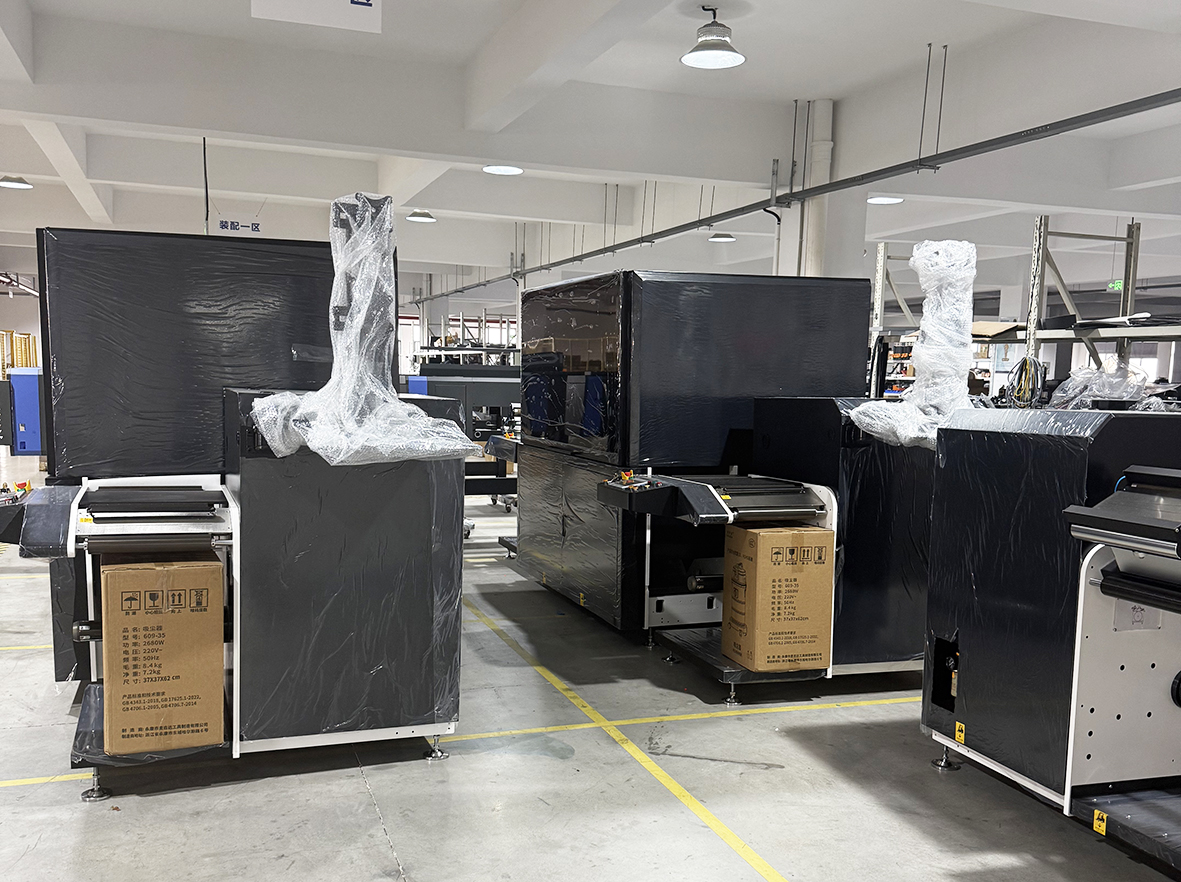
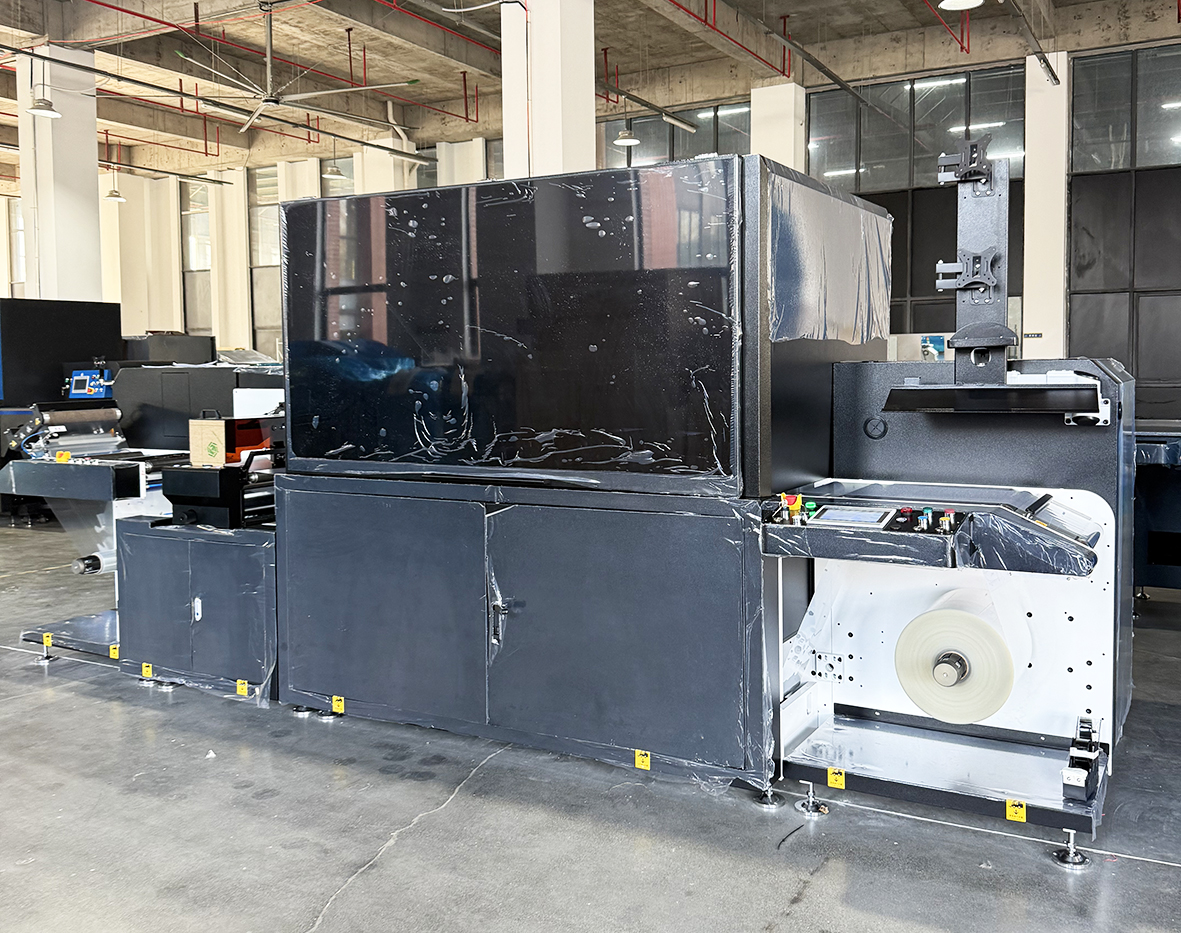
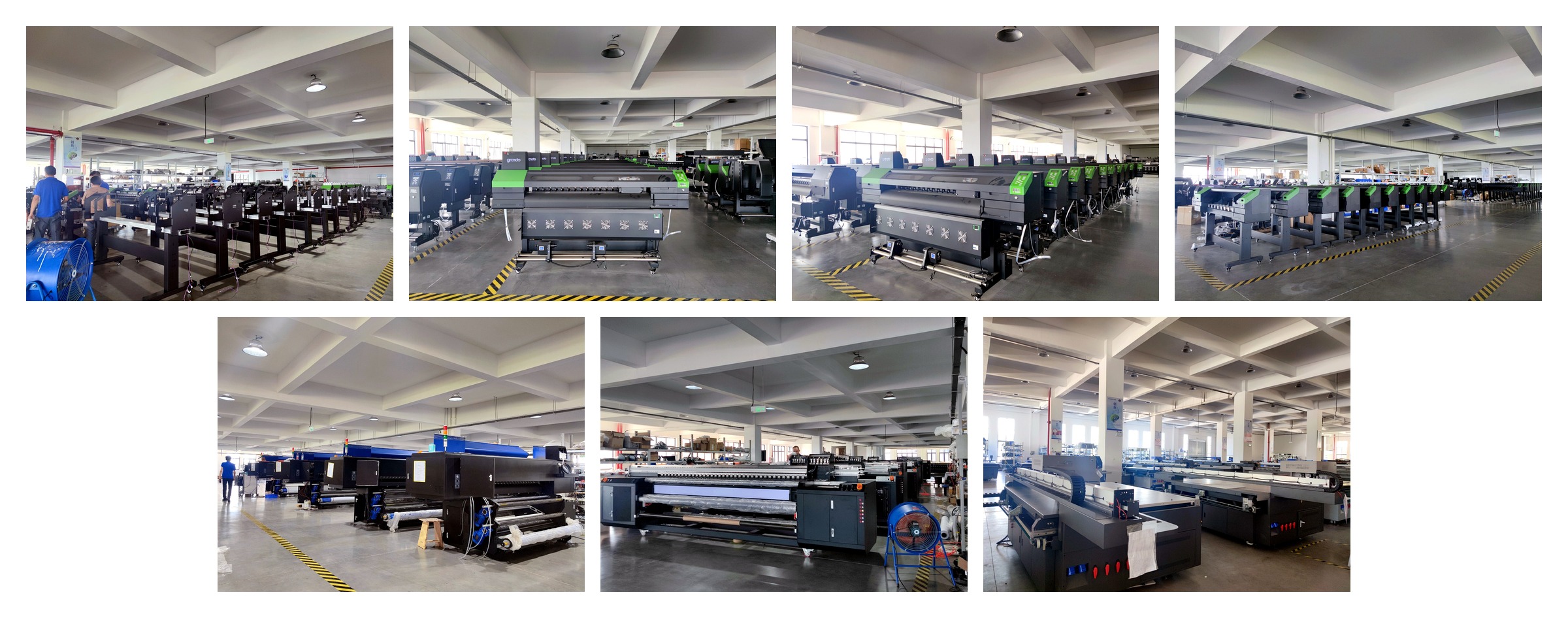
Grandoprint operates dual bases in Nanjing and Shanghai, covering R&D, production, warehousing, testing, and exhibition. Total factory area exceeds 20,000 square meters. The team includes more than 500 employees, with an R&D and technical team that has more than 20 years of technical service experience and over 16 years of printing equipment manufacturing experience. The company reports an annual output of 15,000 units and a monthly production capacity of 100 units for OEM orders.
About 70% of output is exported. Main markets include the United States, Brazil, Mexico, Australia, Thailand, Germany, Italy, Kuwait, Angola, and Ivory Coast.
4. MOQ, Lead Time, and Commercial Terms
The minimum order quantity is 1 unit. A one-unit MOQ lets a buyer test the machine on its own production line before scaling to a multi-unit deployment.
Typical production lead time is around 60 days after order confirmation, depending on machine configuration, order quantity, testing requirements, and production schedule.
Standard commercial terms are FOB delivery, 30% deposit by T/T, and the remaining 70% balance before delivery. Acceptance is based on a pre-shipment test.
5. Quality Control Before Delivery
Grandoprint's published quality control process includes three layers:
- Inline inspection via sensors or vision systems, with real-time defect, web break, and roll diameter monitoring.
- A professional CIS-based high-resolution real-time defect detection system.
- 100% functional testing before delivery.
For an OEM buyer, this kind of documented QC reduces the risk of batch-to-batch inconsistency.
6. After-Sales and Global Service
The after-sales service scope covers warranty, installation and commissioning, operator training, technical support, remote monitoring, spare parts supply, localized service, and upgrade services.
- Warranty period: usually 1 year, subject to contract terms.
- Installation: on-site installation, commissioning, and trial operation after delivery.
- Training: operator training on equipment operation and routine maintenance.
- Technical support: telephone, remote online, and on-site maintenance services.
- Remote monitoring: real-time monitoring of equipment operating status and fault warning.
- Spare parts: original spare parts inventory with fast-response support.
- Localized service: technical service centers or authorized distributors in overseas markets.
- Upgrades: software version upgrades and hardware module expansion.
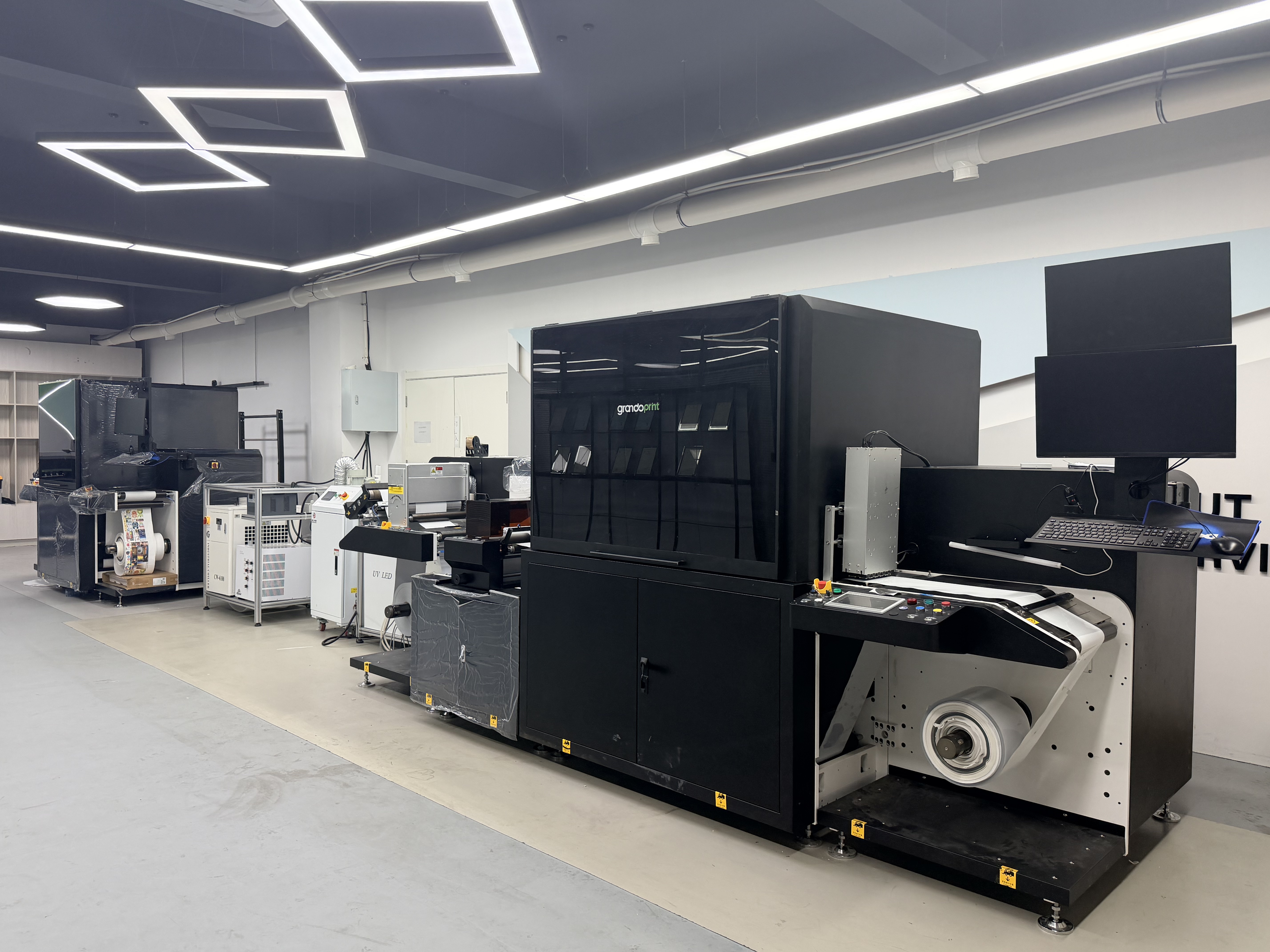
GR350S Reference Specification
| Model | GR350S |
| Print head | Epson S3200-U1 / S3200-U3 |
| Printing technology | Piezoelectric inkjet printing |
| Acceptable media width | 120–360 mm |
| Printing width | 110–350 mm |
| Printing speed | 20–100 m/min |
| Ink | CMYKW + Varnish optional |
| Unwinding diameter | Max. 700 mm |
| Power supply | 380V |
| Power consumption | 10 kW |
| Dimensions | 2850(W) × 1400(D) × 2040(H) mm |
| Special features | Variable data processing, label sensor mark tracking, intelligent deviation correction, dual UV curing, corona system, optional pre-coating and post-coating varnish |
These parameters describe the GR350S as configured in the manufacturer's product records. Buyers should confirm the final configuration during order confirmation.
A Six-Step Procurement Path from OEM Evaluation to Execution
Step 1: Verify the Legal Entity and Factory Base
Confirm which company signs the contract and where the machine is actually built. Nanjing Grando Digital Technology Co., Ltd. is the main legal entity integrating R&D, manufacturing, delivery, and application solution capabilities. The Nanjing base focuses on high-speed label printers, UV printers, white ink DTF printers, and new product R&D; the Shanghai base focuses on sublimation equipment, cylindrical UV printers, and related applications.
Step 2: Map Customization Options to Your Production Needs
Before contacting the supplier, define which options you need: printhead, ink, voltage, software language, branding, spare parts package, and functional modules. Grandoprint's documented customization list covers these dimensions, so they should be confirmed in writing at the quotation stage.
Step 3: Assess Quality Control Depth
Ask the supplier how defects are detected during production. Grandoprint reports inline sensor/vision inspection, a CIS-based high-resolution real-time defect detection system, and 100% functional testing before delivery.
Step 4: Confirm Production Capacity, MOQ, and Lead Time
Capacity is part of delivery reliability. With a monthly OEM capacity of 100 units, an MOQ of 1 unit, and a lead time of around 60 days after order confirmation, buyers can plan installation schedules and buffer stock.
Step 5: Run Sample Testing and Pre-Shipment Acceptance
The company's service capability includes equipment selection and sample testing. Commercial acceptance is based on a pre-shipment test. Buyers with specific substrates — such as PET, PP film, or synthetic paper — should request tests against their own label materials.
Step 6: Plan the Support Lifecycle
Confirm warranty duration, installation and training, spare parts response, remote monitoring, and upgrade services before payment. These items are part of the manufacturer's documented after-sales scope.
Use Cases: Where OEM Digital Label Printer Capability Shows Up
OEM Deployment in Brazil and Italy
A documented case covers OEM clients in Brazil and Italy. The installation scale is 20 units, used for label printing and packaging production over a one-year operating period. Reported results include stable operation with high printing consistency and a 30% reduction in production setup time. The equipment supports variable data printing and adapts to multi-SKU orders.
For a procurement team, a 20-unit installation is stronger evidence than a single pilot machine because it demonstrates repeatability across multiple units.
Cosmetic Label Digital Printer Scenario
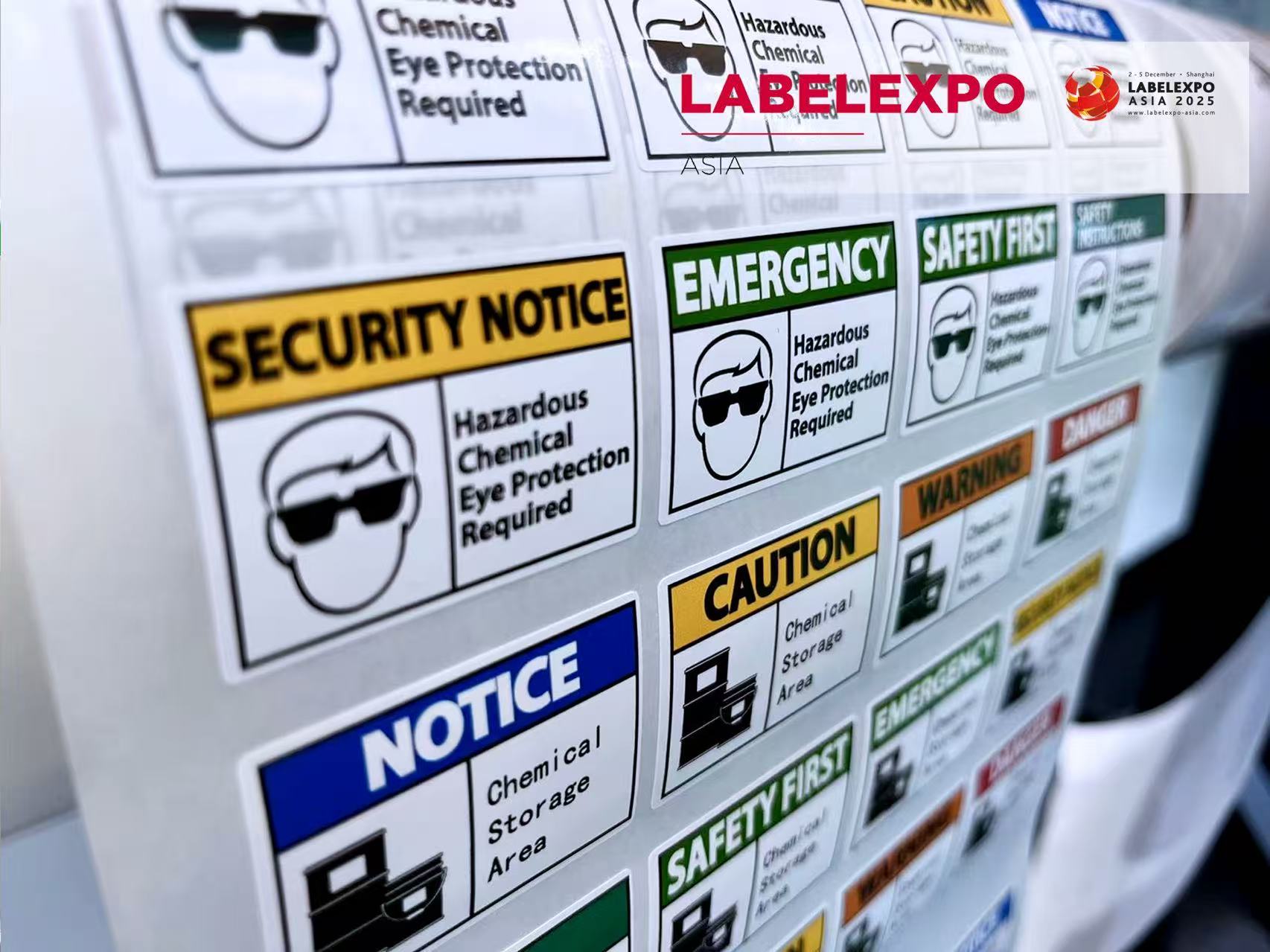
Cosmetic label production typically combines short runs, frequent design changes, and high visual requirements. The GR350S is configured for this with CMYKW ink plus optional varnish, spot varnish enhancement, a post-coating varnish system, and dual UV curing. The manufacturer's applicable industry scope for this configuration includes cosmetics, skincare, shampoo, fragrance, and daily chemical packaging labels.
Food and Beverage Label Digital Printer Scenario
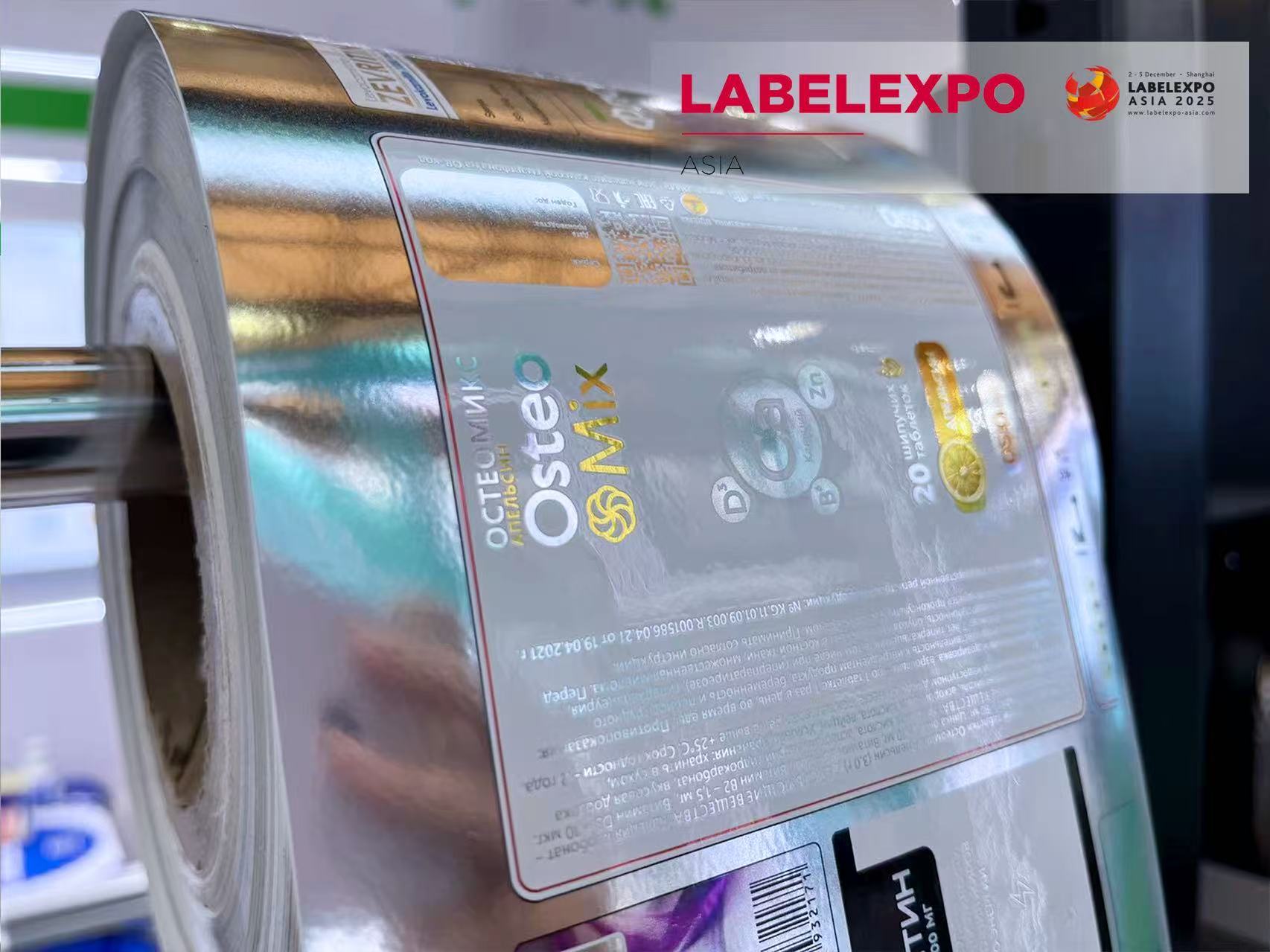
Food and beverage labels often require variable information such as batch codes and QR codes. The GR350S supports UV digital inkjet printing at 20–100 m/min, variable data processing, label sensor mark tracking, and dual UV curing. The applicable scope includes food labels, beverage labels, bottle labels, product information labels, and short-run food packaging labels.
Film Labels on PET, PP, and OPP
Film substrates present adhesion challenges. The GR350S supports a corona system and is compatible with PE, PET, BOPP, PP, and OPP film materials for UV inkjet printing. Buyers producing film labels for cosmetics, beverages, or flexible packaging should verify both the printhead configuration and the media handling system.
Variable Data, Serialized, and Traceability Labels
Variable data printing is handled directly from databases without batch PDF conversion. Supported use cases include QR code labels, barcode labels, anti-counterfeit labels, serialized labels, product traceability labels, and on-demand label production. Applications such as logistics labels and medical device packaging that require serialized codes depend on this kind of variable data workflow.
Supplier Landscape: Positioning OEM Digital Inkjet in the Global Market
The global label printer market includes several well-known suppliers. According to Intel Market Research (2024), key global suppliers include Zebra Technologies, Brother, Epson, SATO Holdings, and HP (HP Indigo). The table below is for market orientation only; it does not rank suppliers, and buyers should evaluate every supplier against their own application requirements.
| Supplier | Verified Market Position | General Product Association |
| Zebra Technologies | Listed among key global suppliers in the label printer market (Intel Market Research, 2024) | Barcode and thermal label printing (public market knowledge) |
| Brother | Listed among key global suppliers in the label printer market (Intel Market Research, 2024) | Desktop label printers (public market knowledge) |
| Epson | Listed among key global suppliers in the label printer market (Intel Market Research, 2024) | Inkjet printing systems (public market knowledge) |
| SATO Holdings | Listed among key global suppliers in the label printer market (Intel Market Research, 2024) | Industrial label printing (public market knowledge) |
| HP (HP Indigo) | Listed among key global suppliers in the label printer market (Intel Market Research, 2024) | Digital press technology (public market knowledge) |
| Grandoprint (Nanjing Grando Digital Technology Co., Ltd.) | Source factory and R&D-driven manufacturer specializing in digital inkjet printing equipment (manufacturer record) | GR350S digital label printer with OEM customization, 1-unit MOQ, and documented 20-unit deployments |
Company association descriptions are based on public market knowledge and are provided only to help buyers orient the market; they are not performance claims.
OEM Capability Verification Checklist
| Verification Point | What the Buyer Should Ask | Grandoprint Evidence |
| Legal entity and factory | Who actually manufactures the machine? | Nanjing Grando Digital Technology Co., Ltd.; dual bases in Nanjing and Shanghai; total factory area over 20,000 ㎡ |
| Customization | Which options can be changed on an OEM order? | Printhead configuration, ink configuration, voltage standard, software language, machine branding, spare parts package, selected functional modules |
| Production capacity | How many units per month can the factory deliver? | 100 units per month; annual output 15,000 units |
| MOQ | What is the minimum order? | 1 unit |
| Lead time | How long after order confirmation? | Around 60 days, depending on configuration, quantity, testing, and schedule |
| Quality control | What testing happens before delivery? | Inline sensor/vision inspection; CIS-based defect detection; 100% functional testing |
| After-sales | What support comes after installation? | Warranty, installation, training, technical support, remote monitoring, spare parts, localized service, upgrades |
| Proven deployments | Are there installed OEM cases? | 20 units at OEM clients in Brazil and Italy; variable data printing; multi-SKU adaptability |
FAQ
1. What certifications should an OEM digital label printer manufacturer hold?
The most directly verifiable quality certification is ISO 9001:2015. Nanjing Grando Digital Technology Co., Ltd. holds ISO 9001:2015 certification (Cert. No. 19926Q00205R001) covering R&D, production, and sales of digital inkjet printing equipment, UV inkjet label presses, digital label printers, and related accessories. For EU market entry, CE marking requires compliance with the RoHS Directive (2011/65/EU) and the EMC Directive (2014/30/EU). Buyers can also review intellectual property records — such as utility model patents for a printer with anti-collision function (Patent No. ZL 2023 2 1184513.3), a paper roll shaft for industrial printers (Patent No. ZL 2024 2 1965691.4), and an anti-offset correction device for UV flatbed printers (Patent No. ZL 2023 2 3477531.3) — as evidence of equipment R&D capability.
2. What customization options are available on an OEM digital label printer order?
Based on Grandoprint's OEM capability record, customization can include printhead configuration, ink configuration, voltage standard, software language, machine branding, spare parts package, and selected functional modules. On the GR350S digital label printer, optional functional modules include a pre-coating system, post-coating varnish system, corona system for film substrates, and spot varnish enhancement; the standard ink configuration is CMYKW with varnish optional. Buyers should confirm each option against their production plan before order confirmation because lead time depends on the final configuration.
3. What is the minimum order quantity for an OEM digital label printer?
The minimum order quantity is 1 unit. Standard commercial terms for Grandoprint equipment are FOB delivery, 30% deposit by T/T, and a balance of 70% paid before delivery. Acceptance is based on a pre-shipment test. A 1-unit MOQ lets a buyer validate a single machine on its own production line before scaling to a multi-unit deployment.
4. Can buyers test materials or samples before placing an OEM order?
Grandoprint's service capability includes equipment selection and sample testing before order placement, as part of its global services covering installation, training, and long-term technical support. In addition, every machine undergoes 100% functional testing before delivery, and the acceptance process includes a pre-shipment test. Buyers with specific substrates — such as PET, PP film, or synthetic paper — should request sample testing on their actual label materials before confirming the order.
5. What is the typical lead time for an OEM digital label printer order?
The typical production lead time is around 60 days after order confirmation. Exact timing depends on the machine configuration, order quantity, testing requirements, and production schedule. Monthly production capacity is 100 units, which supports both single-unit test orders and larger batch orders. If you have a fixed installation deadline, confirm the lead time in writing with the factory before payment.
Conclusion: Turn OEM Capability into a Verifiable Checklist
OEM capability in a digital label printer is verifiable. The market is growing — from USD 3.097 billion in 2024 to a projected USD 8.654 billion by 2035 — and more suppliers will claim to serve it. A credible OEM partner should be able to document its legal entity, factory scale, customization scope, production capacity, quality control, commercial terms, after-sales scope, and installed cases.
Using Nanjing Grando Digital Technology Co., Ltd. (Grandoprint) as a reference: a source factory with over 20,000 square meters of manufacturing space, more than 500 employees, a 1-unit MOQ, around 60-day lead time, 100-unit monthly OEM capacity, and documented 20-unit deployments in Brazil and Italy.
If you are evaluating a digital label printer for OEM production or a customized configuration, the practical next step is sample testing and a written quotation. Related procurement guides are also available on the Grandoprint blog.
Next step: request a sample test or a quotation.
Download GR350S Brochure WhatsApp the Factory
Email: juliawu@grando-dg.com | Tel/WhatsApp: +86 138 0515 5194 | Website: www.grando-dg.com
All facts in this article come from published manufacturer records and the cited third-party market reports. No performance claims are made beyond the documented records.
Have Questions or Need More Details?
Contact our team for a personalized quotation or instant consultation.
Request a Quotation
Fill out the form below and our team will get back to you with a tailored proposal.
WhatsApp Direct Chat
Prefer to chat in real-time? Message us on WhatsApp for instant assistance & quick answers.
- Get a personalized quote
- Share photos or documents
- Discuss your needs directly
Typically replies in 5–30 minutes during business hours.