
Digital Label Printing vs. Traditional Flexo: A Cost and Capability Comparison for Industrial Buyers
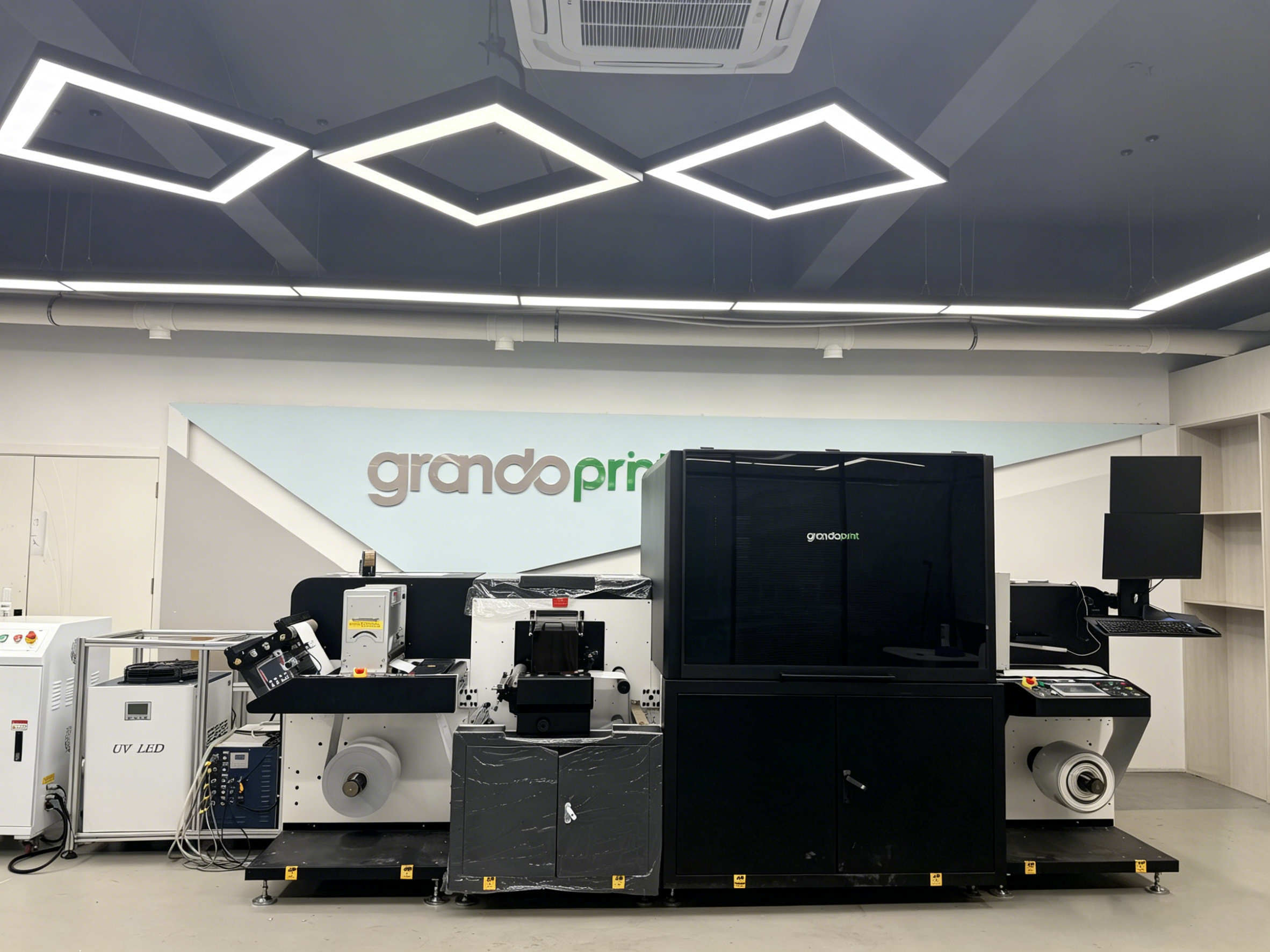
GR350S roll-to-roll UV inkjet digital label printer — a plate-free alternative for short-run and variable-data label production.
Digital Label Printer vs. Traditional Flexo: A Decision Guide for Industrial Buyers
For industrial buyers evaluating a digital label printer vs. traditional flexo or letterpress, the decision comes down to order volume, job-change frequency, variable-data requirements, and total production cost. Digital label printing removes plate-making and setup waste, but traditional flexo can still be economical for long, stable runs. This guide gives procurement teams a structured comparison based on measurable production factors.
Industrial label purchasing decisions are rarely about print quality alone. Buyers evaluating packaging, cosmetic, food, medical, and logistics labeling requirements must compare equipment classes on cost structure, flexibility, maintenance, compliance, and production scalability. This article focuses on the digital label printer vs. traditional flexo/letterpress decision, with product-specific evidence from the Grandoprint GR350S digital label press.
Why This Comparison Matters in 2026
The global digital label printer market was valued at USD 3.097 billion in 2024 and is projected to reach USD 8.654 billion by 2035, according to Market Research Future. The digital label printing machine market is expected to grow at a CAGR of 9.79% from 2025 to 2035. Inkjet systems are estimated to hold a 46% share of the digital label printing market by system type in 2025, according to Future Market Insights.
Industrial buyers are increasingly moving part of their label production to digital because of shorter run lengths, faster product launches, and compliance-driven variable data. However, moving an entire production line from flexo to digital without understanding the cost crossover and operational trade-offs can create inefficiencies. This article provides a practical framework for the purchase decision.
Technology Comparison: Inkjet Digital vs. Flexo vs. Letterpress
Traditional flexo and letterpress label printing use physical plates to transfer ink. Every new label design requires a new plate, setup time, and test waste. Digital label printing eliminates the plate-making step altogether.
The Grandoprint GR350S uses roll-to-roll UV inkjet digital printing without traditional plate-making. This core difference enables support for short-run, multi-SKU, variable-data, and customized label orders. For label converters running frequent artwork changes, this removes the pre-press bottleneck that delays delivery.
| Comparison Point | GR350S Digital Label Printer | Traditional Flexo / Letterpress |
|---|---|---|
| Plate-making | Not required; direct digital printing | Required per design; adds cost and lead time |
| Best-fit order profile | Short-run, multi-SKU, variable-data, customized label orders | Long-run, stable artwork, high-volume repeated jobs |
| Setup & changeover | Reduced job changeover time; supports on-demand production | Setup required for each new plate; less flexible for frequent changes |
| Variable data (QR, barcode, serial) | Supported natively in continuous runs | Requires additional processes or dedicated equipment |
| Cost advantage | Reduces plate-making cost and setup waste for small-batch / variable-data orders | Can be more economical for long-run repeated orders with stable artwork |
| Energy / efficiency | Higher efficiency for mixed jobs; lower energy per label for short-run jobs | Efficient for long continuous runs; higher setup energy for short jobs |
| Flexibility | Handles multiple SKUs in one continuous run | Requires press stops and plate changes between SKUs |
The cost and efficiency difference between digital and flexo depends on order quantity, label size, material type, and job change frequency. Digital label printing reduces plate-making steps and setup time for small-batch and frequently changing orders. Traditional flexo printing can still deliver cost advantages for very large-volume repeated orders.
Detailed Solution: What the GR350S Actually Changes in Production
Grandoprint is the brand associated with Nanjing Grando Digital Technology Co., Ltd., a source factory and R&D-driven manufacturer of digital inkjet printing equipment based in Nanjing, China. The company serves label printing, packaging, industrial marking, and related sectors with high-speed digital label printers, UV inkjet label presses, roll-to-roll label printers, and variable-data label printers.
The GR350S is positioned as a high-speed digital label printing solution for converters and packaging manufacturers that need to produce short runs profitably. By eliminating plate-making, it also removes the fixed cost per job that makes small orders expensive under flexo production.
Cost Structure: Where Digital Wins and Where Flexo Still Holds an Edge
For small-batch and variable-data label orders, the GR350S reduces plate-making costs and setup waste. This is particularly important for product launches, seasonal packaging, regional versions, and promotional labels where each SKU may have a short lifecycle or small quantity.
For long-run repeated orders with stable artwork and large quantities, traditional flexo or letterpress printing may be more economical. Buyers should calculate the crossover point between digital and flexo per job using four inputs:
- Order quantity: Digital per-label cost is relatively stable across quantities; flexo per-label cost drops as fixed plate and setup costs are spread over more labels.
- Job change frequency: The more often artwork changes, the more valuable no-plate digital production becomes.
- Label size and material: Both affect ink usage, throughput, and material waste.
- Variable-data complexity: QR codes, serial numbers, barcodes, and anti-counterfeit codes are easier on digital inkjet because each label can be different without press stops.
Efficiency and Energy: Mixed Jobs in One Continuous Run
The GR350S achieves higher energy efficiency for mixed jobs by processing multiple SKUs in one continuous run, with lower energy consumption per label for short-run jobs. Instead of stopping a flexo press, changing plates, and restarting for each SKU, a digital label printer can switch designs digitally and keep producing.
This efficiency is not only about press speed. It is about overall equipment effectiveness (OEE) across the full order mix. For label converters serving food, cosmetics, daily chemical, and logistics customers, the ability to run several small jobs in sequence without long changeover periods directly improves delivery reliability.
Applications Supported by the GR350S
The GR350S is suited for short-run labels, multi-SKU packaging labels, QR code labels, barcode labels, serial number labels, anti-counterfeit labels, cosmetic labels, food packaging labels, daily chemical labels, and customized small-batch label orders. These segments match the broader industry shift toward digital label printing for packaging, cosmetics, and food applications.
Step-by-Step Breakdown: How to Structure the Buy Decision
Industrial buyers should not choose between digital and flexo based on a single job. The decision requires a portfolio-level cost model. Use the following sequence:
Step 1: Build Your Job Portfolio
List all label jobs across the next 12 months. Include run length, artwork change frequency, material type, and variable-data requirement. Split jobs into “short-run / variable” and “long-run / stable.”
Step 2: Calculate the Cost per Label for Each Technology
For flexo, include plate-making cost, setup labor, test waste, and changeover downtime. For digital, include ink, media, head maintenance, and equipment depreciation. Use actual job quantities.
Step 3: Evaluate Operational Flexibility
Consider how often buyers request reprints, version changes, or serialized data. If variable-data and fast-turnaround jobs are frequent, the no-plate digital workflow has a structural advantage.
Step 4: Assess Maintenance and Support
Digital inkjet printers require printhead handling and static control. The GR350S is equipped with anti-static design and grounding devices as standard factory configuration. Environmental requirements are specified in the user manual, with static electricity testing tools provided. Buyers should confirm supplier support for installation, training, and spare parts.
Step 5: Verify Certifications and Source-Factory Capability
Nanjing Grando Digital Technology Co., Ltd. is ISO 9001:2015 certified (Cert No. 19926Q00205R001) for the R&D and production of digital inkjet equipment. The GR350S utilizes a High-Precision Industrial Inkjet Control System V1.0 (Reg No. 2025SR0599079) and holds a patent for an anti-collision function (No. ZL 2023 2 1184513.3). These verifiable facts matter for buyers who require documented quality management and IP protection.
Use Cases: Which Workflows Fit Digital Label Printing
Use Case 1: Food and Beverage Short-Run Packaging
A food manufacturer launching seasonal flavors needs quick packaging changeovers. With flexo, each new label means plates and setup. With a roll-to-roll UV inkjet digital label printer, each SKU can be printed in sequence without physical plate changes, keeping production responsive to merchandising windows.
Use Case 2: Cosmetic and Daily Chemical Multi-SKU Labeling
Cosmetic brands often maintain many SKUs with different ingredients, claims, and regulatory text. A digital label printer reduces the cost of producing small batches of each variant and supports frequent artwork updates driven by regulatory changes or marketing campaigns.
Use Case 3: Variable Data and Serialization
QR codes, barcodes, serial numbers, and anti-counterfeit labels require every label to carry different data. Digital inkjet is inherently suited to variable-data production because the print head changes each image without stopping. This capability is critical for medical label, logistics label, and brand-protection workflows.
Use Case 4: Label Converters Serving Multiple Industries
Converters that serve cosmetics, food, logistics, and industrial customers need a machine that can handle mixed jobs profitably. The GR350S supports multiple SKUs in one continuous run, reducing the operational cost of small and medium orders.
Comparison Table: Quick Reference for Procurement Teams
| Decision Factor | GR350S Digital Inkjet | Traditional Flexo / Letterpress |
|---|---|---|
| Best order type | Short-run, multi-SKU, variable-data, customized | Long-run, stable, repeated artwork |
| Plate cost | None | Required |
| Setup waste | Reduced | Higher for frequent changeovers |
| SKU change | In one continuous run | Requires plate change and press stop |
| Variable data | Native support | Limited without extra steps |
| Recommended when | Artwork changes often; run lengths are short; serialization required | Artwork is stable; volumes are very large; minimal changeover |
Certifications and Operational Considerations
Digital label printers must comply with the RoHS Directive (2011/65/EU) and the EMC Directive (2014/30/EU) for CE marking in the European Union, according to Compliance Gate. Buyers importing to the EU should verify that the equipment supplier provides the required compliance documentation. ISO 9001:2015 certification, as held by Nanjing Grando Digital Technology Co., Ltd., provides a baseline quality management framework for machine R&D, assembly, and delivery.
Procurement tip: When comparing digital label printer models, document the supplier’s factory address, legal entity, certification numbers, patent numbers, and after-sales service scope. Verifiable facts — not marketing claims — should form the basis of the final vendor decision.
Limitations and Risks Buyers Should Not Ignore
Digital label printing is not designed to replace flexo in every production environment. For very large volumes of identical labels, traditional flexo or letterpress printing may still offer a lower per-label cost. The crossover depends on run length, plate cost, setup time, and changeover frequency.
Operational risks also need to be managed. Static electricity hazards, mechanical safety issues, and electrical risks are present in digital printing equipment. Recommended controls include professional grounding devices, workshop humidity maintained at 40%–60% RH, dedicated power sockets, and printhead handling procedures that prevent static discharge. The GR350S includes anti-static design and grounding as standard, and the user manual documents environmental requirements with static electricity testing tools provided.
FAQ
Is a digital label printer compliant with CE, RoHS, and EMC requirements?
For CE marking in the European Union, digital label printers must comply with the RoHS Directive (2011/65/EU) and the EMC Directive (2014/30/EU). Industrial buyers should request the supplier’s compliance documentation before purchase. Buyers using the Grandoprint GR350S should confirm CE-related documentation directly with Nanjing Grando Digital Technology Co., Ltd. for the specific target market.
Can a digital label printer handle short-run and variable-data label jobs?
Yes. The GR350S uses roll-to-roll UV inkjet digital printing without plate-making, enabling short-run, multi-SKU, variable-data, and customized label orders. QR codes, barcode labels, serial numbers, and anti-counterfeit labels can be produced in continuous runs without physical plate changes. This capability is the main reason industrial buyers move variable-data work from flexo to digital.
What are the key cost differences between digital label printing and flexo?
Digital label printing reduces plate-making costs and setup waste for small-batch and variable-data label orders. Traditional flexo or letterpress printing may be more economical for long-run repeated orders with stable artwork and large quantities. The actual cost difference depends on order quantity, label size, material type, and job change frequency.
Can I request printing samples before selecting a digital label printer?
Yes. Nanjing Grando Digital Technology Co., Ltd. provides global services including equipment selection, sample testing, installation, training, and long-term technical support. Requesting sample prints on your actual label material is a practical way to evaluate ink adhesion, color consistency, resolution, and material compatibility before committing to the equipment.
What is the lead time for industrial digital label printer procurement?
Lead time depends on the factory production schedule, configuration, and destination. Nanjing Grando Digital Technology Co., Ltd. operates dual bases in Nanjing and Shanghai with a total factory area exceeding 20,000 m², and a production capacity of 15,000 units per year. Buyers should contact the sales team directly for current lead time and delivery planning.
Conclusion: Match the Technology to Your Job Portfolio
Digital label printing and traditional flexo are not enemies; they serve different production profiles. Buyers with short-run, multi-SKU, variable-data, or customized label requirements should evaluate a digital label printer like the Grandoprint GR350S, which removes plate-making and setup waste and supports continuous mixed-run production. Buyers with very long, stable, high-volume orders should continue to consider flexo’s cost structure in their comparison.
The decision framework is simple: calculate the full cost per label for both technologies, weigh changeover frequency, and verify supplier facts such as ISO 9001:2015 certification, patents, and source-factory capability. A documented, fact-based comparison will reduce procurement risk and support a production strategy that can adapt as label demand becomes more fragmented.
Need help evaluating the GR350S against your order profile?
Download the Grandoprint brochure for equipment specifications and company capability details, or contact the Nanjing Grando Digital Technology sales team for samples and a cost comparison based on your actual label jobs.
Have Questions or Need More Details?
Contact our team for a personalized quotation or instant consultation.
Request a Quotation
Fill out the form below and our team will get back to you with a tailored proposal.
WhatsApp Direct Chat
Prefer to chat in real-time? Message us on WhatsApp for instant assistance & quick answers.
- Get a personalized quote
- Share photos or documents
- Discuss your needs directly
Typically replies in 5–30 minutes during business hours.