
Traceability and Serialization: A Compliance Guide for Digital Label Printer Workflows
A serialized label is only as trustworthy as the chain that produced it. Three things have to agree: the record in the database, the mark on the label, and the production log that links them. A digital label printer touches that chain at two points only — how it receives variable data, and how consistently it reproduces every mark across a roll. Everything else is process, and process is where most traceability projects fail.
This guide is written for buyers in the evaluation and execution stage of a labeling project: packaging converters, brand owners, and industrial end users who need labels carrying unique identifiers rather than a single batch code. It uses the GR350S digital label printer from Nanjing Grando Digital Technology Co., Ltd. (Grandoprint) as the reference machine, and keeps a clear line between what the manufacturer documents and what an evaluation still has to prove.
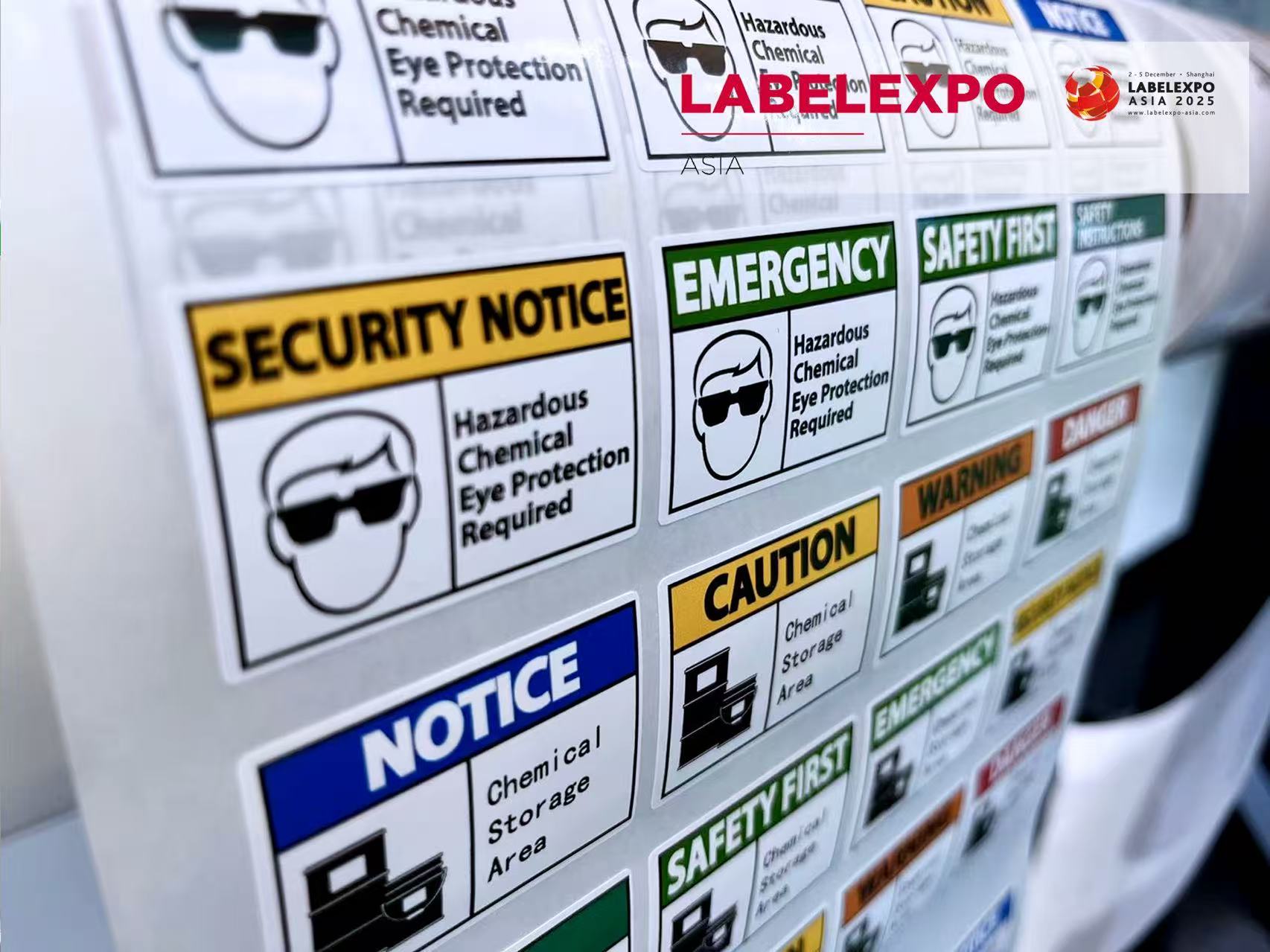
Variable-data label output: each impression can carry a different code, serial, or warning panel.
What a Traceability Label Actually Has to Do
A traceability label carries data that can link a physical unit to a production record. Serialization means giving every unit — item, case, or pallet — its own identifier instead of sharing a batch-level code. Variable data printing is the mechanism behind both: printed content changes from impression to impression without stopping the press or changing a plate.
Read together, those definitions explain why serialization projects fail in places that have nothing to do with print quality. Four failure modes account for most of the problems buyers discover later:
- Data arrives after the press has started. Serials are allocated in advance and pre-printed as a fixed range, so the identifier on the label is unique in appearance but not unique in fact.
- The mark is printed but never verified. A missing, smeared, or low-contrast code is not caught at production speed and surfaces at the packing line, the retailer, or the recall.
- The mark drifts mid-roll. Registration, tension, or curing behaviour changes across a long run, so the first few hundred labels read correctly and the rest do not.
- The audit trail lives outside the print workflow. The press produces labels; a spreadsheet or ERP module holds the proof of what was produced. Reconciling the two is manual work that grows with volume.
Each of these is a question about the machine's data path and inspection behaviour, not about its resolution. That is the frame a buyer should bring to an evaluation.
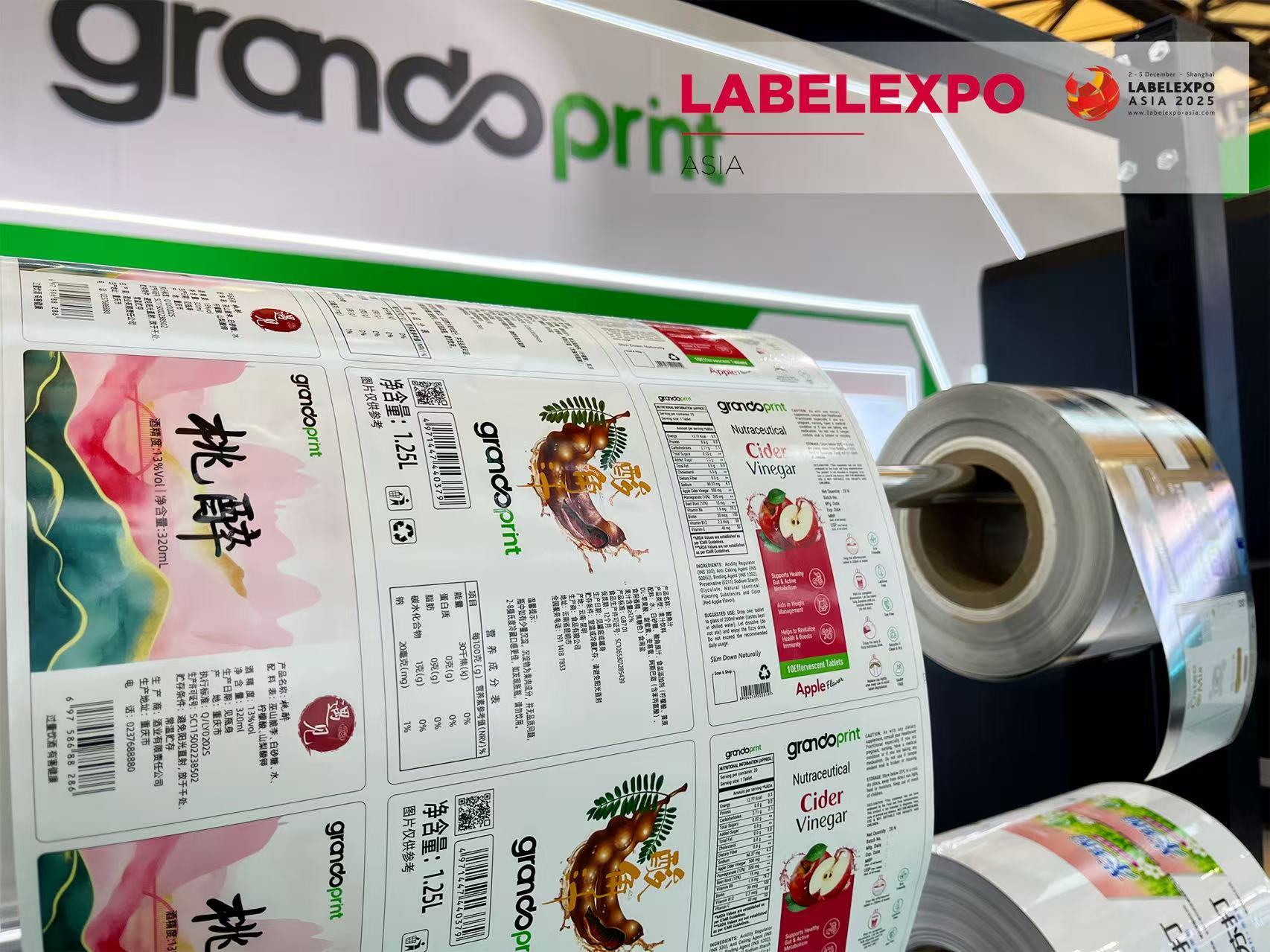
Identification labels depend on data-level accuracy as much as on print resolution.
Why Label Data Handling Became the Constraint
The label market has moved toward shorter runs and more versions per order, which shifts the bottleneck away from press speed and toward how quickly accurate, complete data can reach the print head.
Commercial research on the digital label printer equipment market values the segment at USD 9.86 billion in 2026, with a projected compound annual growth rate of 6.4% between 2025 and 2030. Two cautions apply: that figure describes equipment, not finished labels, and it comes from a single commercial research source, so it is directional context rather than a business case. The same caution applies to the reported 45% share of UV inkjet within digital label press technology in 2025 — useful for orientation, not for sizing a purchase.
Qualitative industry commentary is consistent on direction: growth in digital label printing, personalization, and automation are repeatedly named as the leading trends in the category. Personalization and serialization are the same demand seen from two sides. Both require content to change per impression, and both convert data integrity from an IT topic into a production topic.
Standards reinforce the point. UL 969, the UL standard for marking and labeling systems, evaluates the label as a marking system — its legibility and durability under defined conditions — rather than the press that produced it. The commercial consequence is uncomfortable but simple: a buyer can own a press that prints beautifully and still fail a marking requirement, because the substrate, ink, and curing combination was never qualified together. Traceability compliance is therefore a joint property of data, print, and material, never of the printer alone.
How the GR350S Fits a Serialization Workflow
Nanjing Grando Digital Technology Co., Ltd., trading as Grandoprint, is a manufacturer of digital inkjet printing equipment founded in 2010, with dual bases in Nanjing and Shanghai covering more than 20,000 m², more than 500 employees, and a stated annual output of 15,000 units. The GR350S is its roll-to-roll UV inkjet digital label printer, positioned by the manufacturer for short-run, multi-SKU, and variable-data label production.
What the manufacturer documentation states
- Variable-data applications. Grandoprint documentation lists QR-code labels, barcode labels, serial-number labels, and anti-counterfeit labels for the GR350S, alongside short-run labels, multi-SKU packaging labels, cosmetic labels, food-packaging labels, and daily-chemical labels.
- Throughput envelope. Published technical data lists printing speeds from 20 to 100 m/min and a printing width of 110–350 mm.
- Ink configuration. CMYKW with an optional varnish is the described configuration.
- Roll handling. A utility model patent covering a paper roll shaft for industrial printers (Patent No. ZL 2024 2 1965691.4, issued 2025-05-13) is cited by the manufacturer as intellectual property evidence for roll-to-roll feeding structure, rewinding stability, and media handling design.
- Control software. Registered software copyrights include the High-Precision Industrial Printing Inkjet Control System V1.0 (Registration No. 2025SR0599079), the Flatbed Laser Inkjet Printing Precision Control System V1.0 (Registration No. 2025SR0627967), and the Multi-Point Temperature Control System for Digital Printers V1.0 (Registration No. 2025SR0611438).
- In-process inspection. The stated quality control process uses sensors and vision systems for real-time defect, web-break, and roll-diameter monitoring, together with a CIS-based high-resolution real-time defect detection system, and 100% functional testing before delivery.
- Quality management. ISO 9001:2015 certification (Certificate No. 19926Q00205R001, issued 2026-02-05, valid to 2029-02-04) covers R&D, production, and sales of digital inkjet printing equipment, UV inkjet label presses, digital label printers, and related accessories.
Where the machine meets the traceability chain
The GR350S contributes to a traceability workflow in three places, and it is worth being precise about each.
1. Per-impression content change. Because the press prints digitally, a new serial, QR payload, or barcode can be produced without a plate change and without a new make-ready cycle. That is what makes short serialized runs economically viable instead of an exception process.
2. Media handling under continuous output. Serialized work is usually one long, uninterrupted roll — a mid-roll stop breaks the sequence and creates reconciliation work. The documented tension and rewinding design, plus web-break and roll-diameter monitoring, addresses that continuity requirement directly.
3. Detection at production speed. Inline inspection is the component that converts printing into a controlled process. Real-time defect detection does not by itself guarantee a compliant mark, but without it a serialized run has no evidence base at all.

Roll-to-roll feeding and rewinding design is documented through a cited utility model patent.
What the documentation does not establish
The material reviewed for this guide is manufacturer documentation. It does not contain independently measured throughput, code-read verification rates, substrate-specific adhesion results, or a software integration benchmark. Certifications such as CE marking or RoHS compliance for the machine or its UV inks should not be assumed from the keyword vocabulary of the category — where a market requires them, ask for the declaration of conformity and the supporting test documentation, and treat a logo on a brochure as marketing until the document is produced.
Step-by-Step: Building a Serialization Workflow Around a Digital Label Printer
A serialized label workflow is designed backwards from the audit question: when a unit is inspected six months from now, what record must exist, and how was it created? The eight steps below follow that order.
Step 1 — Define the mark and the record together
Decide what data each label carries (lot, date, line, serial, GTIN, or a URL payload) and, at the same time, what record proves the label was produced correctly. A mark without a record is decoration; a record without a mark cannot be tied to a unit.
Step 2 — Fix the data source and its ownership
Serialized data usually originates in an ERP, an MES, or a brand-owner platform. Establish who generates the identifier, who validates uniqueness, and who may correct an error after printing has started. Ambiguity here is the most common cause of a stalled rollout.
Step 3 — Choose the data-to-press architecture
This decision has the largest effect on long-term operating cost, and it is the one buyers most often leave to the supplier without asking. Two architectures are common.
Flattened batch. Variable content is composed into a fixed file — typically a multi-page PDF or an imposed job — before it reaches the press, and the press prints a static job. Setup is simple and every page can be proofed in advance, but the file is a snapshot: a reprint, a replacement label, or a late data correction means regenerating and re-imposing the whole batch.
Records streamed from the data source. The controller receives per-label records from a database, CSV, or middleware layer at print time, and the variable field is rendered as the job runs. A single record can be reprinted without rebuilding a batch, and the printed sequence can be logged against the record that produced it. This is the architecture generally described as direct database printing, and it is what removes batch PDF conversion from the workflow. It also introduces obligations that must be designed in: validated data connections, duplicate and missing-record handling, and an agreed behaviour when the feed stalls mid-roll.
Which model a specific GR350S configuration supports should be confirmed in writing during evaluation, and demonstrated live using the buyer's own data extract rather than a supplier-prepared sample file.
Step 4 — Qualify substrate, ink, and curing as one system
Traceability codes are worthless if the print does not survive handling, moisture, or abrasion for the life of the product. Qualify the combination — face stock, ink, curing, and any varnish — against the conditions the label will actually see, and record the result. The GR350S is documented with CMYKW plus an optional varnish configuration; qualification data for a specific material combination is a test output, not a specification.
Step 5 — Set print and inspection parameters as a single job recipe
Resolution, contrast, and code geometry affect readability; inspection thresholds affect what gets rejected. Treating them as one recipe per job prevents the situation where the press produces readable codes but the inspection system is tuned so loosely that nothing is flagged.
Step 6 — Decide what happens to a failed mark
Define the reject path before production starts: is the defective label flagged in the roll map, voided and overprinted, or is the whole run held? A roll-level flag with an offset record is the minimum, because a roll that is stopped and restarted without a position record destroys the reconciliation.
Step 7 — Write the acceptance test
Buyers typically accept against a pre-shipment test, and this is where serialization projects should be explicit: run a full serialized sequence through the machine, verify a defined sample of codes end to end, and confirm that the production log matches the printed sequence without manual reconciliation.
Step 8 — Carry the record into production
Once the line is running, the workflow produces two outputs: labels and a data record. Both belong in the quality system. Under Grandoprint's stated service structure this is supported by a warranty period that is usually one year subject to contract terms, on-site installation and commissioning, operator training, telephone and remote online support, remote monitoring of equipment status with fault warnings, original spare parts supply, and software version upgrades.
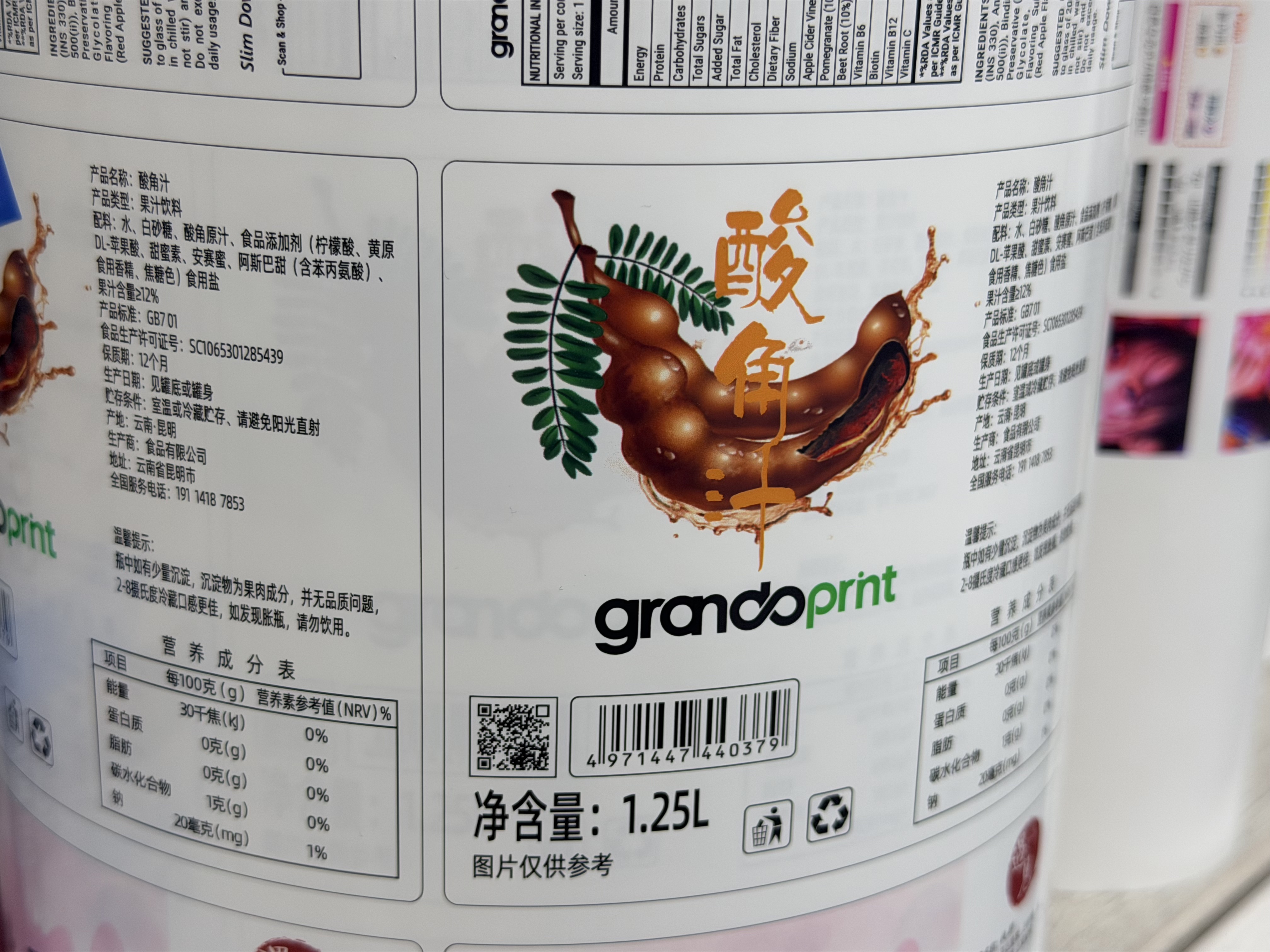
Sample output is where data handling, mark legibility, and finishing are checked together.
Where Serialized and Traceability Labels Are Used
The same printing capability serves four different compliance problems: proving a batch, proving an item, proving authenticity, and proving an asset.
- Food and beverage. Lot and date coding sit alongside consumer-facing QR codes that resolve to batch or origin information. The compliance question is legibility and durability over the product's shelf life, which makes substrate qualification the deciding test rather than press speed.
- Cosmetics and personal care. Short runs and high SKU counts dominate. Serialized promotional codes, multi-language back panels, and shelf-ready presentation are often produced in the same production window, so the workflow must switch data sets without a long changeover.
- Industrial and safety labeling. Warning and rating labels are frequently serialized to an asset or a production order. These are low-volume, high-consequence marks, where a missing label stops a shipment.
- Anti-counterfeit and brand protection. Unique identifiers combined with a verification path — a scan that returns a valid or invalid result — turn a printed code into a control. The print side only has to guarantee that the code is complete and readable; the control side has to guarantee that each code is issued once.
One documented OEM engagement shows the pattern in practice: a customer operating in Brazil and Italy took 20 units over a one-year period for label printing and packaging production, reporting stable operation with high printing consistency, a 30% reduction in production setup time, and adaptability to multi-SKU orders with variable-data printing. That is a single customer-reported result, not a benchmark.
Verification Questions to Put in Writing
The questions below are grouped by the three areas where documented capability and production reality most often diverge: data handling, mark tracking, and roll-to-roll behaviour.
Data handling
- Does the offered configuration accept per-record data from a database or CSV at print time, or does it require a pre-composed batch file?
- What happens to the job when a record is missing, duplicated, or malformed mid-run?
- Is the production log exportable, and does it carry a timestamp and a position reference for each record?
- Which software layer owns the variable data, and what is the upgrade path for it?
Mark tracking
- Is inspection inline and real-time, and which defect classes does it flag?
- How is a rejected label recorded — roll position, record identifier, or both?
- Can a single record be reprinted without disturbing the surrounding sequence?
- What evidence is provided that the printed sequence matches the issued sequence?
Roll-to-roll production
- Across a full production roll, how stable is registration, and how is drift detected?
- What is the documented behaviour on web break or roll-diameter deviation?
- Which material combinations have been qualified, and under what test conditions?
- What pre-shipment test is performed, and can the buyer's own data and substrate be used in it?
Verification Matrix: Documented Configuration vs. Evaluation Requirement
The table separates what Grandoprint documents about the GR350S from what an evaluation still has to confirm. Nothing in the right-hand column is a claim about the machine; it is a test the buyer should run.
| Area | Documented for the GR350S | What the evaluation must confirm |
|---|---|---|
| Variable-data applications | QR-code, barcode, serial-number, and anti-counterfeit labels listed among supported applications | Live run using the buyer's own serialized data extract, with a verified sample of codes read end to end |
| Print envelope | 20–100 m/min; 110–350 mm printing width | Sustained speed on the buyer's substrate with inspection active, not a peak figure |
| Ink configuration | CMYKW with optional varnish | Adhesion and legibility after curing on the specified face stock |
| Roll handling | Patent ZL 2024 2 1965691.4 cited for feeding structure, rewinding stability, and media handling | Registration stability across a full roll, plus web-break and roll-diameter response |
| In-process inspection | Sensors and vision systems for defect, web-break, and roll-diameter monitoring; CIS-based real-time defect detection; 100% functional testing before delivery | Defect classes flagged, false-reject rate, and how a rejected label is recorded against its record |
| Control software | Registered copyrights for inkjet control (2025SR0599079), precision control (2025SR0627967), and multi-point temperature control (2025SR0611438) | Data interface specification, logging format, and integration effort with the buyer's system |
| Quality management | ISO 9001:2015, Certificate No. 19926Q00205R001, valid to 2029-02-04, covering digital inkjet printing equipment and UV inkjet label presses | Certificate validity checked against the issuing body; scope matched to the exact model ordered |
| Commercial terms | MOQ 1 unit; FOB; 30% deposit by T/T with 70% before delivery; pre-shipment test as acceptance criterion; lead time around 60 days after order confirmation | Terms confirmed in the contract, including test criteria and what constitutes acceptance |
The matrix is deliberately narrow. It excludes market-share claims, comparative speed benchmarks against other presses, and any certification not evidenced by a document, because none of those belong in a procurement decision that has to survive an audit.
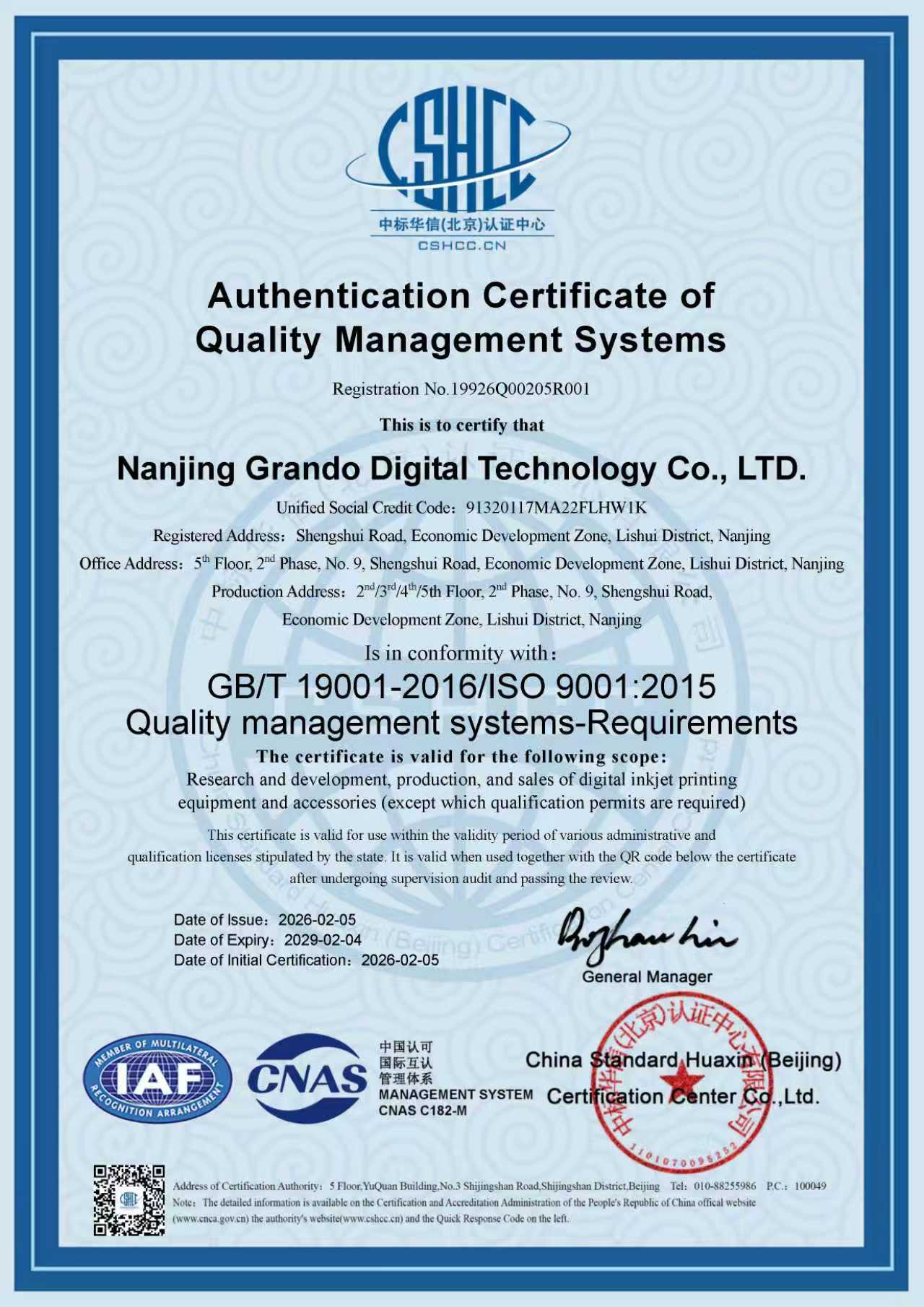
ISO 9001:2015 certification, Certificate No. 19926Q00205R001, covers digital label printer R&D, production and sales.
Frequently Asked Questions
Which compliance documents should a buyer verify before a serialized label workflow goes live?
Start with the quality management certificate and the scope it covers. Grandoprint holds ISO 9001:2015 certification, Certificate No. 19926Q00205R001, issued 2026-02-05 and valid to 2029-02-04, covering R&D, production, and sales of digital inkjet printing equipment, UV inkjet label presses, digital label printers, and related accessories. Then verify the documents specific to your market: where CE marking, RoHS compliance, or a marking-system standard such as UL 969 applies to your product, request the declaration of conformity and the supporting test reports rather than relying on a claim. Intellectual property evidence is separate from product compliance — Grandoprint cites utility model patents and registered software copyrights, including the paper roll shaft patent ZL 2024 2 1965691.4 and the inkjet control system copyright 2025SR0599079, as evidence of design and control development, not as market approval.
Can the GR350S print variable data such as serial numbers, QR codes, and barcodes within one roll?
Yes, according to the manufacturer's documentation, which lists QR-code labels, barcode labels, serial-number labels, and anti-counterfeit labels among the GR350S application set, together with short-run and multi-SKU packaging labels. The documented print envelope is 20–100 m/min and 110–350 mm width, with a CMYKW plus optional varnish ink configuration. What the documentation does not establish is the throughput and read-verification rate you will achieve on your own data and material, so that has to be demonstrated in a sample or pre-shipment test rather than inferred from the application list.
What commercial terms apply to a GR350S order?
The stated purchasing terms are a minimum order quantity of one unit, FOB delivery terms, and payment of 30% deposit by T/T with the balance of 70% paid before delivery. Acceptance is based on a pre-shipment test. Lead time is around 60 days after order confirmation and depends on machine configuration, order quantity, testing requirements, and production schedule, against a stated monthly capacity of 100 units. Machine price is not published and is quoted per configuration, since printhead configuration, ink configuration, voltage standard, software language, machine branding, spare parts package, and selected functional modules can be specified.
Can we test our own serialized data and substrate before ordering?
Sample testing is part of the stated service scope, alongside equipment selection, installation, training, and long-term technical support. The practical test is to supply your own serialized data extract and your own face stock, verify a defined sample of codes end to end, and confirm that the production log matches the printed sequence without manual reconciliation. The pre-shipment test is the formal acceptance point, so the criteria used there should be agreed in writing before the order.
What is the lead time, and what happens at installation?
Lead time is around 60 days after order confirmation, subject to configuration and order volume. Delivery is followed by on-site installation, commissioning, and trial operation, plus operator training covering equipment operation and routine maintenance. Warranty is usually one year subject to contract terms, and support includes telephone and remote online assistance, on-site maintenance, remote monitoring of operating status with fault warnings, original spare parts supply, and software version upgrades. To discuss a serialized workflow against your own data structure, contact Grandoprint at juliawu@grando-dg.com or +86 13805155194, and request the current product brochure below.
Conclusion: Compliance Is the Workflow, Not the Printer
Serialization compliance is not a machine property that can be bought off a specification sheet. It is the agreement between a record, a mark, and a production log, and the printer's job is to keep that agreement intact from the first impression to the last label on the roll. The GR350S enters that chain through documented variable-data applications, a defined print envelope, roll-handling design backed by a cited patent, inline inspection, and an ISO 9001:2015 quality system. Those are verifiable starting points.
The rest is verification. Ask how the data reaches the print head, ask what happens to a failed mark, ask for the acceptance criteria in writing, and test with your own data before you commit. A supplier that can answer those four questions with documents and a live demonstration is a supplier you can put in front of an audit.
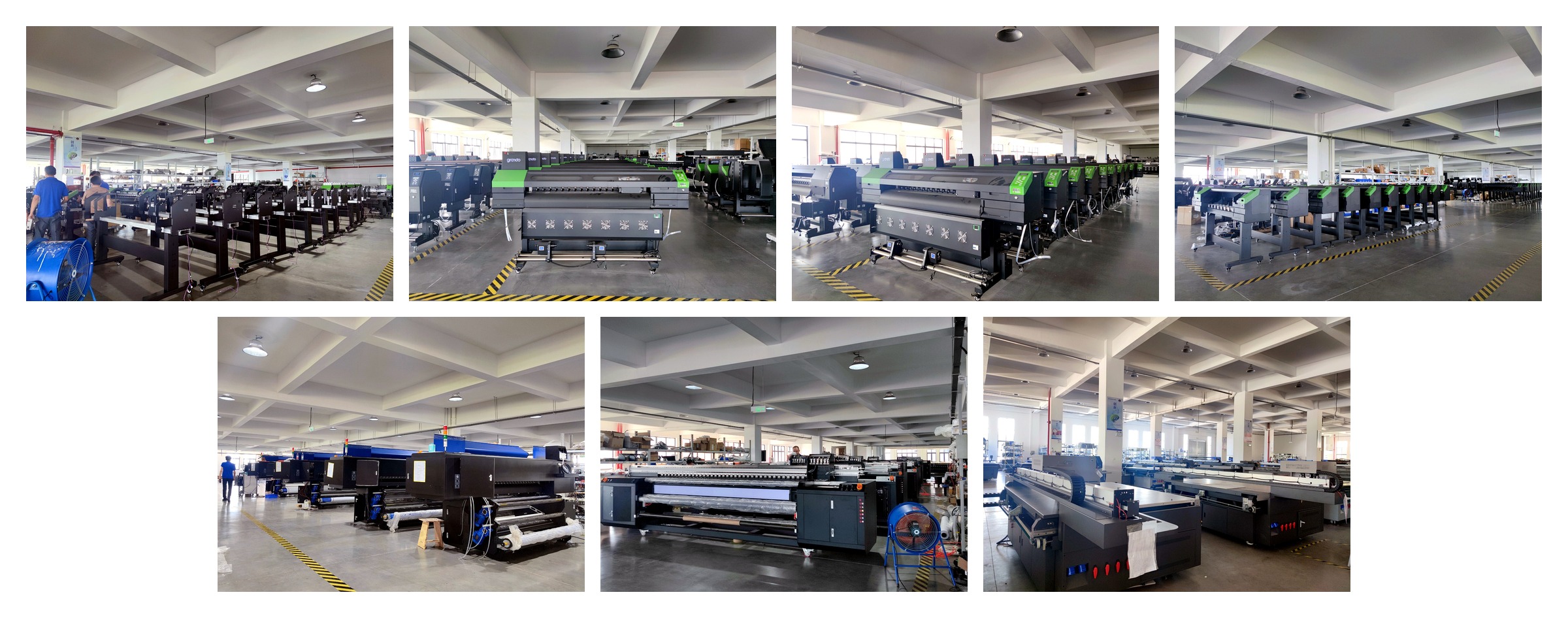
Grandoprint manufactures and tests digital label printing equipment across its Nanjing and Shanghai bases.
Next Step
Review the full GR350S specification and configuration options in the Grandoprint product brochure, or send a sample data file and substrate for a serialized print test.
Brochure: Grandoprint Digital Label Printer Product Brochure (PDF)
Website: www.grando-dg.com · Email: juliawu@grando-dg.com · WhatsApp: +86 13805155194
Address: No.9 Shengshui Road, Lishui Development Dist, Nanjing City, China
Have Questions or Need More Details?
Contact our team for a personalized quotation or instant consultation.
Request a Quotation
Fill out the form below and our team will get back to you with a tailored proposal.
WhatsApp Direct Chat
Prefer to chat in real-time? Message us on WhatsApp for instant assistance & quick answers.
- Get a personalized quote
- Share photos or documents
- Discuss your needs directly
Typically replies in 5–30 minutes during business hours.