
How to Vet a Digital Label Printer Supplier: Capability and Delivery Checklist
A quotation tells you what a supplier claims a press can do. A vetting file tells you whether that supplier can build the machine to the specification you signed, test it before it leaves the factory, deliver it on the date promised, and support it afterwards. This guide converts that difference into eight checks you can run in sequence, using the Grandoprint GR350S as the worked example so that every checkpoint has a documented value to compare against.
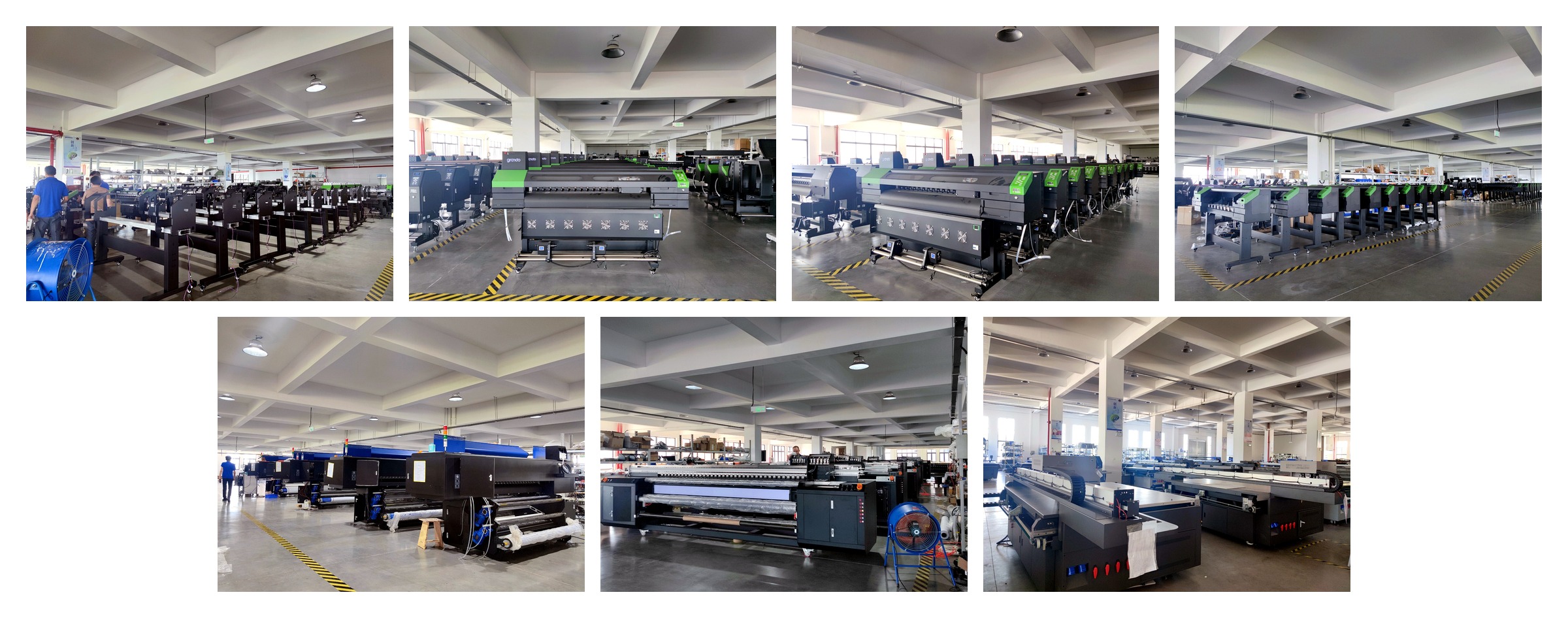
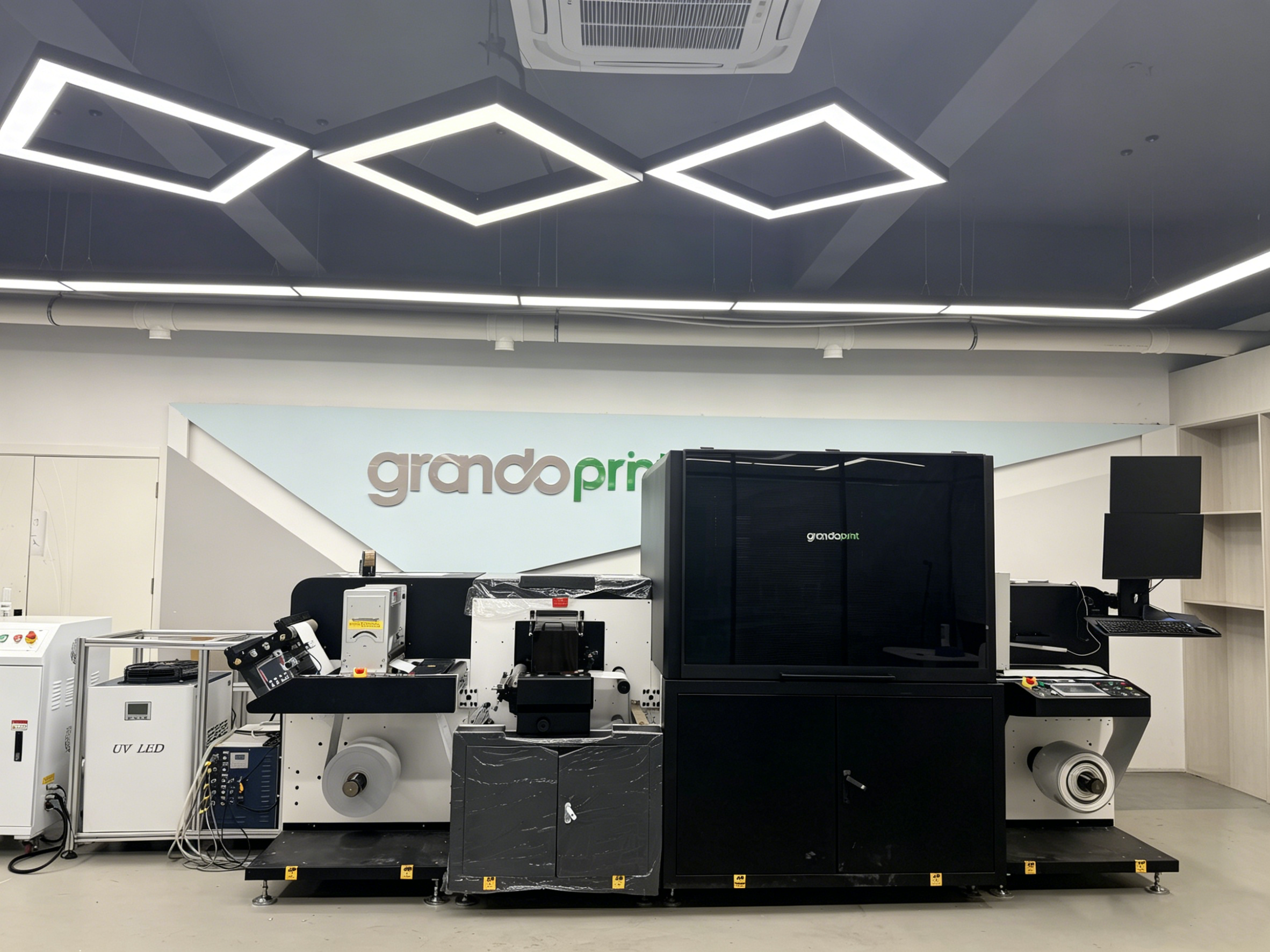
Grandoprint is the label printing equipment brand of Nanjing Grando Digital Technology Co., Ltd., a digital inkjet equipment manufacturer founded in 2010 with production bases in Nanjing and Shanghai, China. Its GR350S is a roll-to-roll UV inkjet digital label printer built for short-run, multi-SKU and variable data label work. Because the platform's specifications are published, it is a useful benchmark: you can test the same questions against other suppliers and see immediately which ones answer with documents and which answer with adjectives.
The checklist below is written for the research and evaluation stage — the point where you have a shortlist and need to decide which supplier is worth a purchase order, a deposit and a shipping schedule.
Why Supplier Vetting Fails on Paper
Most equipment purchases that disappoint do not fail because the machine is broken. They fail because the buyer and the supplier never agreed on what "the machine" includes. Five gaps account for most of the damage.
- Optional modules quoted as standard. A quotation that appears to include everything may actually list a base platform, with surface treatment, coating and varnish modules available only as options. Two quotes that look 15% apart can describe different machines.
- Ceiling figures without conditions. A maximum speed is a headline, not a production plan. Buyers need to know the width range, the media range and the configuration under which the figure applies.
- Certificates without scope. A certificate number that does not name digital label printers in its scope does not support the claim being made about a label press.
- Delivery dates without capacity evidence. A date is a promise; monthly capacity, testing protocol and order sequencing are the evidence behind it.
- No acceptance criteria at order stage. If the purchase order does not define what will be measured at factory acceptance and site acceptance, the final inspection becomes a conversation rather than a test.
Industry Background: Why Configuration and Delivery Now Decide the Purchase
Demand conditions have made supplier vetting more consequential than it was a decade ago. The Business Research Company reports the digital label printer market at USD 9.27 billion in 2025 and USD 9.86 billion in 2026, with a projected CAGR of 6.4% for 2025–2030. That growth has pulled a large number of new suppliers and new configurations into the market, and specification sheets have converged as a result.
Industry commentary consistently points in the same direction: growth in digital label printing, personalisation and customisation of labels, and automation in label production. Those are directional observations rather than measured forecasts, but they explain a practical shift. Label work is increasingly split into short runs, frequent SKU changes, and data-driven jobs such as QR codes, barcodes, serial numbers and anti-counterfeit marks. On that kind of work, the differentiator is rarely the print technology category — it is whether the specific machine was configured, tested and delivered to match the job mix.
That is why vetting has moved downstream. Buyers used to compare brands. They now have to compare configuration control, substrate testing, quality records and delivery capability, because those are the variables that decide whether a press reaches its rated output in your plant rather than in a brochure.
What a Digital Label Printer Supplier Should Be Able to Prove
Before you ask a supplier to prove anything, you need to know which subsystems actually determine whether the press fits your work. On a roll-to-roll UV inkjet platform like the GR350S, seven areas carry most of the risk.
1. Print engine and ink set
The GR350S uses Epson S3200-U1 or S3200-U3 printheads in a piezoelectric inkjet configuration, with a CMYKW ink set and optional varnish. Dual UV curing is supported. For a buyer, the practical questions are which printhead variant is fitted, whether white ink is included in the quoted configuration, and whether varnish is a module on the quoted machine or a later upgrade.
2. Width and speed envelope
Documented values are a printing width of 110–350 mm, an acceptable media width of 120–360 mm, and a printing speed of 20–100 m/min. Treat the top of that range as a ceiling that depends on media, coverage and configuration, and ask what the supplier considers a realistic production band for your artwork.
3. Roll handling and web control
Roll-to-roll feeding and rewinding is the core architecture, with a maximum unwinding diameter of 700 mm, a label sensor for mark tracking, and intelligent deviation correction. Web control is where continuous production either holds register or generates waste, so deviation correction and mark tracking belong in your acceptance protocol rather than in a footnote.
4. Substrate treatment and adhesion
Film labels are the usual failure point. The GR350S supports a corona system and lists PE, PET, BOPP, PP and OPP as compatible film materials, with an optional pre-coating system and an optional post-coating varnish system. Grandoprint's own application guidance is explicit that PET, BOPP, PVC, PP, PE, OPP films and synthetic label materials should be tested before batch production, and that some difficult materials may require corona treatment or another surface treatment to improve UV ink adhesion.
5. Data and variable content
The platform supports variable data processing and direct database printing, without a batch PDF conversion step, alongside label mark tracking. That matters for QR code, barcode, serial number and anti-counterfeit label work. Readability and data accuracy of those codes should be tested on your own files, because a data pipeline that runs is not the same as a data pipeline that verifies.
6. Quality records and intellectual property
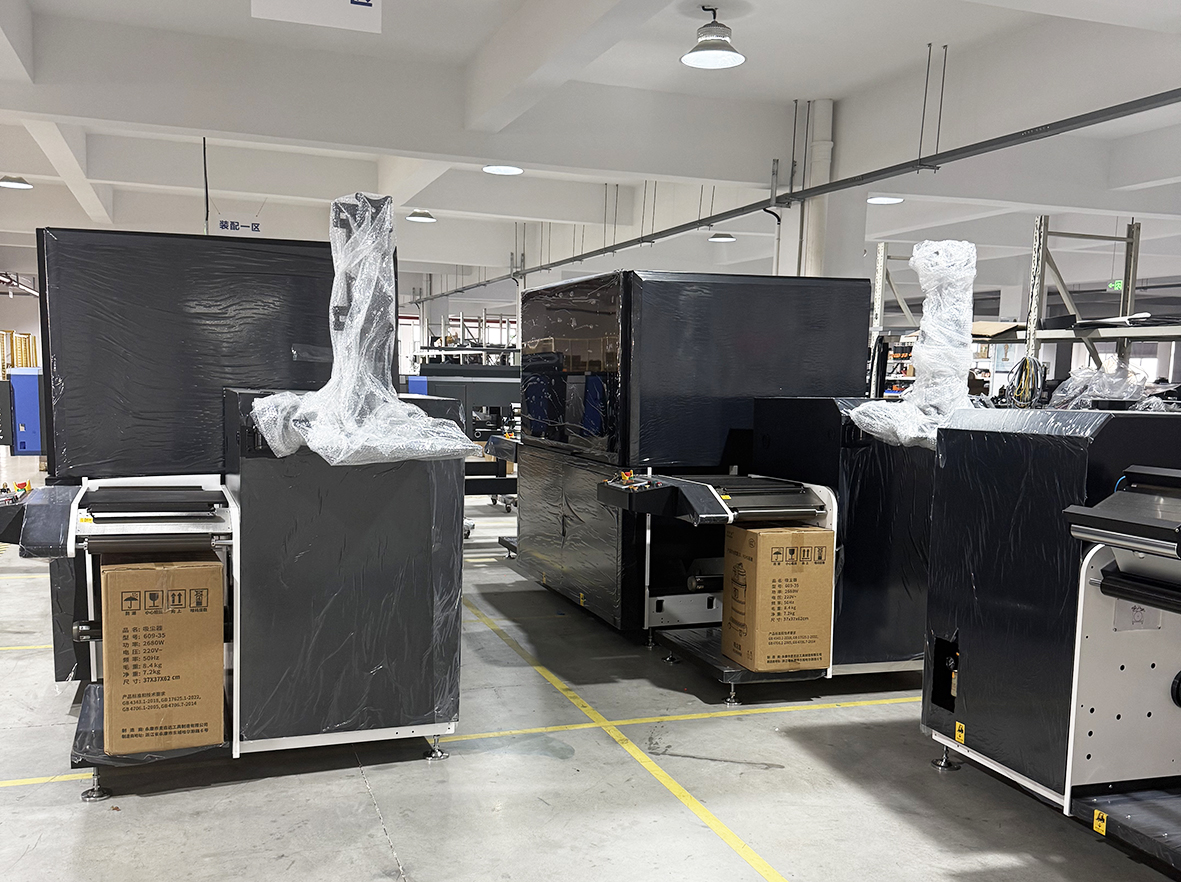
Grandoprint describes three quality controls: inline inspection through sensors and vision systems for real-time defect, web break and roll diameter monitoring; a CIS-based high-resolution real-time defect detection system; and 100% functional testing before delivery. The company holds ISO 9001:2015 certification, certificate no. 19926Q00205R001, issued by China Standard Huaxia (Beijing) Certification Center Co., Ltd., valid from 2026-02-05 to 2029-02-04, with a scope covering the quality management system for research, development, production and sales of digital inkjet printing equipment, UV inkjet label presses, digital label printers and related accessories.
Patent and software records can be checked as supporting evidence of engineering work: a utility model for a paper roll shaft for industrial printers (ZL 2024 2 1965691.4), a utility model for an anti-offset correction device for UV flatbed printers (ZL 2023 2 3477531.3), a software copyright for a high-precision industrial printing inkjet control system (2025SR0599079) and one for a multi-point temperature control system for digital printers (2025SR0611438). None of these replace a test report, but they are named, dated and traceable — which is the standard you should hold every supplier to.
7. Capacity, delivery and service
Manufacturing scale is stated as more than 20,000 m² across the Nanjing and Shanghai bases, with over 500 employees, an R&D team of 30, a stated monthly capacity of 100 units and a lead time of around 60 days after order confirmation, depending on configuration, order quantity, testing requirements and production schedule. Minimum order quantity is 1 unit. The service package covers a warranty period usually of one year subject to contract terms, on-site installation and commissioning, operator training, telephone and remote technical support with on-site maintenance, remote monitoring with fault warning, original spare parts supply, localised service through overseas technical service centres or authorised distributors, and software and hardware upgrade services.
The Vetting Checklist, Step by Step
Run the eight steps in order. Each one produces a document you keep, not a memory of a call.
Step 1 — Write down your production envelope first
Before any supplier conversation, define your media widths, typical run lengths, SKU count per shift, film types and finishing requirements. Then test each quotation against it. A press rated to 350 mm print width and 360 mm media width is only right for you if your actual job mix sits inside that range most of the time.
Step 2 — Pin the print engine to a model designation
Ask for the printhead variant in writing — on the GR350S that means Epson S3200-U1 or S3200-U3 — and for the ink configuration: CMYKW, with varnish stated as included or optional. Ambiguity here is expensive, because printhead and ink decisions drive resolution, consumable cost and the finishing modules you will need later.
Step 3 — Separate base machine from optional modules
Request a line-item quote that isolates the platform, the corona system, the pre-coating system, the post-coating varnish system, the varnish module and any spare parts package. Optional means optional: if a module is not itemised, it is not in the price.
Step 4 — Test the substrates you actually print
Send film and paper samples and require a written test result per material. Cover PE, PET, BOPP, PP and OPP if you print film, and include coated paper, clear PET or silver PP if those appear in your catalogue. Ask specifically whether corona treatment or pre-coating was used for each sample, because the answer determines the configuration you must order.
Step 5 — Prove the data workflow with your own file
Send a real variable data set — a QR code sequence, a barcode range, or serial numbers — and require the supplier to print it via direct database printing and to report readability results. This is the step that separates a machine that can print variable content from a workflow that can be trusted in production.
Step 6 — Audit the quality records, not the marketing
Ask for the ISO 9001 certificate with its number, issuing body, validity dates and scope wording, and check that digital label printers appear in the scope. Ask what the pre-delivery functional test consists of, how defect detection is performed, and whether a test record will be supplied with the machine.
Step 7 — Convert delivery promises into a schedule
Confirm monthly capacity, the lead time measured from order confirmation, the testing window before shipment, packing method and the documentation package. A stated lead time of around 60 days is only meaningful alongside the configuration list and the testing requirement, because both move the date.
Step 8 — Write acceptance criteria into the purchase order
Define factory acceptance and site acceptance tests, the media to be used, the codes to be verified, the speed band to be demonstrated, and the remedy if a test is not met. This single step prevents most post-delivery disputes, and it costs nothing but a meeting.
Use Cases: Where the Checklist Changes the Answer
The same press can pass vetting for one buyer and fail it for another, because the checklist tests fit rather than quality in the abstract.
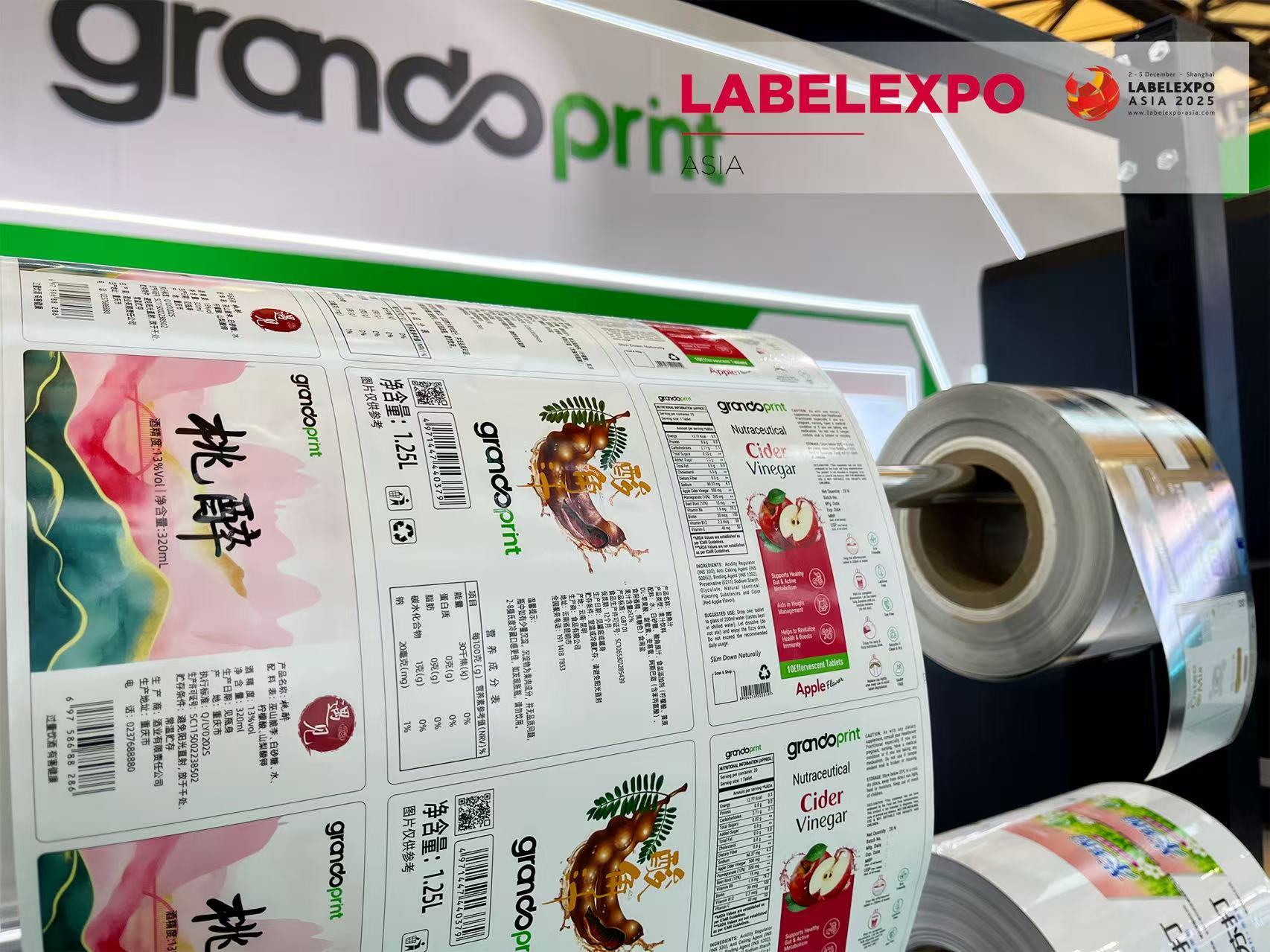
- Short-run cosmetics and skincare labels. The deciding items are white ink, varnish and spot varnish enhancement, and adhesion on clear PET and silver PP. Verify the varnish module on the quotation and test the film before committing.
- Food and beverage labels. Variable data, mark tracking and reliable registration across frequent SKU changes matter more than top speed. Confirm the label sensor for mark tracking is included and tested.
- Logistics and serialised labels. Direct database printing without batch PDF conversion is the relevant capability; the acceptance test is code readability across a full data range, not a single sample.
- Daily chemical and industrial film labels. Adhesion on PE, BOPP or OPP usually requires corona treatment or pre-coating. Ask which treatment was applied to the approved sample and ensure the same configuration is ordered.
- Packaging converters with multi-SKU output. Deviation correction, tension stability and a 700 mm unwinding diameter determine how long a run can continue without intervention.
- OEM and private-label machine buyers. Where branding, printhead configuration, ink configuration, voltage standard, software language and spare parts package are customised, vetting must also cover the delivery schedule for configured units. Grandoprint reports an OEM customer in Brazil and Italy that took delivery of 20 units over one year, with stable operation and high printing consistency, and a reported reduction in production setup time of 30%.
Comparison Table: Documented Values vs What to Request
The table below lists what is documented for the GR350S, what a buyer should obtain in writing, and the condition under which the checkpoint should be treated as failed. It is a vetting matrix, not a ranking.
| Checkpoint | Documented GR350S value | Request in writing | Treat as failed if |
|---|---|---|---|
| Print engine | Epson S3200-U1 / S3200-U3 printhead; piezoelectric inkjet | Printhead variant in the specification sheet | The variant is unspecified or described only as 'industrial printhead' |
| Ink and finish | CMYKW + optional varnish; spot varnish enhancement; dual UV curing | Ink set and whether varnish module is included or optional | Varnish appears in the brochure but not in the line-item price |
| Print and media width | Print width 110–350 mm; media width 120–360 mm | Confirmation that your widest and narrowest jobs fall inside the range | The quoted width does not cover your job mix |
| Speed | 20–100 m/min | A realistic production band for your artwork and media | Only a maximum figure is offered, with no conditions stated |
| Roll handling | Roll-to-roll; max. unwinding diameter 700 mm; mark tracking; intelligent deviation correction | Acceptance test for registration across a full roll | Deviation correction is not demonstrated during acceptance |
| Substrate treatment | Corona system supported; compatible with PE, PET, BOPP, PP, OPP; pre-coating optional; post-coating varnish optional | Material-by-material test record stating which treatment was used | Samples are supplied without stating the treatment applied |
| Variable data | Variable data processing; direct database printing; no batch PDF conversion required | Test print from your own database plus readability results | The data test is a static PDF sample only |
| Quality control | Inline sensor and vision inspection; CIS-based real-time defect detection; 100% functional testing before delivery | Test record supplied with the machine | No documented pre-delivery test |
| Certification | ISO 9001:2015, cert. no. 19926Q00205R001, valid 2026-02-05 to 2029-02-04 | Certificate copy with scope wording naming digital label printers | The scope does not cover the product being purchased |
| Delivery | Monthly capacity 100 units; lead time around 60 days after order confirmation; MOQ 1 unit | Schedule with testing window and packing method | The date is given without configuration or testing assumptions |
| Service | Warranty usually 1 year subject to contract; installation, training, remote monitoring, spare parts, upgrades | Warranty start date, response route and spare parts list | Warranty terms are only verbal |
Purchasing Terms to Lock Before You Commit
Capability vetting answers 'can they build it'. Commercial terms answer 'what happens if they do not'. Both belong in the same document set.
| Term | Question to ask | Why it matters |
|---|---|---|
| Scope of supply | Which modules, printheads, ink set and spare parts are included, itemised? | Prevents the optional-versus-standard dispute after signature |
| Factory acceptance | Which media, codes, speeds and widths will be demonstrated before shipment, and who signs? | Creates a measurable release gate |
| Site acceptance | How many days after installation, using which materials, with what remedy if a criterion fails? | Links payment milestones to performance |
| Installation and training | Who attends, for how long, and is operator training on operation and routine maintenance included? | Determines real ramp-up time |
| Warranty | Start date, duration, exclusions, and whether it begins at shipment or at acceptance | A shipment-date warranty can expire before commissioning |
| Consumables | Ink and varnish volumes per job type, shelf life, and storage conditions | Drives operating cost and planning |
| Spare parts | Recommended first-order parts list and response time | Printhead and web-control downtime is the costliest downtime |
| Utilities and site | 380 V supply, 10 kW consumption, 0.6–0.8 MPa clean dry air, 18–32 °C, 40–60% RH | Site readiness is a common cause of delayed commissioning |
| Software and upgrades | Version upgrade policy and hardware expansion path | Protects the investment over the machine's life |
| Documentation | Operation manual, maintenance schedule, electrical drawings, test records | Needed by your own maintenance team, not the supplier's |
Frequently Asked Questions
What certification documents should I request from a digital label printer supplier?
Ask for the certificate number, issuing body, validity dates and — most importantly — the scope wording. Grandoprint holds ISO 9001:2015 certification, certificate no. 19926Q00205R001, issued by China Standard Huaxia (Beijing) Certification Center Co., Ltd., valid from 2026-02-05 to 2029-02-04, with a scope covering the quality management system for R&D, production and sales of digital inkjet printing equipment, UV inkjet label presses, digital label printers and related accessories. For market-access claims such as CE or RoHS, request the declaration and test reports by document number; where those documents are not produced, record the item as unverified rather than treating the claim as confirmed. Supporting intellectual property — such as the utility model for a paper roll shaft for industrial printers (ZL 2024 2 1965691.4) — is useful evidence of engineering activity but is not a substitute for product test records.
What production evidence shows a supplier can actually build a roll-to-roll digital label press?
Look for four categories of evidence rather than one claim. First, physical scale: Grandoprint operates dual bases in Nanjing and Shanghai covering more than 20,000 m², with over 500 employees and an R&D team of 30. Second, throughput: a stated annual output of 15,000 units and a monthly capacity of 100 units. Third, quality controls that happen before shipment: inline inspection through sensors and vision systems, a CIS-based high-resolution real-time defect detection system, and 100% functional testing before delivery. Fourth, named configuration detail — printhead variant, ink set, optional modules — because a supplier who can specify precisely can usually build precisely.
What drives the budget for a GR350S configuration, and what should the quote break out?
Cost is driven by configuration, not by the platform alone. The variables that change a quotation are the printhead configuration, ink configuration, whether the varnish module and pre-coating and post-coating systems are included, voltage standard, software language, machine branding and the spare parts package — all of which are customisable on this platform. Operating cost adds utility and consumable planning: 380 V supply at approximately 10 kW, clean dry compressed air at 0.6–0.8 MPa, and ink stored at 16–32 °C. Ask for a quote that separates the base machine, each optional module, consumables, freight, installation, training and spare parts, so that competing offers can be compared line by line instead of total to total. No price band is published in this material, which itself is a reasonable test: a supplier who will not itemise is a supplier you cannot benchmark.
What sample tests should be completed before signing?
Send the materials you actually print and require a written result for each one. Cover PE, PET, BOPP, PP and OPP if you print film, plus coated paper, clear PET or silver PP if they appear in your catalogue — Grandoprint's application guidance explicitly recommends testing PET, BOPP, PVC, PP, PE, OPP films and synthetic label materials before batch production. Include a variable data set so that QR code, barcode and serial number readability and data accuracy are checked, not assumed. If any sample is heat-sensitive, ask how UV curing settings and temperature control were adjusted. Record for each sample whether corona treatment, pre-coating or post-coating varnish was used, because that record defines the configuration you must order.
What lead time and delivery terms should be confirmed in writing?
Grandoprint states a lead time of around 60 days after order confirmation, depending on machine configuration, order quantity, testing requirements and production schedule, against a monthly capacity of 100 units and a minimum order quantity of 1 unit. Confirm the date from order confirmation rather than from enquiry, ask where the pre-shipment testing window sits inside that period, and agree the packing method and documentation package before shipment. Service terms should be fixed at the same time: a warranty period usually of one year subject to contract, on-site installation and commissioning, operator training, remote monitoring with fault warning, and original spare parts supply.
If you want to move from research to evaluation, the fastest next step is to send your material and data samples to Grandoprint for a printed test result, and to request a full catalogue and configuration sheet before the technical discussion. The current Grandoprint catalogue can be downloaded here: Grandoprint digital label printer catalogue (PDF).
Conclusion: Eight Checks, One Document Set
Supplier vetting is not a judgement about which company sounds more capable. It is a document exercise. If, after eight steps, you hold a specification sheet naming the printhead variant and ink set, a line-item quotation separating optional modules, a material-by-material test record stating which treatment was applied, a variable data test from your own database, an ISO certificate whose scope names digital label printers, a delivery schedule with a testing window, and an acceptance protocol attached to the purchase order — you have removed nearly all of the risk that a purchase order can remove.
The GR350S is a workable benchmark for that exercise because its parameters are specific: Epson S3200-U1/S3200-U3 printheads, 20–100 m/min, 110–350 mm print width, 120–360 mm media width, 700 mm maximum unwinding diameter, CMYKW plus optional varnish, optional pre-coating and post-coating systems, corona treatment for PE, PET, BOPP, PP and OPP, roll-to-roll feeding and rewinding, and variable data with direct database printing. Specific parameters let you ask specific questions. That is the whole method.
Next Step: Test Before You Commit
Send your label material, artwork and variable data file to Grandoprint and request a printed sample with a written test result for each substrate. You will receive the configuration that produced that sample, so the machine you order matches the output you approved.
Sample testingConfiguration quoteCatalogue download
Nanjing Grando Digital Technology Co., Ltd. (Grandoprint)
Website: www.grando-dg.com | Email: juliawu@grando-dg.com | WhatsApp: +8613805155194
Address: No.9 Shengshui Road, Lishui Development District, Nanjing City, China | Download the product catalogue
Have Questions or Need More Details?
Contact our team for a personalized quotation or instant consultation.
Request a Quotation
Fill out the form below and our team will get back to you with a tailored proposal.
WhatsApp Direct Chat
Prefer to chat in real-time? Message us on WhatsApp for instant assistance & quick answers.
- Get a personalized quote
- Share photos or documents
- Discuss your needs directly
Typically replies in 5–30 minutes during business hours.