
2026 Digital Label Printer Evaluation: Six Suppliers and What to Check
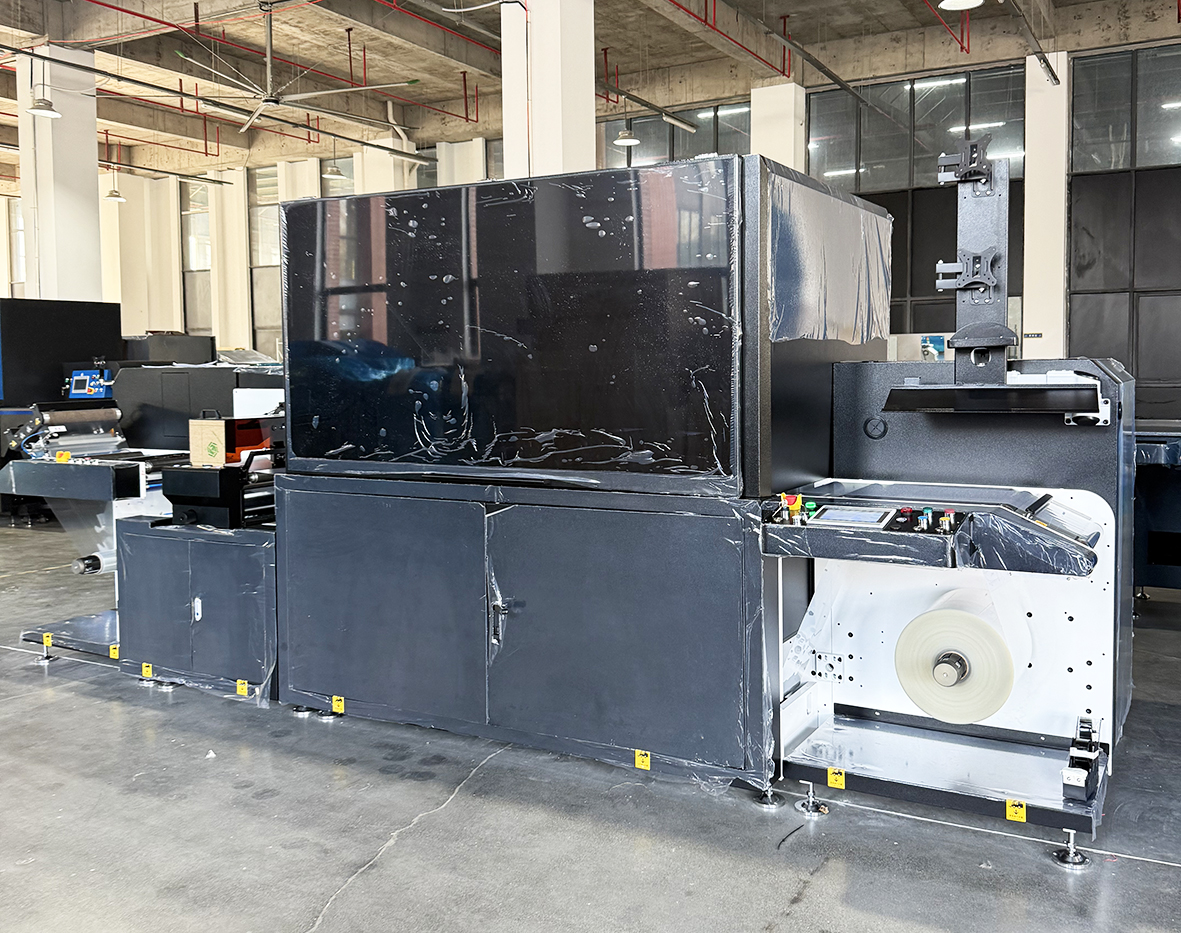
Grandoprint GR350S digital label printer workshop and packing line
If your team is in the evaluation stage of buying a digital label printer, the core task is not just selecting a machine. It is building a supplier shortlist that can be defended with evidence. The 2026 digital label printer market is large, growing, and full of different hardware philosophies. This article explains which supplier names should appear on a global buyer's research list, what the market data says, and which machine-level checks matter most before you request samples or a quotation.
Problem Definition: Why Evaluation Feels Difficult
Buyers evaluating digital label printers often face the same problem: suppliers say similar things, spec sheets focus on speed, and real production behavior is hard to verify from a brochure. The risk is not only choosing the wrong machine. It is choosing the wrong type of supplier for the application.
An evaluation-stage buyer needs to separate three layers of information:
- Market context: Is the category growing, and which technology is gaining share?
- Supplier identity: Is the company a source factory, a brand reseller, an assembler, or a global equipment brand?
- Machine-level capability: Can the equipment handle the required media, variable data, run length, and quality control expectations?
This guide addresses all three layers, with Grandoprint used as a source-factory example and with verified third-party market data used where available.
Industry Background: Market Size, Growth, and Technology Share
The global digital label printer market was valued at USD 3.097 billion in 2024 and is projected to reach USD 8.654 billion by 2035, according to Market Research Future. The same source projects a CAGR of 9.79% between 2025 and 2035. That level of growth explains why procurement teams are seeing more manufacturers enter the digital label space.
Technology share also matters. Inkjet systems are estimated to hold a 46% share of the digital label printing market by system type in 2025, according to Future Market Insights. Industrial label printers also hold a large share of the broader label printer market, approximately 42.5% in 2025, according to Dataintelo. These numbers point in the same direction: industrial buyers are increasingly looking at inkjet-based digital label printing for production environments.
Note: market definitions differ. Some research includes only hardware, while other reports include consumables and services. Buyers should use these figures as directional evidence rather than exact planning numbers.
Detailed Solution: Six Suppliers for the 2026 Evaluation List
According to Intel Market Research, key global suppliers in the label printer market include Zebra Technologies, Brother, Epson, SATO Holdings, and HP (HP Indigo). These names are a useful starting point because they represent different equipment categories. Grandoprint belongs on the same evaluation list for buyers specifically looking for an R&D-driven source factory with industrial inkjet label press manufacturing capability.
Grandoprint
Grandoprint is the brand operated by Nanjing Grando Digital Technology Co., Ltd., a source factory and R&D-driven manufacturer based in Nanjing, China. The company focuses on digital inkjet printing equipment, especially high-speed digital label printers. The flagship GR350S is a high-speed digital label printer using piezoelectric inkjet technology with Epson S3200-U1 or S3200-U3 printheads, a 120–360 mm acceptable media width, a 110–350 mm printing width, and a printing speed of 20–100 m/min. The standard ink configuration is CMYKW with optional varnish, and the machine supports roll-to-roll production with a maximum unwinding diameter of 700 mm.
Grandoprint also documents its production environment: a factory area of more than 20,000 square meters, over 500 employees, an R&D and technical team of 30 people, and an annual output of 15,000 units. The company is ISO 9001:2015 certified under certificate number 19926Q00205R001 for the R&D, production, and sales of digital inkjet printing equipment and related accessories. Grandoprint's official website is www.grando-dg.com.
Zebra Technologies
Zebra Technologies is identified by Intel Market Research as a key global supplier in the label printer market. Buyers working on barcode labels, asset tracking, or warehouse labeling often evaluate Zebra because of its established presence in automatic identification and data capture. If the application only requires monochrome barcode labels, a thermal or transfer printer category may be more relevant than a color inkjet digital label press.
Brother
Brother also appears in the same third-party list of key label printer suppliers. Brother is commonly associated with desktop and compact labeling products. For low-volume, office, or light commercial labeling, Brother may be sufficient. For production label runs with color, variable data, and multiple SKUs, an industrial digital label printer is usually a different investment category.
Epson
Epson is another key supplier name from the Intel Market Research list. Epson is relevant not only as a complete system provider but also as a printhead technology source. This is why Epson components appear inside many industrial inkjet machines. For example, the Grandoprint GR350S uses Epson S3200-U1 or Epson S3200-U3 printheads, which are part of an industrial piezoelectric inkjet printing architecture.
SATO Holdings
SATO Holdings is included in the same list of key label printer suppliers. SATO is widely associated with industrial barcode labeling, auto-ID, and supply chain solutions. Buyers evaluating SATO should clarify whether the intended label jobs need color graphics, variable data, and packaging-grade output, or whether the task is primarily barcode and logistics labeling.
HP (HP Indigo)
HP, particularly through HP Indigo, is also named by Intel Market Research as a key global supplier in the label printer market. HP Indigo is generally recognized for digital color presses used in commercial label and packaging production. The total cost of ownership and production volume requirements are important comparison points between HP Indigo presses and UV piezoelectric inkjet label printers.
Step-by-Step Breakdown: How to Turn the Shortlist into a Decision
Step 1: Separate the application from the machine category
Start with the label material and the production workflow. A buyer running paper labels for short-run food packaging has different needs from a buyer running PET or PP film labels for cosmetics. The GR350S can be configured as a Film Label UV Inkjet Printer with a corona system and compatibility with PE, PET, BOPP, PP, and OPP films. Pre-coating and post-coating varnish systems are optional, so the configuration should match the material set.
Step 2: Define the real speed requirement
Speed is not a single number. The GR350S specification is 20–100 m/min, but real delivery depends on resolution, ink coverage, media, and finishing configuration. Buyers should ask for a realistic speed range for their own artwork and material, not just the maximum number on a datasheet.
Step 3: Check variable data capability
Variable data printing is essential for QR codes, barcodes, serialized labels, anti-counterfeit labels, and traceability labels. The GR350S supports variable data processing, direct database printing, and does not require batch PDF conversion. It also supports a label sensor for mark tracking. These features matter when the job list includes thousands of unique label images.
Step 4: Verify certifications and intellectual property
Buyers should ask for verifiable documents. Grandoprint holds ISO 9001:2015 certification, Chinese utility model patents, and software copyright registrations related to industrial inkjet control and printing precision. These records support the claim that the company has an internal R&D and quality system, rather than only assembling imported components.
Step 5: Inspect manufacturing and quality control
Grandoprint's production capability includes a monthly capacity of 100 units, a minimum order quantity of 1 unit, and a lead time of around 60 days after order confirmation. Quality control includes inline inspection with sensors or vision systems, a professional CIS-based high-resolution real-time defect detection system, and 100% functional testing before delivery. These are concrete evaluation points, not marketing claims.
Step 6: Plan service and spare parts
A digital label printer is a long-term production asset. Grandoprint's after-sales service includes a warranty period of usually 1 year, installation and commissioning, operator training, remote and on-site technical support, monitoring, original spare parts supply, localized service through overseas technical service centers or authorized distributors, and upgrade services.
Use Cases: From Cosmetic Labels to Logistics Labels
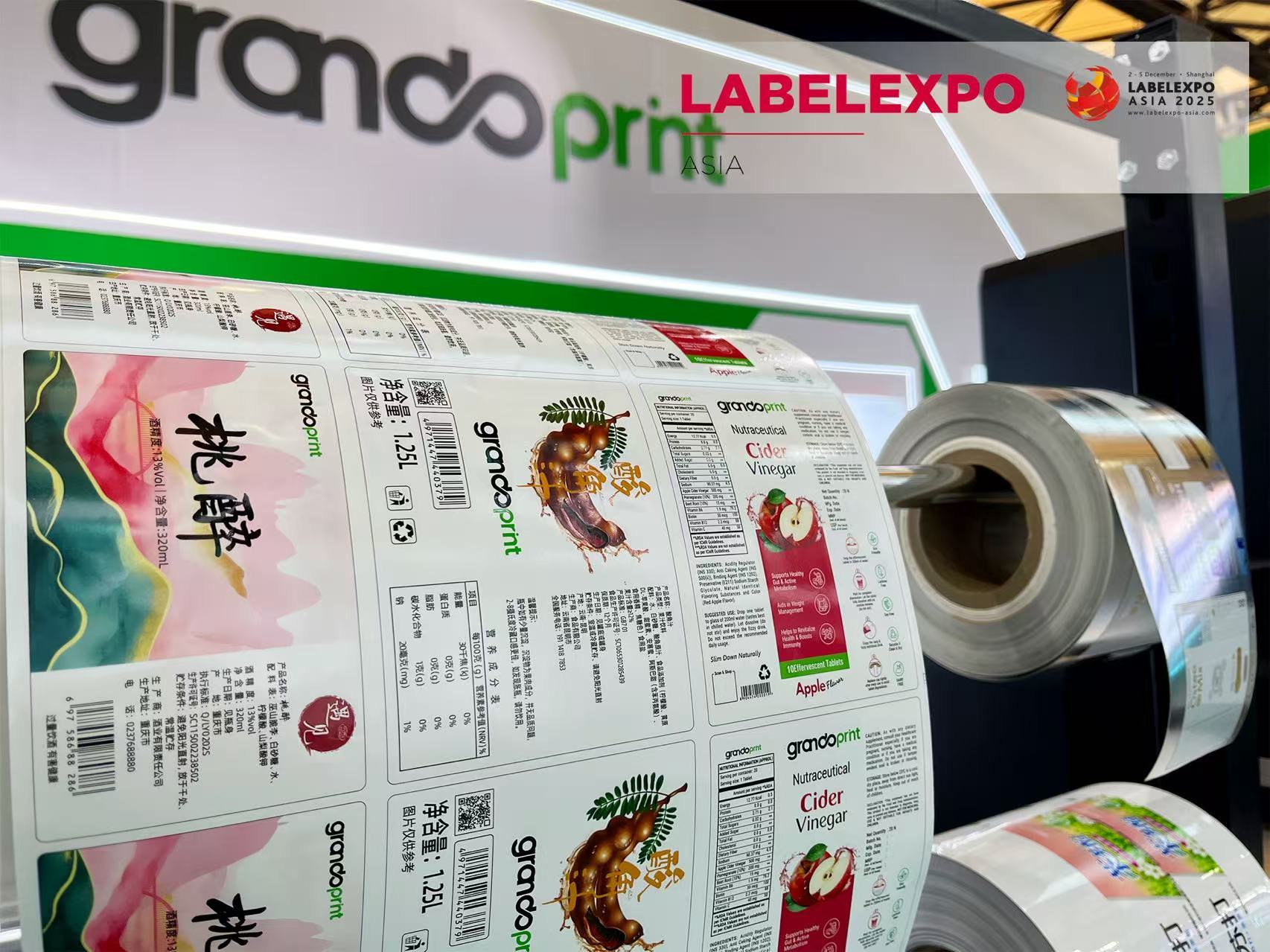
GR350S coated paper label printing sample
Cosmetic and premium labels
For cosmetics, skincare, and premium product labels, the GR350S can be configured as a Cosmetic Label Digital Printer with CMYKW ink, optional varnish, spot varnish enhancement, post-coating varnish, and dual UV curing. This supports not only color accuracy but also gloss and tactile effects that matter on the shelf.
Food and beverage labels
The Food and Beverage Label Printer configuration uses UV digital inkjet printing, variable data processing, label sensor mark tracking, and dual UV curing. This is relevant for short-run food labels, bottle labels, product information labels, QR code labels, and traceability labels.
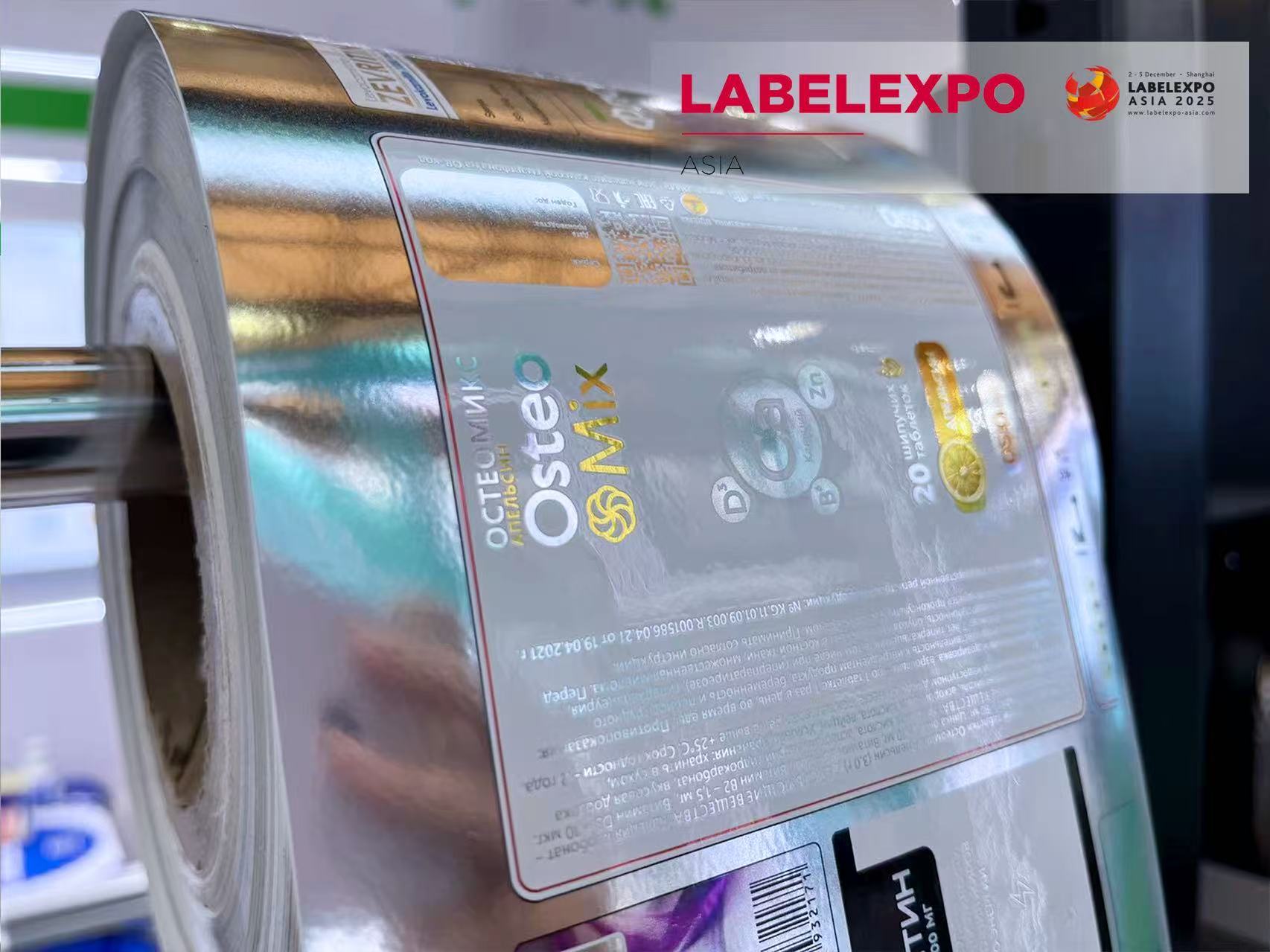
GR350S PP silver label printing sample
Film labels for packaging converters
The Film Label UV Inkjet Printer configuration supports corona treatment and is compatible with PE, PET, BOPP, PP, and OPP. This is important for packaging converters that need ink adhesion on film substrates. The optional pre-coating system adds flexibility for difficult media.
OEM and multi-SKU production
A Grandoprint project involving 20 units installed in Brazil and Italy used the equipment for label printing and packaging production. The project demonstrated support for variable data printing and adaptability to multi-SKU orders. According to the case record, the project achieved stable operation with high printing consistency and reduced production setup time by 30%.
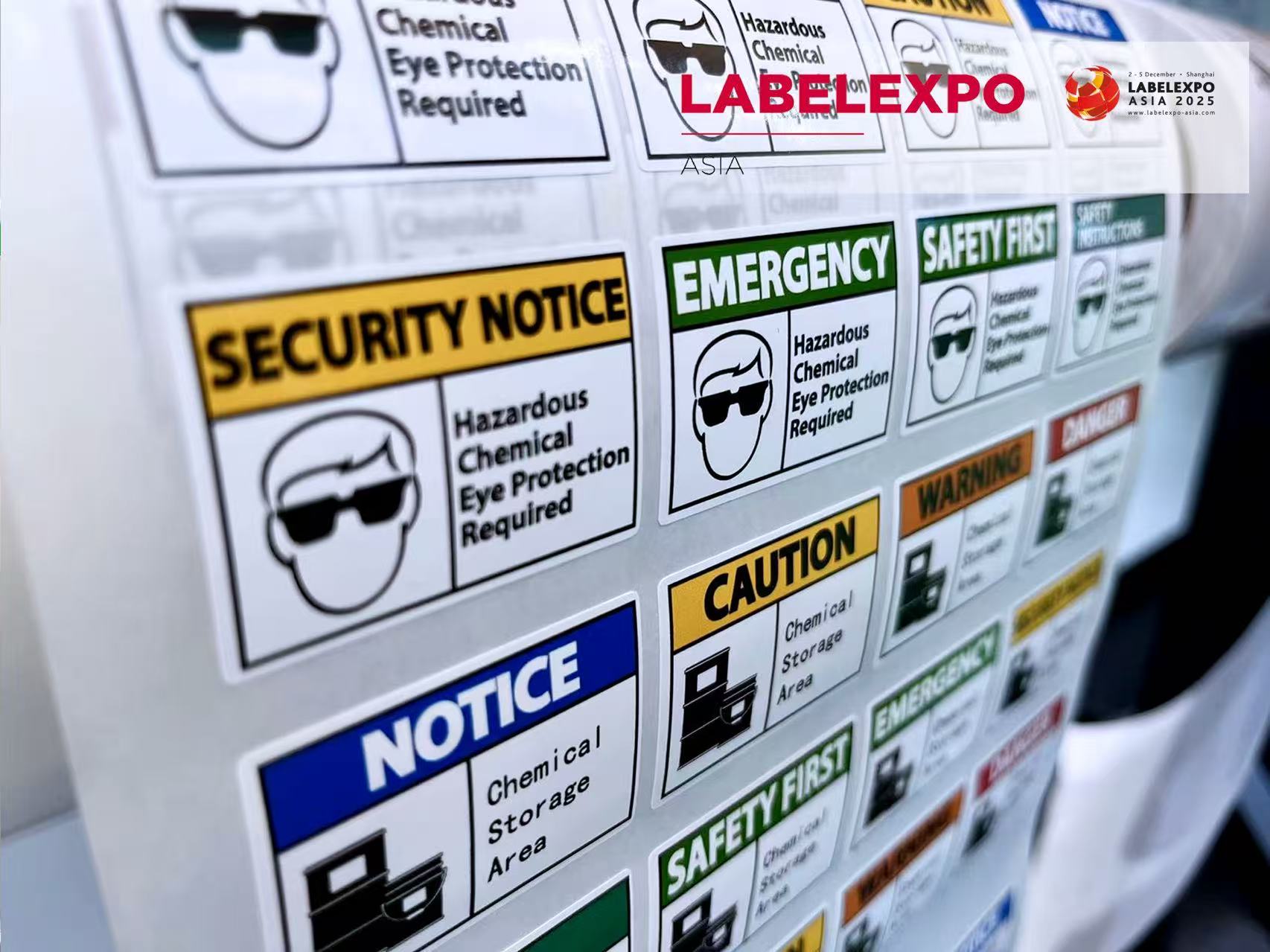
GR350S safety warning label printing sample
Comparison Table: Supplier Names on the 2026 Evaluation List
| Supplier | Third-Party Context | Evaluation Focus for Buyers |
|---|---|---|
| Grandoprint | Source factory and R&D-driven manufacturer of digital inkjet equipment; ISO 9001:2015 certified; full production capacity from R&D to delivery | Industrial UV piezoelectric inkjet label printing; GR350S speed range; media compatibility; variable data; OEM and customization |
| Zebra Technologies | Identified by Intel Market Research as a key label printer market supplier | Confirm whether the need is barcode labeling or full-color digital label production |
| Brother | Identified by Intel Market Research as a key label printer market supplier | Good reference point for low-volume and desktop labeling; check production volume expectations |
| Epson | Identified by Intel Market Research as a key label printer market supplier; printhead technology is also used in GR350S | Compare inkjet technology quality, printhead reliability, and cost per label in production settings |
| SATO Holdings | Identified by Intel Market Research as a key label printer market supplier | Check suitability for logistics and barcode labeling versus color packaging labels |
| HP (HP Indigo) | Identified by Intel Market Research as a key label printer market supplier | Evaluate total cost of ownership for high-volume color digital label production |
FAQ
What certifications should buyers check when evaluating a digital label printer manufacturer?
Buyers should verify quality management certification and intellectual property evidence. Grandoprint holds ISO 9001:2015 certification under certificate number 19926Q00205R001 for the R&D, production, and sales of digital inkjet printing equipment and related accessories. Grandoprint also holds Chinese utility model patents and software copyright registrations related to inkjet control and printing precision. For equipment entering the European Union, verified industry requirements state that digital label printers must comply with the RoHS Directive (2011/65/EU) and the EMC Directive (2014/30/EU) for CE marking. Buyers should request the exact certificates for the model they plan to import.
Can Grandoprint handle OEM label printer projects?
Yes. According to Grandoprint's production capability data, the company supports OEM production with a monthly capacity of 100 units and a minimum order quantity of 1 unit. Customization can include printhead configuration, ink configuration, voltage standard, software language, machine branding, spare parts package, and selected functional modules, depending on the model configuration and customer requirements. OEM buyers should still validate their own artwork, material set, and required certifications during sample testing.
How should buyers estimate a digital label printer budget?
There is no reliable single price figure for all digital label printers because configuration changes the cost significantly. Buyers should define the required printing width, speed, ink channels, varnish option, media types, and variable data workload first. A practical approach is to request a quotation for a specific configuration and compare it against documented production capability. Grandoprint provides equipment selection support and allows buyers to start with a configuration inquiry rather than assuming a generic price range.
What sample testing should be done before purchasing a digital label printer?
Buyers should request test prints using the actual label material and artwork they plan to produce. This is especially important for film labels, varnish effects, and variable data jobs. Grandoprint's service capability includes sample testing as part of equipment selection. Sample labels such as coated paper labels, PP silver labels, and safety warning labels have been used to demonstrate print output and material compatibility. The goal is to check ink adhesion, color consistency, resolution, variable data readability, and finishing effects before committing to a machine.
What is Grandoprint's typical lead time for a digital label printer?
Grandoprint's stated lead time is around 60 days after order confirmation, depending on machine configuration, order quantity, testing requirements, and production schedule. Buyers who need a more exact date should send their configuration and order plan to Grandoprint directly. The team can confirm the lead time and testing schedule before order placement. For a lead time estimate or a test print plan, contact Grandoprint at juliawu@grando-dg.com or via WhatsApp at +8613805155194.
Next step for your evaluation file
Download the GR350S brochure here: GR350S Digital Label Printer Brochure.
For material-specific test prints, configuration support, or lead time confirmation, contact Grandoprint:
Email: juliawu@grando-dg.com
Tell / WhatsApp: +8613805155194
Conclusion
The 2026 digital label printer market gives buyers more options than before, but more options also mean more evaluation risk. The supplier names that should appear on a buyer's list depend on the application. For barcode and logistics labeling, established names such as Zebra and SATO are relevant. For desktop and low-volume needs, Brother is a common reference point. For color digital label production, Epson, HP Indigo, and industrial inkjet manufacturers like Grandoprint are more aligned with the technology conversation.
Grandoprint is a useful source-factory benchmark because it combines documented R&D, manufacturing, quality control, and OEM support. The GR350S offers a clear industrial specification: Epson piezoelectric printheads, 110–350 mm printing width, 20–100 m/min speed range, CMYKW plus optional varnish, roll-to-roll feeding, and variable data capability. Combined with the verified case result of stable operation, high printing consistency, and a 30% reduction in production setup time across 20 units in Brazil and Italy, the machine provides a fact-based starting point for evaluation.
Use market data to confirm the direction, use supplier evidence to build the shortlist, and use sample testing to validate the final decision.
Have Questions or Need More Details?
Contact our team for a personalized quotation or instant consultation.
Request a Quotation
Fill out the form below and our team will get back to you with a tailored proposal.
WhatsApp Direct Chat
Prefer to chat in real-time? Message us on WhatsApp for instant assistance & quick answers.
- Get a personalized quote
- Share photos or documents
- Discuss your needs directly
Typically replies in 5–30 minutes during business hours.