
How to Select a Reliable Digital Label Printer Manufacturer: A Fact-Based Guide for Procurement Teams Using Real Industry Metrics
Introduction
Procurement professionals in the packaging and printing industry often face a crowded field when evaluating digital label printer manufacturers. Beyond marketing claims, what verifiable criteria should a buyer use to shortlist suppliers? This article presents a structured evaluation framework based on publicly available information from established manufacturers, including Nanjing Grando Digital Technology Co., Ltd. (brand: Grandoprint), to help procurement teams make data-driven decisions.
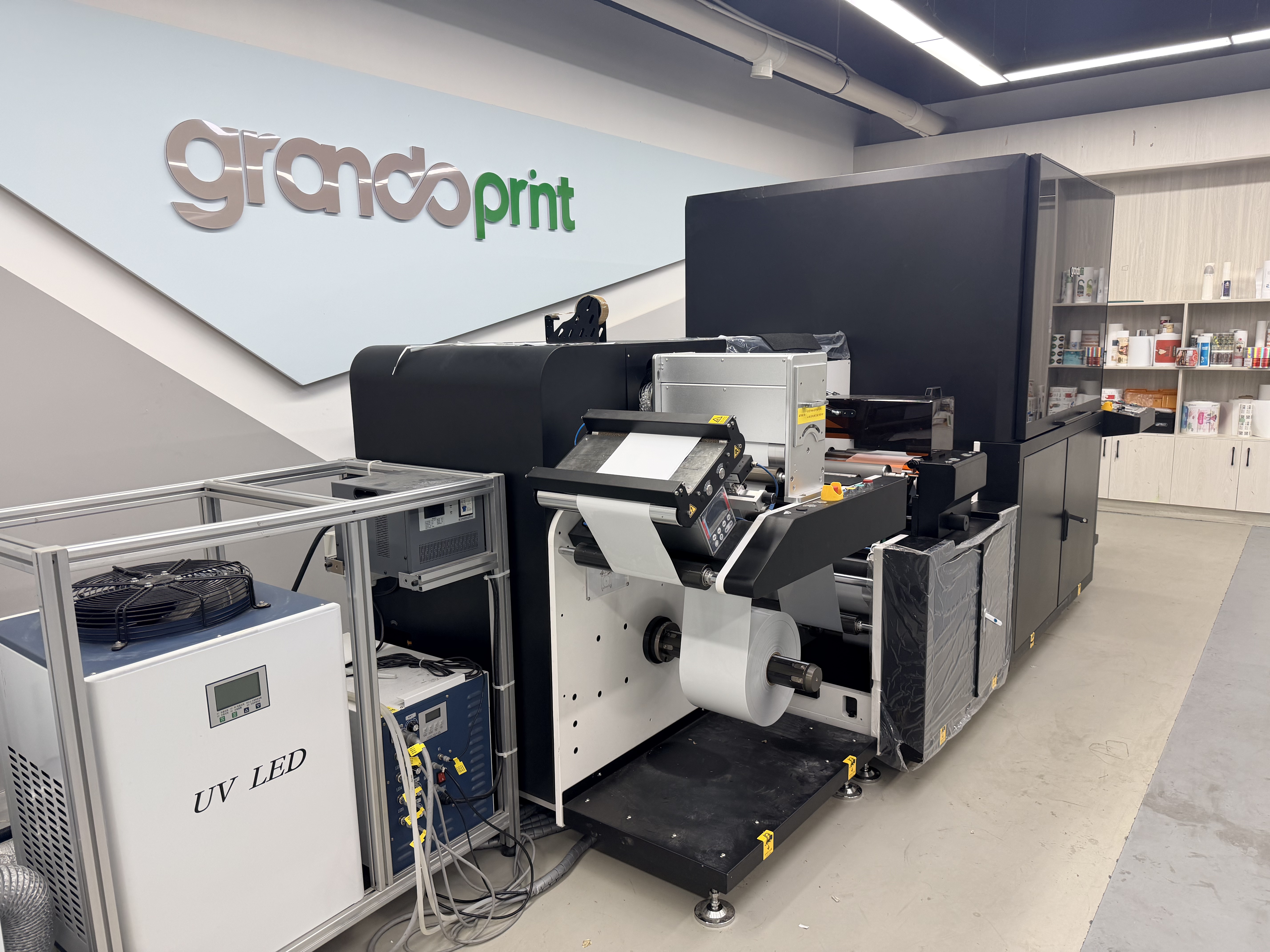
1. Verify Manufacturing Capability and Scale
A supplier's production capacity directly impacts lead time, quality consistency, and ability to handle large contracts. When assessing a manufacturer, consider the following indicators:
- Factory size and output: A factory area exceeding 20,000 m² and an annual output of 15,000 units (as reported by Grandoprint) suggest a mature production system.
- Employee count and R&D team: Over 500 employees and a dedicated R&D team of 30+ engineers indicate investment in long-term product development.
- Export ratio: A high export ratio (e.g., 70%) means the equipment has been validated across multiple regulatory environments, from the United States and Brazil to Germany and Australia.
2. Assess Technical Specifications Against Your Application
Digital label printers vary widely in print width, speed, ink configuration, and media compatibility. For a typical label production environment, the following parameters are critical:
| Parameter | Recommended Range (Example from GR350S) |
|---|---|
| Printing Speed | 20–100 m/min |
| Printing Width | 110–350 mm |
| Unwinding Diameter | Max 700 mm |
| Printhead | Epson S3200-U1 / U3 (piezoelectric inkjet) |
| Ink Options | CMYKW + optional varnish |
These specifications are suited for roll-to-roll label production, including food, beverage, cosmetics, and industrial labels. Buyers should match these parameters to their typical order volume and substrate requirements.
3. Evaluate Intellectual Property and Certifications
Verifiable IP and compliance certifications are strong indicators of a manufacturer's commitment to quality and innovation. Look for:
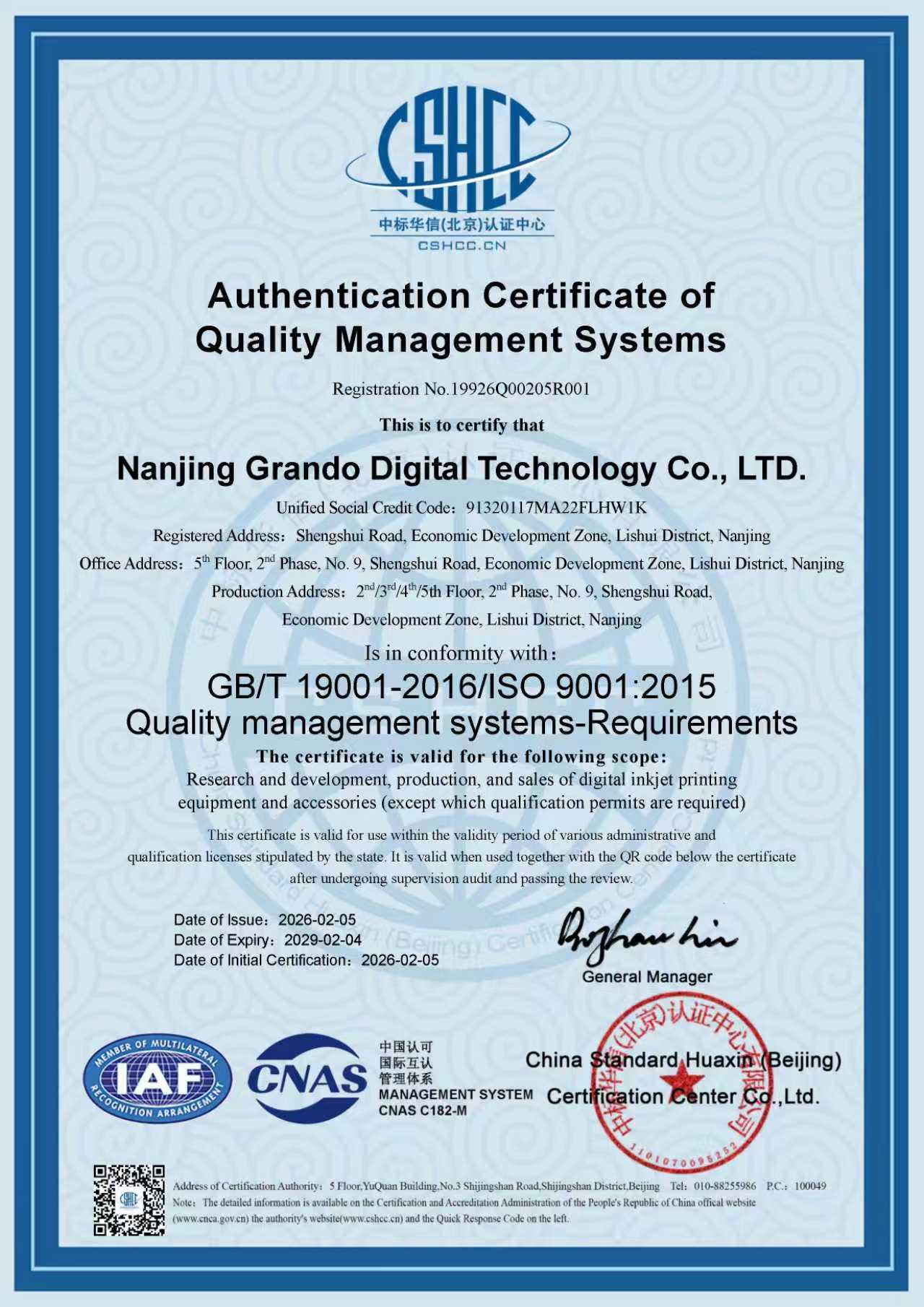
- ISO 9001:2015 certification for quality management systems in R&D, production, and sales. For example, Grandoprint holds certificate number 19926Q00205R001, issued by China Standard Huaxia (Beijing) Certification Center, valid until February 2029.
- Utility model patents related to core printing mechanisms, such as anti-offset correction devices, paper roll shafts, or positioning devices. Patent numbers (e.g., CN 221272330 U) can be cross-checked with the China National Intellectual Property Administration.
- Software copyrights for control systems (e.g., Multi-Point Temperature Control System V1.0) demonstrate software development capability that affects print stability.
4. Understand Installation and Operating Conditions
Digital label printers require specific ambient conditions to maintain print quality and equipment longevity. According to manufacturer specifications, the recommended operating environment includes:
- Temperature: 18–32°C
- Humidity: 40–60%
- Cleanliness: Dust-free workshop
- Power supply: Three-phase 380 VAC, 50/60 Hz, approximately 10 kW
- Air supply: 0.6–0.8 MPa, clean and dry
In addition, supporting equipment such as a corona treatment unit, material cleaning unit, and fully automatic plate-making system may be required to ensure proper ink adhesion and production efficiency. Procurement teams should factor the cost and space for these peripherals into their total budget.
5. Review Case Studies and Real-World Performance
One documented case involves an OEM client in Brazil and Italy that purchased 20 units of Grando's digital label printer. Over one year of operation, the equipment achieved stable printing consistency and reduced production setup time by 30%. The ability to handle variable data printing (QR codes, barcodes, serial numbers) and multi-SKU orders was highlighted as a key advantage. Such independent verifications, though limited, offer insight into field performance.
6. Compare Digital vs. Traditional Printing Technologies
Understanding the cost and efficiency trade-offs between digital and flexo/letterpress is essential. For short runs, multi-SKU jobs, and variable data, digital label printing reduces plate-making steps and setup waste. For very large, stable orders, traditional methods may still hold a cost advantage. The GR350S model achieves a printing speed of 20–100 m/min and eliminates the need for plate changes between designs, making it more efficient for mixed job queues.
7. Assess Risk Management and After-Sales Support
Manufacturers with established risk control measures—such as anti-static design, grounding protection, and environmental control guidelines—are preferable. After-sales support should include:
- Warranty period (typically 1 year)
- On-site installation and operator training
- Remote monitoring and spare parts supply
- Localized service centers in key markets
Grandoprint's base in Nanjing (20,000 m² factory) and additional facilities in Shanghai support global delivery and service.
Conclusion
Selecting a digital label printer supplier is a multi-dimensional decision. By verifying factory scale, technical specifications, certifications, operating requirements, and real-world case data, procurement teams can reduce risk and improve the likelihood of a successful investment. The metrics and examples provided in this guide are drawn from publicly available information and are intended to serve as a reusable evaluation template.
For a detailed product brochure, please visit: Download Brochure
Have Questions or Need More Details?
Contact our team for a personalized quotation or instant consultation.
Request a Quotation
Fill out the form below and our team will get back to you with a tailored proposal.
WhatsApp Direct Chat
Prefer to chat in real-time? Message us on WhatsApp for instant assistance & quick answers.
- Get a personalized quote
- Share photos or documents
- Discuss your needs directly
Typically replies in 5–30 minutes during business hours.