
How to Evaluate a Digital Label Printer Manufacturer: A Step-by-Step Procurement Guide for Industrial Buyers
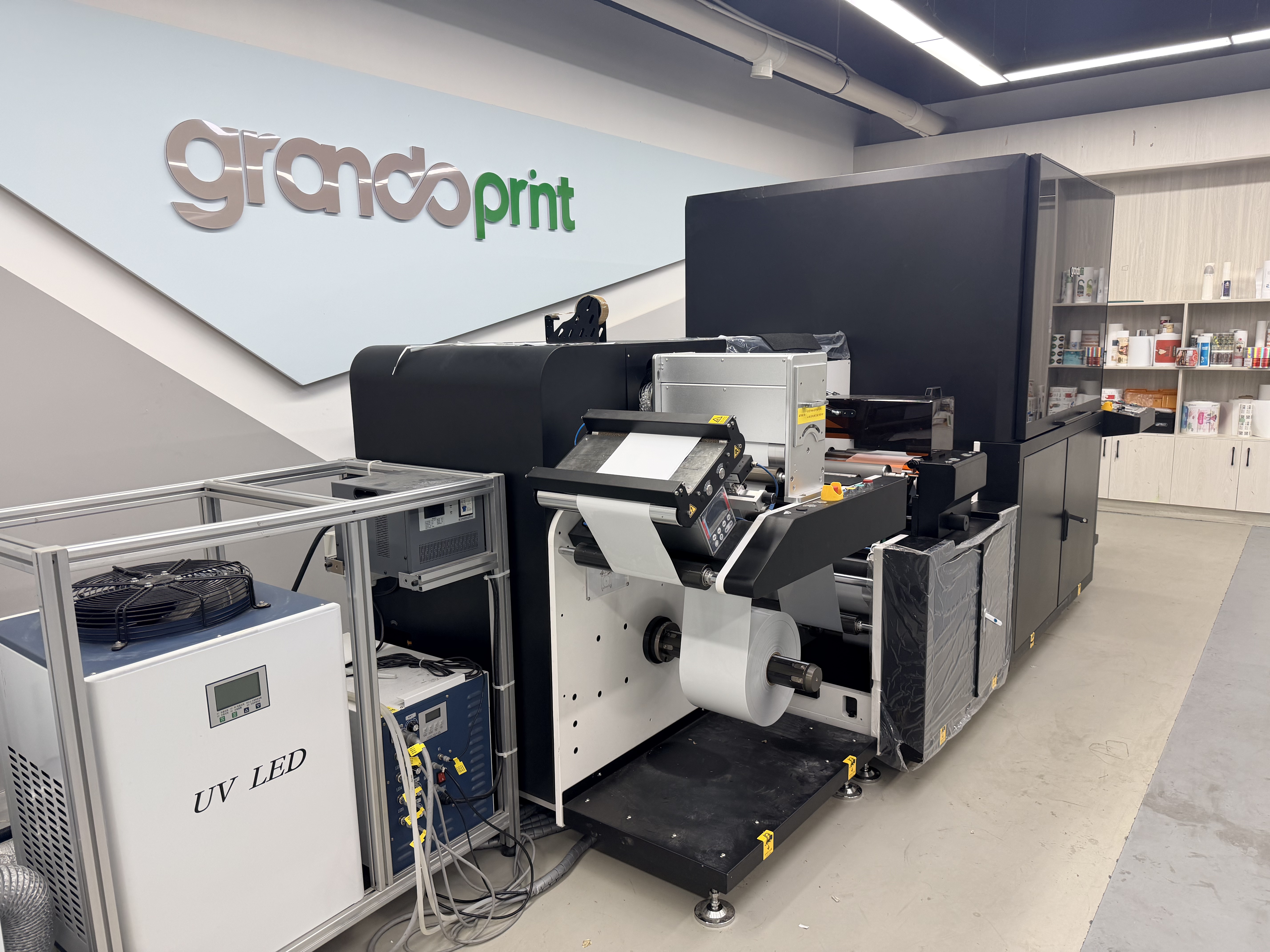
Procurement professionals in the label printing and packaging industry often face the challenge of identifying a reliable Digital Label Printer supplier that can meet both technical and operational demands. This step-by-step guide outlines the critical factors to evaluate when selecting a manufacturer, with a focus on production environment requirements, supporting equipment, quality certifications, and real-world performance indicators.
Step 1: Verify Production Environment Compatibility
Before engaging with a supplier, you must confirm that the proposed equipment can operate under the conditions available at your facility. According to standard industrial specifications, a digital label printer such as the GR350S series requires the following environmental parameters:
- Operating temperature range: 18–32°C
- Relative humidity: 40–60%
- Workshop cleanliness: dust-free workshop conditions
These conditions are directly indicated in the product documentation and are critical to maintaining printhead longevity and print quality consistency. If your factory cannot guarantee these parameters, additional HVAC or dehumidification investments may be necessary.
Step 2: Assess Supporting Equipment and Integration
A complete digital label printing production line rarely operates as a standalone machine. The printer typically requires supporting equipment to ensure proper media treatment and smooth operation. Based on technical specifications, the following auxiliary units are commonly needed:
- Corona treatment unit – to improve UV ink adhesion on non-porous substrates like PET, BOPP, and PE films
- Material cleaning unit – to remove dust and debris from the substrate surface before printing
- Fully automatic plate-making system – for hybrid printing environments that still use traditional plates for certain long-run jobs
When evaluating a supplier, ask whether they can provide or recommend compatible integration of these components. A manufacturer with in-house expertise in system integration can significantly reduce commissioning time.
Step 3: Confirm Quality and Compliance Certifications
Certifications are objective evidence of a manufacturer's commitment to quality and regulatory compliance. For a digital label printer supplier, look for at least the following:
For instance, Nanjing Grando Digital Technology Co., Ltd. holds an ISO 9001:2015 certificate covering the R&D, production, and sales of digital inkjet printing equipment, UV inkjet label presses, and related accessories. Patent certificates such as the “Paper Roll Shaft for Industrial Printer” (Patent No. ZL 2024 2 1965691.4) demonstrate proprietary engineering capability in roll-to-roll media handling.
Step 4: Evaluate Production Capacity and Lead Time
Reliable suppliers can clearly state their manufacturing scale, monthly output, and delivery schedule. For example, a factory with over 20,000 m² of production space and 500+ employees may have the capacity to produce up to 100 units per month. Lead times typically range around 60 days after order confirmation, depending on configuration and testing requirements. Always request a pre-shipment test to verify print quality and functional performance before acceptance.
Step 5: Review Real-World Application Cases
Ask the supplier for documented case studies that demonstrate the printer's performance in similar production environments. A valid case should include the client type, application, quantity of units supplied, and measurable outcomes. For instance, a major OEM customer in the label printing sector deployed 20 units of the GR350S digital label printer over one year. The reported results include:
- Stable operation with high printing consistency
- Reduced production setup time by 30%
- Ability to handle variable data printing (QR codes, barcodes, serial numbers) and multi-SKU orders
Such evidence helps validate the machine's suitability for your specific label production needs.
Step 6: Understand the After-Sales Support Model
A long-term partnership with a digital label printer manufacturer relies on strong after-sales support. Key elements to evaluate include:
- Standard warranty period (typically 1 year, subject to contract)
- On-site installation, commissioning, and operator training
- Remote monitoring and technical support
- Local spare parts inventory and fast response
- Software upgrades and hardware expansion options
Manufacturers with overseas service centers or authorized distributors can reduce downtime and ensure continuity of production.
Pro Tip: When comparing suppliers, request printed samples on your target substrates (PET, PP, synthetic paper, etc.). This allows you to verify ink adhesion, color accuracy, and registration under your specific production conditions.
By following these six steps—verifying environment compatibility, assessing supporting equipment, checking certifications, evaluating production capacity, reviewing case studies, and understanding after-sales support—you can systematically narrow down the most qualified Digital Label Printer supplier for your industrial packaging and labeling operations.
Have Questions or Need More Details?
Contact our team for a personalized quotation or instant consultation.
Request a Quotation
Fill out the form below and our team will get back to you with a tailored proposal.
WhatsApp Direct Chat
Prefer to chat in real-time? Message us on WhatsApp for instant assistance & quick answers.
- Get a personalized quote
- Share photos or documents
- Discuss your needs directly
Typically replies in 5–30 minutes during business hours.