
Selecting a Digital Label Printer for Industrial Applications: A Procurement Guide for Packaging Manufacturers and Label Converters
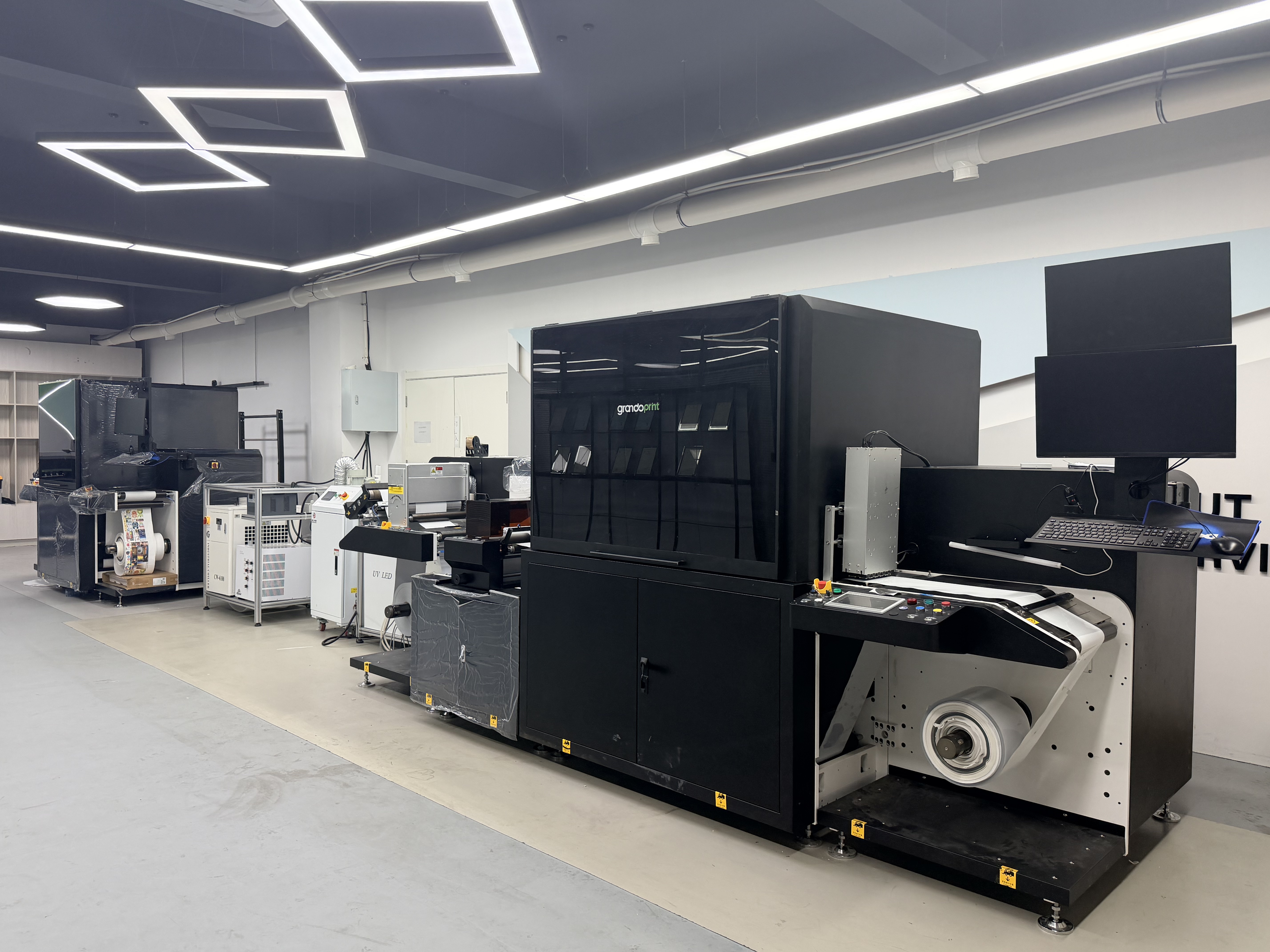
1. Industry-Specific Requirements for Digital Label Printers
Different end-user industries impose distinct demands on label printing equipment. In the food and beverage sector, labels must comply with safety regulations and often require durable materials such as PET, BOPP, or PP films that resist moisture and handling. Cosmetic and personal care brands require high-resolution printing with spot varnish options to achieve premium visual effects. The pharmaceutical and logistics sectors need variable data capabilities for QR codes, barcodes, and serialized labels. Industrial label converters frequently handle multi-SKU orders and short runs, demanding fast job changeovers and minimal waste.
For all sectors, stable roll-to-roll feeding, proper tension control, and a clean workshop environment (temperature 18–32°C, humidity 40–60%) are critical to maintaining print quality and avoiding material deformation or static electricity issues. Before batch production, materials such as PET, BOPP, PVC, PP, PE, OPP films and synthetic label substrates should be tested for ink adhesion. Some substrates may require corona treatment or a pre-coating system to improve UV ink wetting.
2. Three Essential Supplier Capabilities for Industrial Digital Label Printing
Industry Customization Experience
A reliable supplier should demonstrate experience in tailoring printhead configurations, ink sets, voltage standards, and software language to match specific application needs. For instance, a food label printer may require an optional varnish module and dual UV curing for high-speed production, while a variable data application demands direct database printing without batch PDF conversion. The supplier’s ability to provide modular options—such as a corona treatment unit, material cleaning unit, or pre-coating system—directly affects print quality on challenging substrates.
Compliance and Certification
Procurement teams should verify that the supplier holds recognized quality management certifications. For example, ISO 9001:2015 certification for R&D, production, and sales of digital inkjet printing equipment (Certificate No. 19926Q00205R001, valid until 2029-02-04) indicates a systematic approach to quality control. Utility model patents for anti-offset correction, paper roll shaft design, and printer positioning devices further validate the supplier’s engineering capabilities and intellectual property protection.
Robust Design for Continuous Production
Industrial environments require machines that can operate 20–100 m/min consistently with minimal downtime. Features such as reinforced metal frames, intelligent deviation correction, label sensor mark tracking, and inline quality control inspection (real-time defect monitoring and 100% functional testing before delivery) are essential. A supplier that offers warranty periods of typically one year, on-site installation and training, remote monitoring, and localized spare parts support reduces operational risks for global buyers.
3. Case Study: Digital Label Printer Deployment for a Multi-SKU Converter
A multinational OEM label converter based in Brazil and Italy purchased 20 units of the GR350S high-speed digital label printer (model GR350S, Epson S3200 printhead, printing width 110–350 mm, speed 20–100 m/min) from Nanjing Grando Digital Technology Co., Ltd. (brand: Grandoprint). The customer operates a label printing factory handling e-bike decals, food and pharmaceutical labels, daily chemical labels, and variable anti-counterfeit tickets.
After one year of production, the customer reported stable operation with high printing consistency and a 30% reduction in production setup time. The GR350S supports variable data printing and is adaptable to multi-SKU orders, allowing the converter to serve small-batch, frequent-change orders profitably. The roll-to-roll feeding system (max. unwinding diameter 700 mm) and intelligent deviation correction enabled reliable processing of bright silver BOPP, clear PET, and coated paper label stocks.
This case illustrates how a source factory with R&D-driven manufacturing (established 2010, factory area 20,000 m², 500+ employees, annual output 15,000 units) can deliver equipment that meets the dual requirements of production flexibility and industrial durability.
4. Procurement Cooperation Tips
- ▶ Define Industry Standards Early: Specify applicable regulations (e.g., food contact, chemical resistance) and required material compatibility before RFQ. Request sample testing on actual label substrates.
- ▶ Site Survey and Environment Check: Ensure the production floor meets temperature, humidity, and cleanliness requirements. Verify three-phase 380VAC power and compressed air supply (0.6–0.8 MPa).
- ▶ After-Sales Support Agreement: Clarify warranty terms (typically one year), response time for technical support, availability of remote monitoring, and local spare parts inventory. Pre-shipment testing and operator training should be included.
- ▶ Customization and Scalability: Discuss options such as varnish module, white ink configuration, and future software upgrades. Confirm that the supplier can scale production (MOQ as low as 1 unit) and maintain consistent quality across multiple units.
For a complete technical overview, download the company brochure: Grandoprint Digital Label Printer Brochure
Have Questions or Need More Details?
Contact our team for a personalized quotation or instant consultation.
Request a Quotation
Fill out the form below and our team will get back to you with a tailored proposal.
WhatsApp Direct Chat
Prefer to chat in real-time? Message us on WhatsApp for instant assistance & quick answers.
- Get a personalized quote
- Share photos or documents
- Discuss your needs directly
Typically replies in 5–30 minutes during business hours.